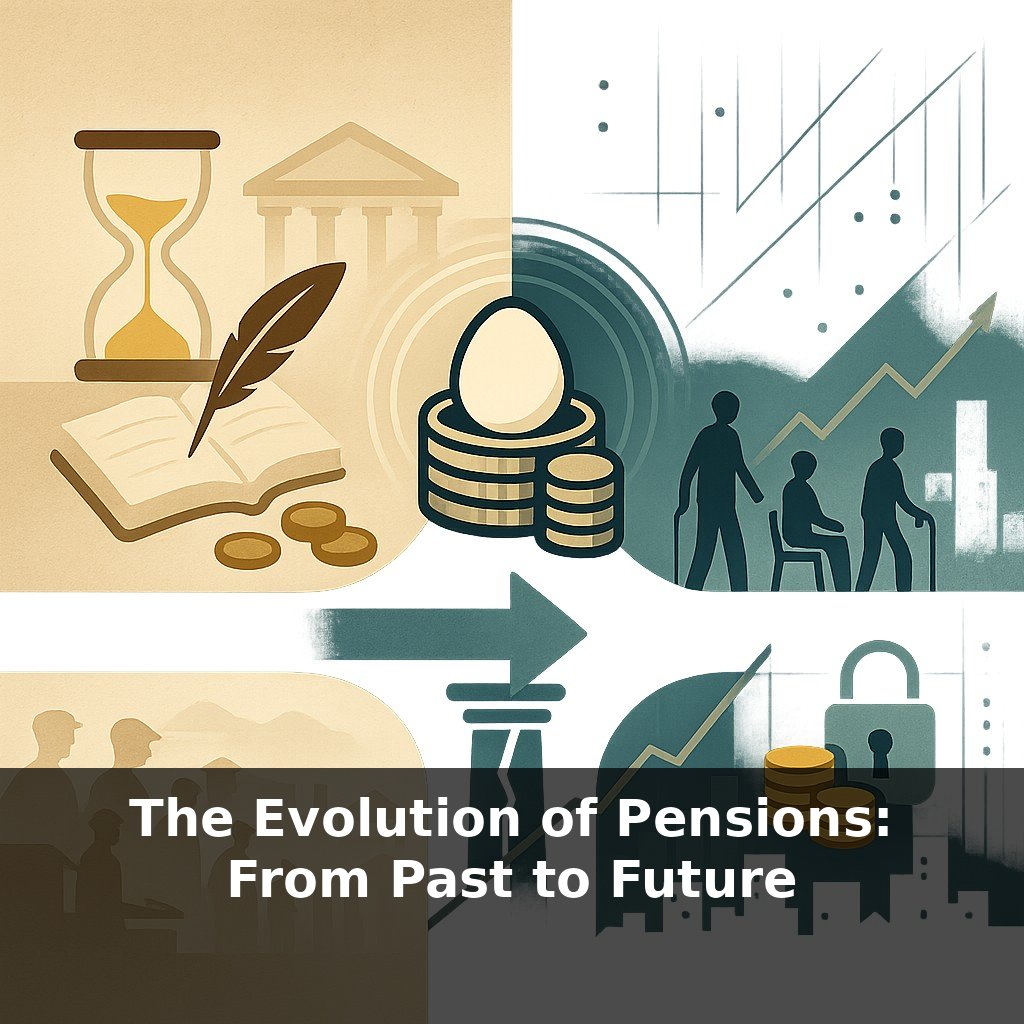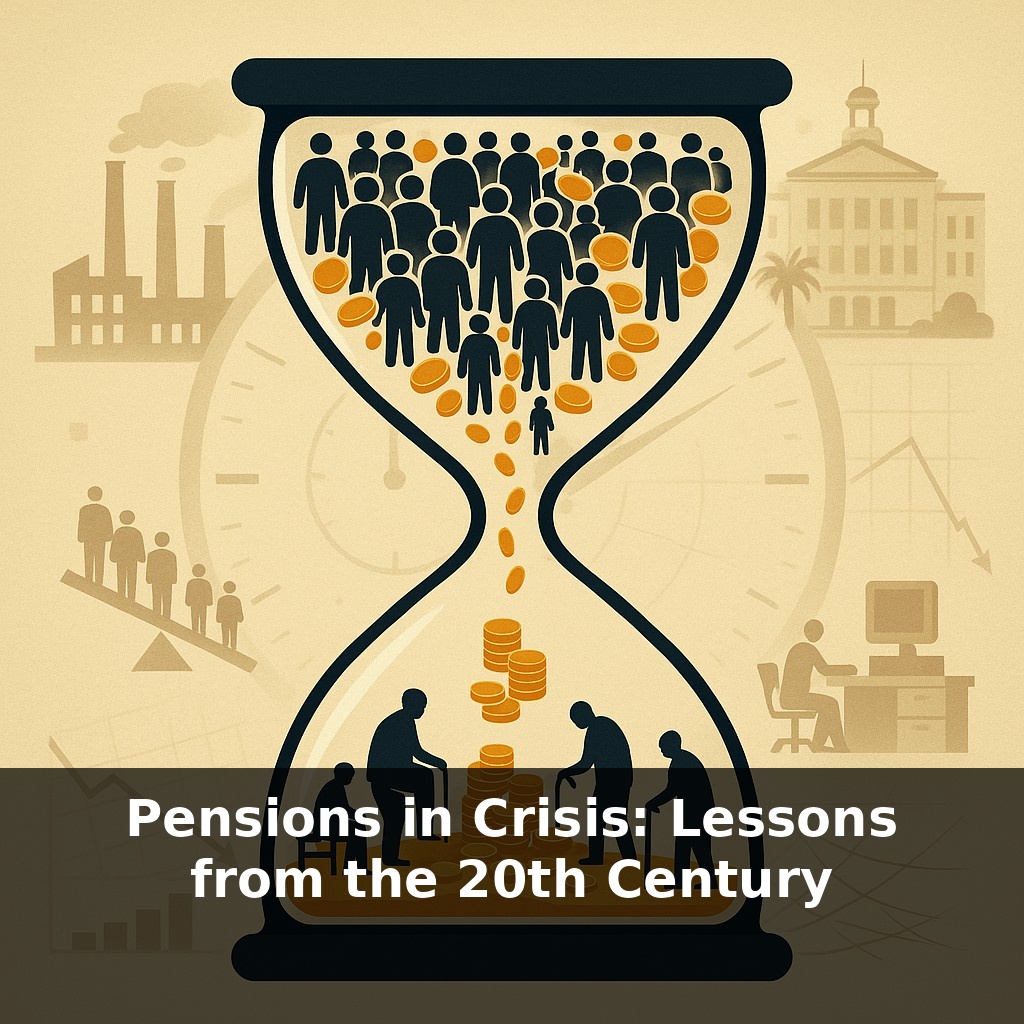
A century ago, there were more than forty workers for every American retiree. Today, it’s only a few. Now picture a factory owner in the 1930s, a Chilean minister in the 80s, and a British clerk in the 90s—all discovering, too late, that their promised pensions weren’t guaranteed.
By the mid‑20th century, governments and companies had quietly turned retirement into a grand wager on the future. As long as economies kept expanding, markets kept rising, and populations stayed young, the system looked solid. But history refused to cooperate. The Great Depression vaporized years of savings in a few panicked seasons. Post‑war baby booms swelled the ranks of future retirees just as generous benefits were being locked in. Then the 1970s arrived with high inflation and low growth, shredding the math underneath long‑term promises. Finally, high‑profile corporate abuses in the late century exposed how fragile many private schemes really were. Each shock forced policymakers to improvise new rules, safety nets, and funding models—patches on a structure that was never fully redesigned from the ground up.
Instead of a single, well‑designed blueprint, 20th‑century pension systems emerged as a collage of fixes layered over earlier promises. Some countries leaned hard on pay‑as‑you‑go public schemes; others trusted employers or pushed workers toward individual savings accounts. Each choice reflected local politics and culture more than careful stress‑testing. Like an artist repeatedly painting over the same canvas, reformers kept adding new colors—benefit formulas, contribution rules, tax breaks—without stripping back the old layers. The result: systems that often looked stable, yet hid deep cracks that only appeared under pressure.
In practice, the 20th century exposed three structural weak points that kept showing up in different countries and eras.
First, the hidden bet on perpetual growth. Many schemes quietly assumed that wage bases, productivity, and asset prices would rise fast enough to make tomorrow’s money cheaper than today’s. Benefit formulas were set generously, contribution rates cautiously. As long as good times lasted, this looked prudent. But when downturns hit, funds discovered that a few bad years early on could erase decades of optimistic projections. During 1929–32, U.S. equity losses weren’t just a paper shock; they obliterated reserves that had been treated as nearly permanent. Later, stagflation showed that even without a market crash, the combination of rising prices and sluggish output could wreck funding plans that assumed more benign conditions.
Second, demography stopped being background noise and became a central financial variable. Systems that had been designed when lifespans were shorter and exit ages earlier suddenly had to cover far longer retirements. Medical advances and changing work patterns quietly stretched the period over which benefits were paid. Public schemes indexed to wages, not just prices, amplified the strain: each cohort expected not only longer support, but support linked to the living standards of active workers. Political reluctance to raise contributions or trim formulas on time meant that what began as a mild imbalance could evolve into chronic deficits.
Third, private plans revealed how fragile promises can be without tight oversight. In theory, employer plans diversified risk away from state budgets. In reality, many concentrated it back onto a single corporate balance sheet, often with lax funding rules and opaque accounting. When firms prospered, few questioned assumptions; when they declined, underfunding surfaced suddenly. The result was a pattern: scandal, public anger, emergency intervention. From this cycle came two enduring innovations: independent regulators with powers to police funding and disclosure, and insurance‑style backstops such as the PBGC that socialize the tail risk of outright plan failure.
Reforms like ERISA in the U.S., the U.K.’s post‑Maxwell framework, and Chile’s funded‑account experiment were not ideologically pure projects; they were attempts to plug specific leaks exposed by shocks. Each fix reduced some risks but heightened others—for example, shifting market and longevity risk from institutions onto individuals.
Consider three snapshots. In 1938, a small Midwestern company offered lifelong payments to loyal staff, backing the promise with a portfolio heavily tilted to local bank stocks and railroads. When those firms faltered later, the plan’s assets shrank so sharply that younger employees were quietly shifted into less generous arrangements. In the 1980s, a Chilean schoolteacher saw contributions diverted into an individual account; her eventual payout depended not on a single employer’s health, but on decades of fees, portfolio choices, and market cycles. In 1991, British employees of Robert Maxwell’s firms learned that what looked like a secure benefit had been systematically raided to prop up a collapsing business empire. These stories trace a pattern: who ultimately bears the risk keeps changing—sometimes the company, sometimes the state, increasingly the individual—yet the trade‑offs remain obscured until stress hits. Like a seasoned hiker choosing routes, each system picks a path that feels safe in fair weather, only to discover its true exposure when conditions suddenly turn.
If the 20th century was about building pension engines, this one is about learning to steer them in rough weather. As work becomes more fragmented and lifespans stretch, rigid “one‑age, one‑formula” promises look brittle. Expect more flexible retirement windows, auto‑adjusting benefits tied to longevity trends, and cross‑border investment clubs sharing risk. Your challenge this week: map all the income streams you’d rely on if you stopped working 10 years earlier than planned.
The next crises may come less from sudden shocks than from slow shifts: longer lives, uneven wages, and workers drifting between gigs like birds changing nesting grounds. Systems built for straight-line careers now face zigzags. Staying curious about who carries which risk—and how it can be shared more fairly—will shape the promises we dare to make next.
Try this experiment: Log into your pension/retirement account today and download your latest statement, then create a “crisis stress test” by cutting the projected benefit in half and asking: “What would my monthly life look like on this lower amount?” Next, open a blank spreadsheet and add one new “backup pillar” beside your pension—e.g., a low-cost index fund, rental room income, or delayed Social Security—and plug in realistic numbers to see how much each could add to your reduced pension. Finally, pick ONE of those backup pillars and take a concrete step today—like opening the actual investment account or listing a spare room draft ad—then set a calendar reminder in 30 days to check whether you followed through and how your sense of security has changed.