A single law in Kansas wiped out hundreds of millions in state revenue—without delivering the promised jobs. Meanwhile, a program in Brazil quietly pulled millions out of extreme poverty. Same tool: public policy. So why do some rules redraw lives while others barely leave a smudge?
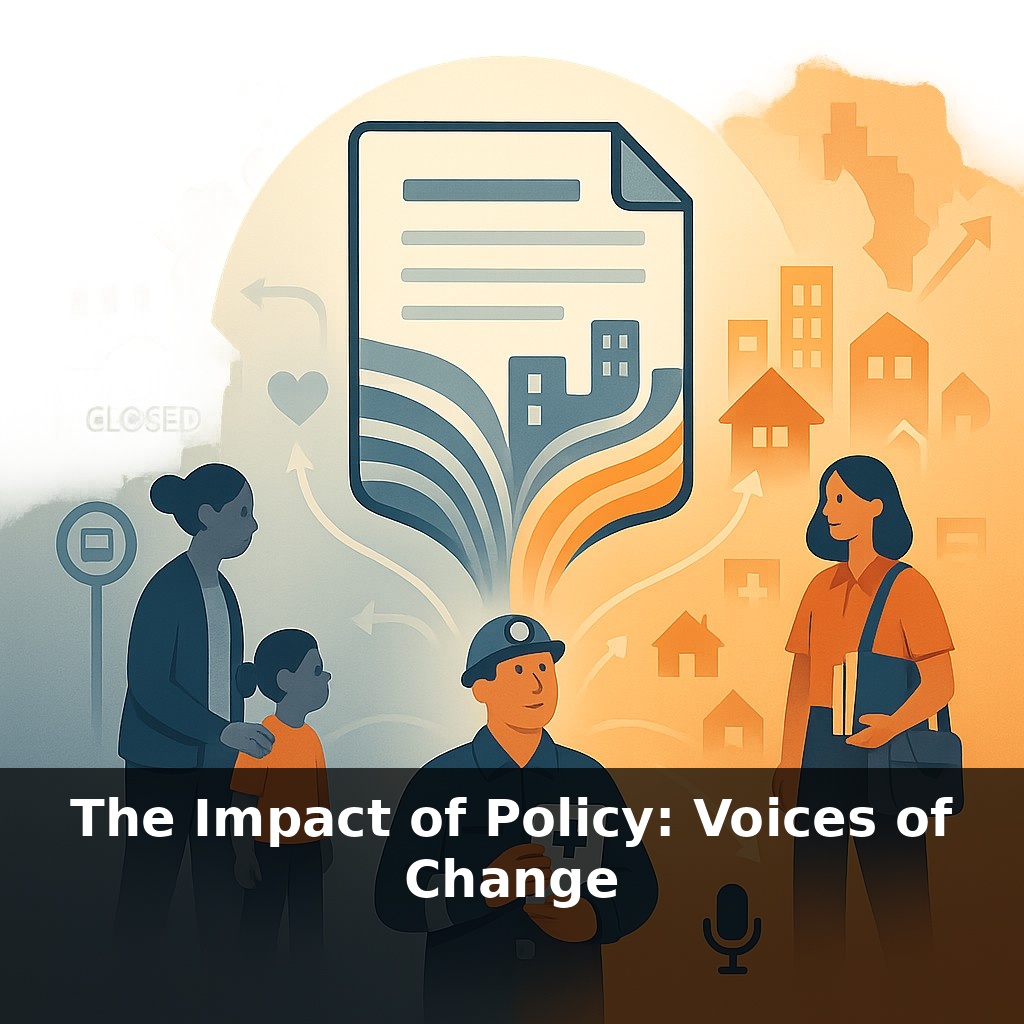
A caregiver in Detroit loses childcare when a state budget cut closes the center on her bus line. A laid-off coal miner in West Virginia gains health coverage through an expansion he never voted for. A young teacher in Phoenix sees her class size jump overnight after a tax cap squeezes school funding. None of them sat in the rooms where decisions were negotiated, yet each lives inside the consequences. That’s the quiet power of policy: it redraws daily routines long after the press conference lights switch off. Sometimes it’s as visible as a new bridge rising over a river; other times it’s as subtle as a shorter pharmacy line or a missing social worker. To understand inequality, we have to listen past charts and averages and tune into these individual storylines—where a line in a budget becomes a missed meal, a college acceptance, or a step out of generational poverty.
Listen closely and you can hear the hinge points: a scholarship rule that changes who can apply, a zoning vote that decides where the next grocery store goes, a tweak to unemployment benefits that determines whether a family can cover rent after a layoff. These choices rarely trend on social media, yet they quietly sort who waits, who walks, and who gets waved through. Some decisions are bold headline acts, others buried in technical language. But all of them stack over time, layer by layer, until they feel less like “decisions” and more like the way the world simply is.
A number on a spreadsheet can look tiny: a 0.5% change in a tax rate, a revised formula for school funding, a new eligibility cutoff for a childcare subsidy. Yet when you zoom in, that decimal point stretches across years of someone’s life. A 0.5% bump in payroll taxes might mean one less shift covered at a nursing home; a small increase in a housing voucher cap might be the difference between staying in a neighborhood with decent schools and getting pushed three bus transfers away.
Consider two teenagers, born on the same street, same year. One just scrapes above an income threshold for college aid; the other falls just below. To a budget office, the line is tidy and necessary. On the ground, it can mean one kid graduates without debt while the other juggles two jobs, takes fewer classes, and is more likely to drop out after a bad semester. Ten years later, the gap shows up as different résumés, different savings, different stress levels when a parent gets sick.
Scale this up and patterns emerge. Countries that use taxes and cash transfers more aggressively don’t just post lower Gini coefficients; their children are more likely to out-earn their parents. It’s not magic. Extra income support makes it less catastrophic to take a risk: starting a small business, moving for a better job, going back to school at 35. Places that underinvest in these buffers tend to see the opposite: people clinging to any job, any landlord, any arrangement that feels just secure enough not to lose.
Design details can amplify or dilute impact. A benefit that phases out slowly as earnings rise encourages people to pick up extra hours; one that drops off suddenly at a fixed cutoff can trap workers at just under that line. A minimum wage increase without enforcement is a headline; a smaller increase backed by real inspections and penalties can change paychecks in actual pay envelopes.
The politics matter too. When those most affected have the least time, money, or representation to push back, rules skew toward those already comfortable. Voices missing from the room don’t just lose abstract arguments; they lose concrete things: bus routes, clinic hours, safe playgrounds, quiet places to sleep before an early shift.
A former factory worker in Milwaukee spends evenings at a publicly funded coding bootcamp. The program didn’t exist five years ago; a state grant seeded it after layoffs spiked. Two bus rides and three months later, she’s debugging software instead of packing boxes. Across town, a landlord quietly upgrades old wiring because a revised housing inspection rule finally has teeth—and a real timeline. Tenants don’t cite statutes; they just notice fewer outages and lower fire risks.
In another city, a new “first-generation” college grant doesn’t change tuition, but it reshapes who fills lecture halls: older students, recent immigrants, parents with diaper bags under the desk.
Think of a basketball coach adjusting a playbook: one tweak in passing routes shifts who touches the ball, who takes the shot, who gets seen by scouts. Similarly, refinements to how aid is delivered, how complaints are processed, or how data is collected can move opportunity from the margins to the center without fanfare or headlines.
A city debating climate plans today is also sketching its future job map: who installs solar panels, who rebuilds flooded streets, who moves away. Automation rules do similar quiet drafting. A training stipend, a wage floor for gig work, or a data‑privacy shield can nudge tech from hollowing out neighborhoods to anchoring them. Your challenge this week: notice one local debate—about transit, zoning, or hiring—and trace who stands to gain in ten years, and who risks being erased.
Policy can feel distant, but its fingerprints are on rent notices, bus schedules, clinic wait times, and the hours your neighbor keeps at her second job. As new rules are drafted, the question isn’t only “what will this cost?” but “whose Tuesday morning will this rewrite?” Listening for those quiet edits is how numbers become stories—and leverage.
Start with this tiny habit: When you open a news app or social media, tap “save” on one local policy story that affects schools, housing, or healthcare in your area. Then, hit the share button and send that one story to a friend or family member with a short note like, “This could actually change things for us.” Each day, just repeat that with one policy story—no debating, no big research project, just noticing, saving, and sharing one concrete example of policy in real life.