 2min preview
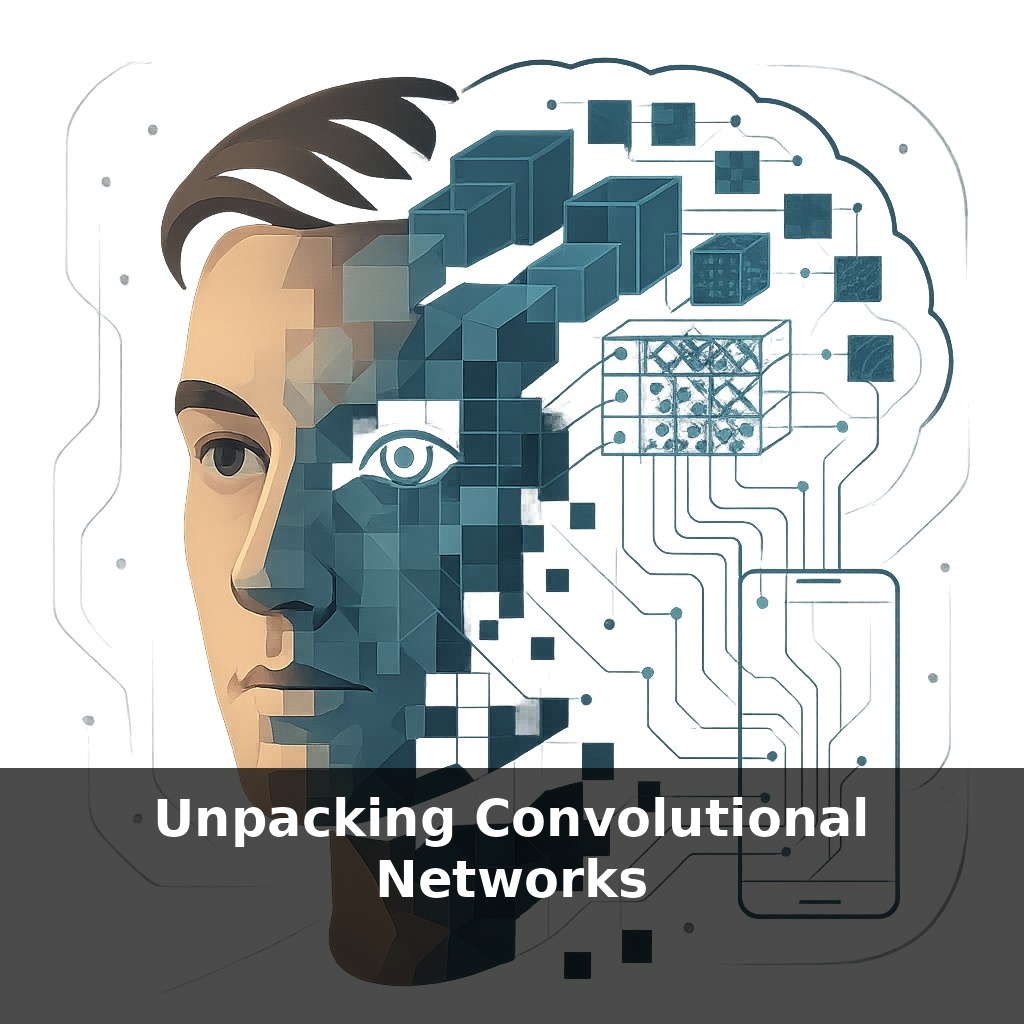
Unpacking Convolutional Networks
📝 Transcript
Your phone can recognize your face in less than a heartbeat, yet it has never “seen” you the way you have. In one glance, it picks out edges, patterns, and objects—layer by layer—without anyone telling it what an eye or a smile looks like. How is that even possible?
AlexNet’s 2012 ImageNet win didn’t just shave off ~10 percentage points of error; it quietly rewrote what “seeing” means for machines. Before that, many vision systems relied on hand-crafted features—engineers guessing which visual patterns might matter. AlexNet showed that, with enough data and smart architecture, networks could discover those features on their own and scale to millions of images.
That breakthrough opened the door to far more than cat vs. dog classifiers. Today, compact CNNs like EfficientNet-B0 can run serious vision models on a mobile CPU, powering on-device photo search, AR apps, and real-time translation overlays. In hospitals, CNNs moved from research papers to the clinic—IDx-DR became the first FDA-approved autonomous diagnostic system, screening retinal images for diabetic eye disease without a specialist in the loop. The same core idea now underpins everything from self-checkout cameras to quality control in factories.
Subscribe to read the full transcript and listen to this episode
Subscribe to unlockSubscribe for $1.99/month to unlock the full episode.
From this course
The Neural Network Mysteries: Under the Hood of AI
8 episodesUnlock all episodes
Full access to 8 episodes and everything on OwlUp.
Subscribe — $1.99/monthLess than a coffee ☕ · Cancel anytime

