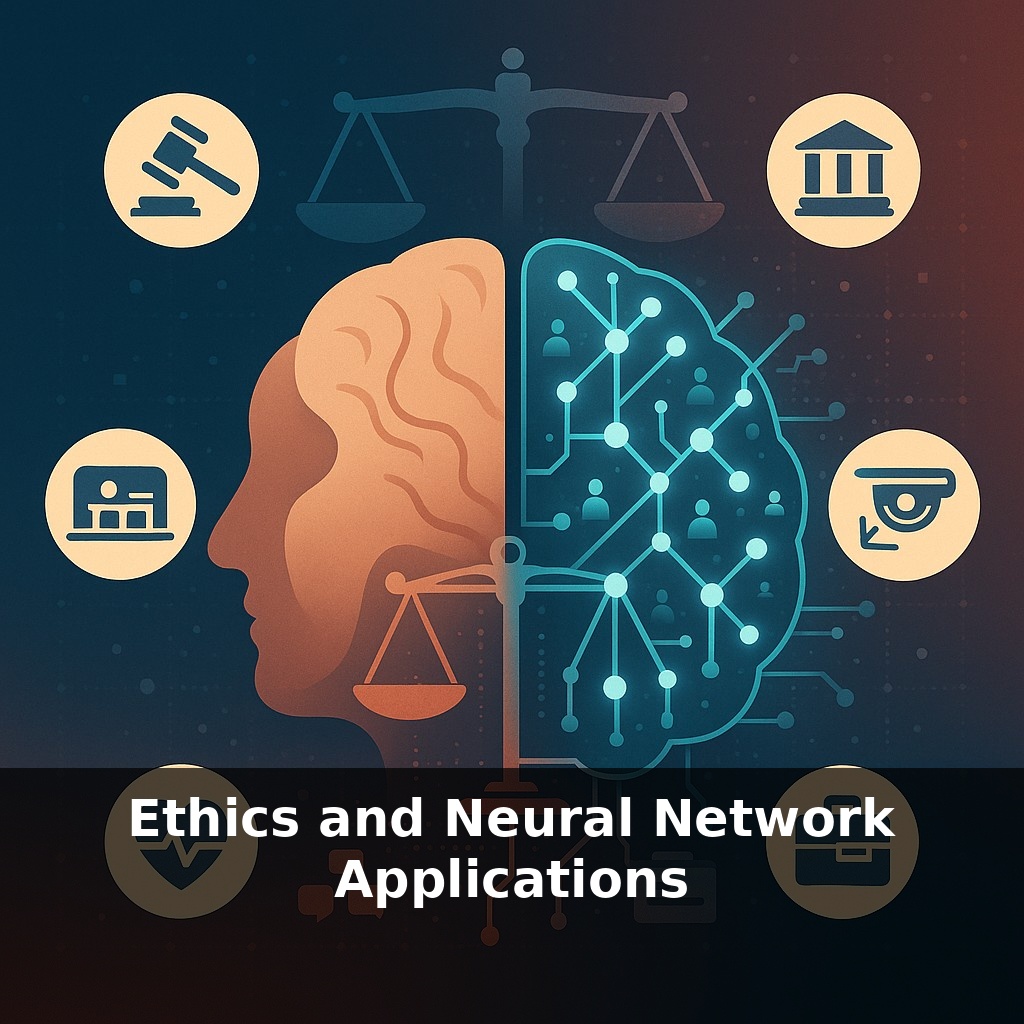
“Algorithms don’t just make mistakes,” one researcher warned, “they can make injustice look scientific.” A judge reads a risk score, a bank reviews your loan, a camera scans a crowd. Each trusts a neural network. Here’s the twist: the network learned its ethics from us.
A hiring portal quietly filters résumés. A hospital triage system whispers which patient to treat first. A content moderator hides one post and boosts another.
In each case, a neural network is making a call that feels technical, but its impact is deeply human. The catch: even when no one *intends* harm, bias can sneak in through skewed training data, sloppy deployment, or missing guardrails. And once these systems scale, their mistakes scale too.
Ethics here isn’t a final “safety stamp” at launch; it’s more like ongoing quality control in a high‑speed factory line—checking inputs, monitoring outputs, and updating processes as rules and norms evolve. Lawmakers are scrambling to catch up, regulators are drafting new standards, and organizations are discovering that “move fast and break things” can now mean “move fast and break people.”
When neural models move into courts, clinics, and credit offices, abstract debates harden into consequences. The COMPAS tool, for instance, labeled Black defendants “high risk” at nearly double the false‑positive rate of white defendants, shaping bail and sentencing in quiet, bureaucratic ways. Facial‑analysis systems misidentify dark‑skinned women far more often than light‑skinned men, yet may still be sold as “objective security.” At this scale, ethics becomes less about catching a few bad actors and more about redesigning an entire supply chain of decisions, from data sourcing to legal accountability.
A curious twist of modern AI is that the *same* architecture can either amplify unfairness or help expose it. Swap the data, the objective, or the feedback loop, and you can move from “rubber‑stamping discrimination” to “stress‑testing a system for hidden bias.”
At the technical layer, teams now track fairness the way they once tracked accuracy. Instead of asking only “How often is the model right?”, they slice performance by group: error rates by race, gender, age, income bracket, language. If one group consistently gets harsher predictions or more rejections, that’s a signal—not just about the model, but about the history baked into its examples.
Some practitioners go further and hard‑code constraints: “Don’t let approval rates for equally qualified applicants differ too much between groups,” or “Equalize false‑positive rates across demographics.” The trade‑off is real: tightening these constraints can reduce overall accuracy, or force uncomfortable questions about what “equally qualified” actually means in domains like credit or hiring, where past opportunity was itself uneven.
Then there’s interpretability. Instead of a sealed black box, organizations are pushing for tools that show *why* a decision tilted one way. Think of a bank interface that highlights: “Income stability and existing debt drove this decision most.” That not only helps auditors and regulators; it gives affected people a clearer path to contest or correct bad information.
Crucially, ethics isn’t just a coding problem. Governance frameworks like the EU AI Act or the NIST AI Risk Management Framework pull lawyers, domain experts, and community voices into the loop. They force questions that don’t show up in loss functions: Who can override the model? Who’s accountable when it fails? How will affected groups be heard if patterns of harm emerge?
Missteps are costly. A misbehaving hiring system might look like a harmless prototype—until regulators see a pattern of rejected candidates from a specific demographic and treat that as systemic discrimination. At that point, “we didn’t know” stops being a defense and becomes evidence of poor oversight.
Your challenge this week: pick one real‑world AI system you rely on (credit scoring, ad targeting, recommendation feeds, or automated screening at work). Trace its likely decision chain: Who sets its goals, who audits its behavior, and how would you even know if it treated one group consistently worse than another?
A food‑delivery app quietly updates its ranking model. Overnight, family‑owned restaurants sink below chain franchises because the system learns to favor “reliability” and “throughput” — metrics small kitchens struggle to optimize. No one wrote “down‑rank independents,” yet weekend traffic shifts, and a neighborhood’s culinary map is rewritten by a few lines of code.
In another corner of the economy, an insurer tests a neural model on telematics data: hard braking, night driving, neighborhood crime rates. A slight tweak — dropping postal code, capping how much risky‑area driving can influence premiums — turns a system that would have penalized entire communities into one that focuses more on individual behavior.
Think of the development process less like a single recipe and more like running a test kitchen: multiple versions simmering, each tasted by chefs, nutritionists, and health inspectors before anything reaches customers. The question isn’t just “Does it work?” but “Who does it work *for* — and at whose expense?”
As these systems spread into housing, healthcare, and labor markets, ethical choices start to look less like “nice‑to‑have” features and more like urban planning for the digital world. Invisible zoning decisions—where models are allowed, what human vetoes exist, which data sources are off‑limits—will quietly shape who gets access to opportunity. The open question is who gets a seat at that planning table, and how early they’re invited in.
In the end, the question isn’t “Can we trust the model?” so much as “Can we trust the people and institutions steering it—and will they let us look over their shoulder?” Treat each AI decision less like a sealed verdict and more like a draft contract: negotiable, reviewable, and shaped by the toughest negotiators we can invite to the table.
Try this experiment: Pick one neural network–powered tool you already use (like an AI coding assistant, a recommendation system, or an image generator) and run two deliberate “edge case” tests on it. First, feed it prompts that involve sensitive attributes (e.g., gender, race, age) and see how its outputs change when you only tweak those attributes—document any biased patterns you notice. Second, ask the tool to do something ethically questionable (like generating deepfake-style content or discriminatory hiring suggestions) and observe how it refuses or complies. Compare what actually happens with the ethical principles discussed in the episode (fairness, transparency, accountability), and decide one concrete way you’ll change how or when you use that tool based on what you observed.