In the United States, almost every state has tried to make protest harder in just a few years—yet movements keep popping up, again and again. A march is canceled, a leader burns out, funding dries up… and still, people regroup. How does that keep happening?
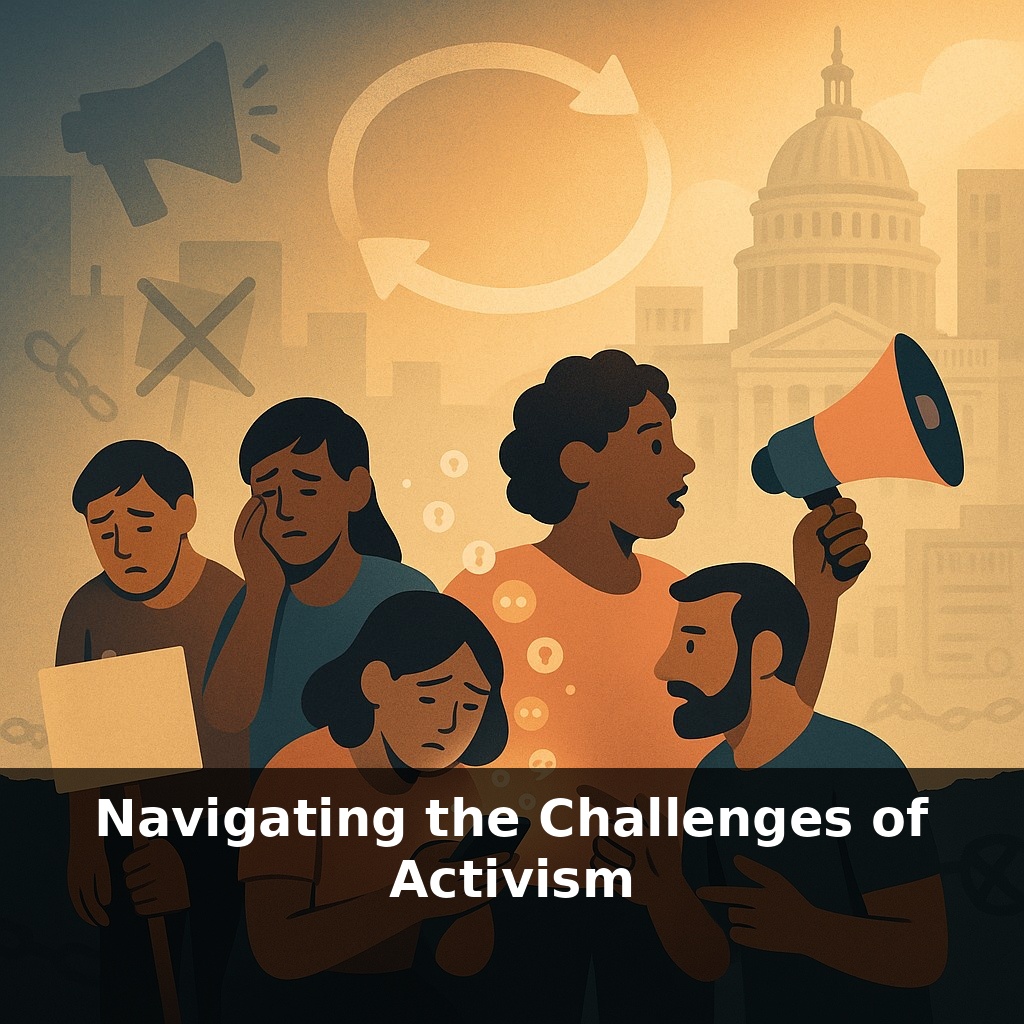
Laws tighten, permits get denied, trolls swarm your inbox, and somehow you’re still supposed to show up to the next meeting with a smile and a strategy. That tension between “keep going” and “I’m done” isn’t just personal drama—it’s a structural feature of activism. Since 2017, 45 U.S. states have floated bills to curb protest, while only a sliver of philanthropy—about 2%—goes to the kind of organizing that actually sustains long‑term change. Inside groups, it’s no easier: nearly four out of five activists in one study reported emotional exhaustion. Yet research by Erica Chenoweth suggests you “only” need active support from 3.5% of a population to tip the scales. So the real puzzle isn’t whether change is possible—it’s how people navigate this storm of pressure, scarcity, and fatigue long enough to reach that threshold.
So activists are working in a kind of double gravity: outside pressure bearing down, inside friction slowing every step. That tension shapes not just whether a movement wins, but *how* it behaves day to day—who gets heard, who leaves, who burns out quietly. Some groups respond by centralizing power and tightening discipline; others decentralize, spreading risk and responsibility through networks, mutual aid projects, and loose coalitions. The ones that last rarely rely on just passion or just strategy; they learn to treat logistics, care, and conflict like evolving practices rather than one‑time decisions.
When people talk about “movement strategy,” they usually mean big choices—march or boycott, hashtag or hunger strike. But the day‑to‑day craft of surviving those external and internal pressures looks much smaller and more ordinary.
On the *external* side, groups that last treat the political landscape like shifting weather, not fixed terrain. When a city cracks down on permits, they pivot to neighborhood‑level actions in church basements or parks. When online harassment spikes, they move key coordination to encrypted chats and in‑person meetings, using public feeds mainly for framing the story. Legal threats push some campaigns to build standing relationships with movement‑friendly lawyers, so they’re not scrambling only after someone is arrested. That kind of “pre‑lawyering” sounds unglamorous, but it quietly changes who feels safe participating—especially people already targeted by police.
The *resource* side is just as strategic. Because formal funding is scarce, enduring movements diversify. They mix small recurring donations, sliding‑scale events, and in‑kind support—childcare, rides, printing, food—so a single grant or donor can’t dictate direction. Some campaigns deliberately separate “money power” from “decision power”: funders get reports, not a steering wheel. Others build co‑ops or community enterprises whose profits underwrite organizing, trading short‑term capacity for long‑term autonomy.
Turning inward, groups that outlive their first wave of excitement treat burnout and conflict as design problems, not moral failures. They rotate high‑stress roles, pair newer organizers with experienced ones, and set hard limits: maximum numbers of nights out per week, mandatory off‑seasons, explicit sabbaticals after major pushes. Instead of waiting for relationships to fracture, they schedule conflict check‑ins—structured spaces to surface resentments before they explode on social media. Many movements borrow from transformative justice practices to handle harm without immediately exiling people or shoving issues under the rug.
Underlying all this is narrative. Enduring campaigns don’t just tell the public a story; they tell *themselves* one about why it’s okay to slow down, regroup, or change tactics without calling it defeat. That internal story—“we’re learning,” “we’re protecting each other,” “we’re building for the long haul”—is often what keeps people at the table when the wins are still far away.
A lot of this sounds abstract until you watch how groups quietly tinker with their own “settings.” One tenants’ union in Kansas City realized meetings were draining parents, so they shifted big decisions to Saturday potlucks with childcare and used weeknights only for quick check‑ins. Attendance went *up*, and so did follow‑through. A campus climate group noticed the same three people always ran media, so they capped any role at one semester and treated the handoff like a mini‑training. Output dipped for a month, then more people felt confident pitching stories, which mattered when a divestment push suddenly drew TV crews. Think of it more like revising a draft than “fixing” a broken organization: test a new meeting format for three weeks, try a different way of sharing information, replace one recurring task with a rotating buddy system—then keep what actually makes people more willing to stay in the work.
AI won’t just map opponents; it will also spotlight forgotten allies—like a neighborhood nurse with WhatsApp reach or a gamer who can secure servers between matches. Movements may treat digital safety drills the way coastal towns treat storm sirens: routine, slightly annoying, but lifesaving. As climate shocks and inequality collide, you’ll see “resilience hubs” that look like ordinary libraries or gardens on calm days, then quietly flip into command centers when crises hit.
When you zoom out, navigating activism looks less like charging a fortress and more like learning a coastline: tides of attention, storms of backlash, hidden coves of support. The next wave of organizers may study calendars as closely as ideology—tracking exam weeks, harvest seasons, even local sports finals—to time pressure so people can join without breaking.
Start with this tiny habit: When you open your phone in the morning, type the name of one grassroots group you care about into the search bar and screenshot a single specific need they’ve posted (like “we need court support Tuesday” or “we’re short on printing funds”). Then, when you plug in your phone to charge at night, look at that screenshot and say out loud, “Tomorrow I’ll support this by [sharing this post / sending $3 / showing up for one hour].” Keep the bar laughably low—one group, one need, one action you can actually imagine doing.