Only a tiny fraction of fast, viral movements are still alive a year later. The rest? Gone—like last week’s trending sound. A teenager skips school to march, a CEO signs a pledge, a lawmaker tweets support. Which of those moments actually echo decades from now—and why?
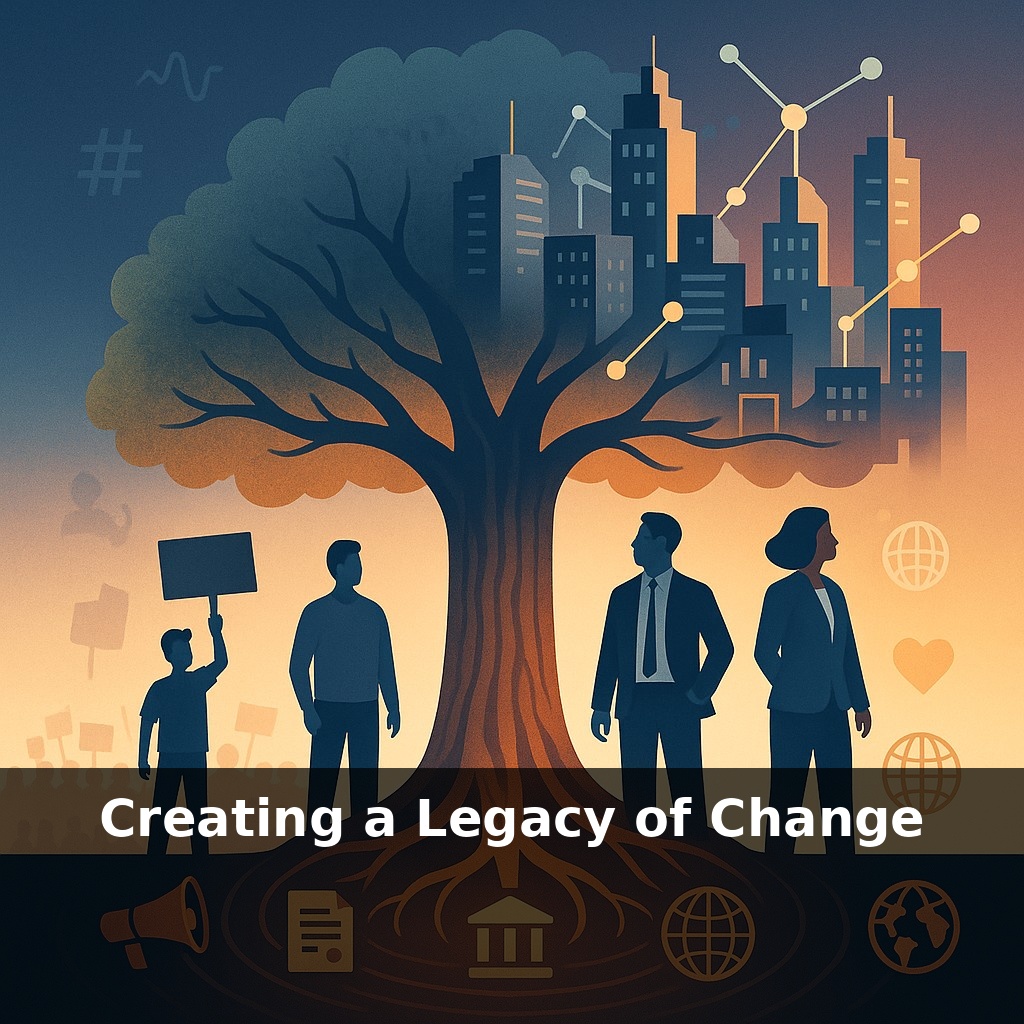
Some movements fade like a summer storm; others quietly rewire how a society works. The difference isn’t passion—there’s plenty of that in any uprising. The difference is what gets built *after* the chanting stops. Behind every “overnight” transformation you’ve heard about sits a web of boring but powerful infrastructure: legal teams drafting language no one will ever read in full, number-crunchers building budgets, elders training new organizers in cramped back rooms, storytellers reshaping how an issue shows up in movies, memes, and news.
Think of a campaign that changed your mind in the last five years. Did it leave anything behind—new laws, new habits, new institutions—or just a memory? In this episode, we’ll trace how fleeting sparks become durable architecture: from legal wins and steady funding to cultural shifts and leaderful, not leaderless, movements.
Some of the most durable shifts in history looked unimpressive in real time: dull committee meetings, draft documents passed back and forth, budget lines quietly redirected. That’s the unglamorous layer where change either hardens into structure or evaporates. The data is blunt: when energy doesn’t turn into something repeatable—rules, roles, resources—most efforts disappear within a year. So in this episode, we’ll zoom in on the “boring superpowers”: policies that outlive politicians, money that arrives even in slow news weeks, and norms that make backsliding socially expensive.
When researchers looked at hundreds of campaigns from the last few decades, they found a harsh pattern: if a surge of people doesn’t quickly attach itself to something durable—an organization, a budget, a legal strategy—it almost always withers. Only about 8% of “flash” mobilizations are still operating a year later. Energy is necessary, but it’s not a plan.
Resilient movements tend to do four quiet things well.
First, they translate demands into **specific rules and resources**. Not “better schools,” but “this law amended, this line in the city budget moved, this enforcement agency created.” The Civil Rights Act is often remembered as a moral victory; in practice, it was pages of enforceable obligations, penalties, and procedures that lawyers and local organizers could keep using long after TV cameras left.
Second, they **build containers for memory**. That can be a neighborhood group that keeps minutes, a youth fellowship that trains each new cohort, or a shared digital archive of tactics and stories. The point is inter‑generational handoff. Movements that last treat knowledge like common infrastructure, not personal property of the original founders.
Third, they **diversify where power and money come from**. When all funding depends on one donor, or all visibility on one influencer, a single scandal, death, or change of heart can erase years of gains. That’s why initiatives like the Ford Foundation’s BUILD program experiment with multi‑year, flexible grants: they’re betting that stability lets groups plan beyond the next news cycle.
Fourth, they **reshape incentives around them**. Cultural wins are not just vibes; they can change what’s profitable or embarrassing. If 64% of consumers say they’ll switch brands over social issues, then a successful movement doesn’t only lobby parliaments—it also makes certain corporate behaviors look outdated, risky, or uncool, pushing firms to align policies voluntarily.
A useful way to see all this is like planning a long train journey: the initial departure matters, but what really determines whether you arrive is the track you lay, the stations you build, and whether fresh crews can climb aboard when the first team is exhausted.
Think of how different groups “bank” their wins. Some, like early marriage‑equality organizers, didn’t stop at court victories; they spun up legal clinics, trained local volunteers to monitor implementation, and partnered with filmmakers so new narratives kept circulating long after headlines cooled. Others, like certain tenant unions, focused on buying buildings through community land trusts, so each battle over rent control also added a permanently affordable home to their portfolio. Fridays For Future channels part of its moral authority into climate lawsuits; disability‑rights organizers often target professional licensing boards, knowing a single rule change can quietly open thousands of jobs for decades. Even fandom communities offer clues: K‑pop fans didn’t just trend hashtags—they built translation teams, fundraising squads, and voting guides that survive each comeback cycle. The through‑line: every action is asked, “What does this leave behind that a stranger can use five years from now?”
Future legacies may be designed less like monuments and more like open‑source projects: anyone can fork, adapt, and extend them. As AI makes it easier to scan draft laws, map power, and simulate outcomes, small groups can play at “expert” scale—if they also defend their data, protect identities, and share tools across borders. Intersectional coalitions will likely become the norm, so the change you seed in one arena could quietly unlock doors in three others.
Legacy isn’t a statue; it’s closer to a shared playlist that others keep editing. The test isn’t how loud your moment gets, but how easy it is for strangers to add their own verse. When you back a cause, ask: am I funding a single concert, or helping build the venue, teach the instruments, and publish the sheet music for whoever plugs in next?
Here’s your challenge this week: Choose one issue you genuinely care about (like youth mentorship, local climate impact, or workplace equity) and schedule a 30‑minute “legacy conversation” with one person who could join you in changing it—actually put it on the calendar today. In that conversation, share one concrete change you want to be remembered for (e.g., “funding 10 scholarships a year” or “cutting our office waste in half”) and ask them to commit to a specific role in making it happen. Before you hang up or leave, agree on one visible action you’ll both complete within 7 days (such as contacting a specific community group, drafting a pilot program, or setting up a meeting with a decision‑maker) and lock in a date to check back in.