Right now, roughly four-fifths of the world’s energy still comes from fossil fuels. Yet countries keep talking about “green transitions” and “energy independence.” So here’s the puzzle: how can a nation be both deeply dependent on old fuels and strategically free at the same time?
Here’s where the real power game begins: access and control. It’s not just *what* energy a country uses, but *who* it depends on to get it, on what terms, and at what price. Think of two neighbors sharing a single Wi‑Fi router: the one who owns the router sets the password, the rules, and can pull the plug at any time. The other might have the same laptop, the same skills, even the same ambitions—but far less freedom online.
Now scale that up to oil chokepoints, gas pipelines, rare earths, and high‑voltage grids. Suddenly, energy isn’t a technical issue; it’s a map of leverage and vulnerability. And once you lay that map on top of trade flows, currency strength, and debt levels, you start to see why some states can defy sanctions or crises—while others fold quickly when the “router” starts to flicker.
Energy starts the story, but money decides how long it can run. A state with deep capital markets, stable banks, and trusted institutions can soak up price spikes, finance new import routes, or pour billions into renewables without collapsing. A weaker one sees the same shock turn into inflation, currency crashes, or street protests. This is why control over energy routes like Hormuz matters far more to countries whose budgets and trade balances swing with every dollar move in oil. The same barrel hurts differently depending on how strong your economic “shock absorbers” are when the hit arrives.
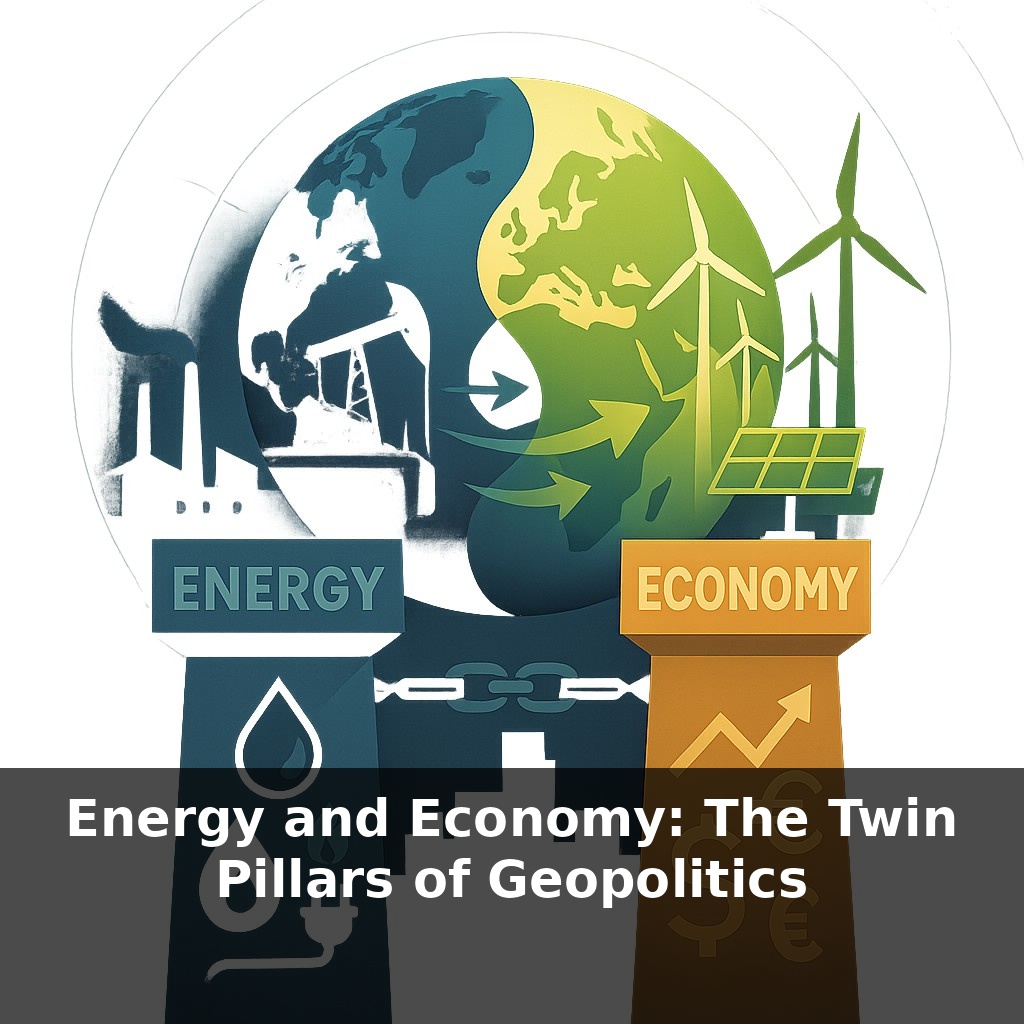
Start with a simple but uncomfortable fact: energy shocks almost never stay “in the energy sector.” They leak into food prices, rents, wages, interest rates, and even election results. That’s because the energy system and the economy aren’t two parallel tracks; they’re more like a tightly coupled machine where pushing one gear immediately strains the others.
Take a high‑importer economy hit by a sudden oil price spike. First, its trade balance worsens: more foreign currency going out to pay for fuel. To defend its currency, the central bank might raise interest rates. Higher rates cool investment and hiring just as transport and heating bills rise. Households cut back, firms delay projects, and government tax revenues soften. A shock that started in tankers and pipelines ends up shaping mortgage costs and job offers.
Now flip the scenario. A country with strong public finances and deep capital markets can borrow cheaply to cushion that same spike—through fuel subsidies, cash transfers, or faster investment in alternatives. It’s not that the shock vanishes; it’s that it’s absorbed and redistributed over time. Think of smart software throttling processor use to stop a laptop from overheating: the total energy demand is similar, but the system avoids a crash.
This is why some petrostates look powerful on paper yet remain fragile. When oil and gas make up most export revenue and fiscal income, price booms bring windfalls—but also tempt leaders to delay diversification, overpromise social spending, and tolerate corruption. When prices fall, they face budget holes, youth unemployment, and, at times, unrest. The “resource curse” is less a mystical fate than an economic structure that ties state stability to commodity cycles.
By contrast, energy‑importing countries that invest early in efficiency, diversified supply, and innovation can turn exposure into bargaining power. Japan has few hydrocarbons yet became a global player by mastering liquefied natural gas contracts, fuel‑efficient technologies, and high‑value manufacturing that earns the foreign currency needed to buy fuel on its own terms.
In practice, geopolitical weight comes from this loop: energy choices shape economic resilience, and economic choices determine how painful—or strategic—those same energy choices become.
When Europe scrambled to replace Russian gas after 2022, it wasn’t just about finding new molecules; it was about who could afford to outbid others. Germany could tap deep bond markets to finance emergency LNG terminals. Pakistan, facing dollar shortages, had to accept blackouts when spot cargoes went to higher bidders. Both saw the same global price—but their economic “shock absorbers” weren’t remotely alike.
Think of it like cloud computing: firms with cash and credit can instantly scale up servers in a crunch, while smaller players must ration capacity and accept downtime. Similarly, China spends heavily on electric rail, solar, and strategic stockpiles not only for climate reasons, but to trim exposure to sea‑lane disruptions. Meanwhile, Gulf states invest oil proceeds into sovereign wealth funds and global real estate, trying to turn exhaustible fuel income into diversified, interest‑earning assets that still generate influence when the wells decline.
Data centers could become the new factory chimneys of geopolitics: silent, power‑hungry, and clustered where electricity is cheapest and most reliable. As grids strain, governments may court “AI investment” the way they once chased car plants, trading tax breaks for guaranteed capacity. At the same time, states rich in lithium, cobalt, or rare‑earths can behave less like raw‑material suppliers and more like tech gatekeepers, nudging buyers into long contracts that quietly reshape alliances.
Geopolitics, then, is less a chessboard and more a balance sheet in motion: kilowatts, currencies, and supply chains constantly re‑priced by shocks and inventions. As grids digitize and finance chases “secure” projects, quiet choices—where to lay cables, who funds ports, which metals get recycled—become fault lines. Your challenge this week: follow one energy headline and trace how it touches jobs, prices, or local politics where you live.