An airstrike hits a small border town, and within months grocery prices rise in cities a continent away. A fishing boat is seized in disputed waters, and global shipping routes quietly shift. Conflicts that start “over there” rarely stay put. They redraw maps we all live inside.
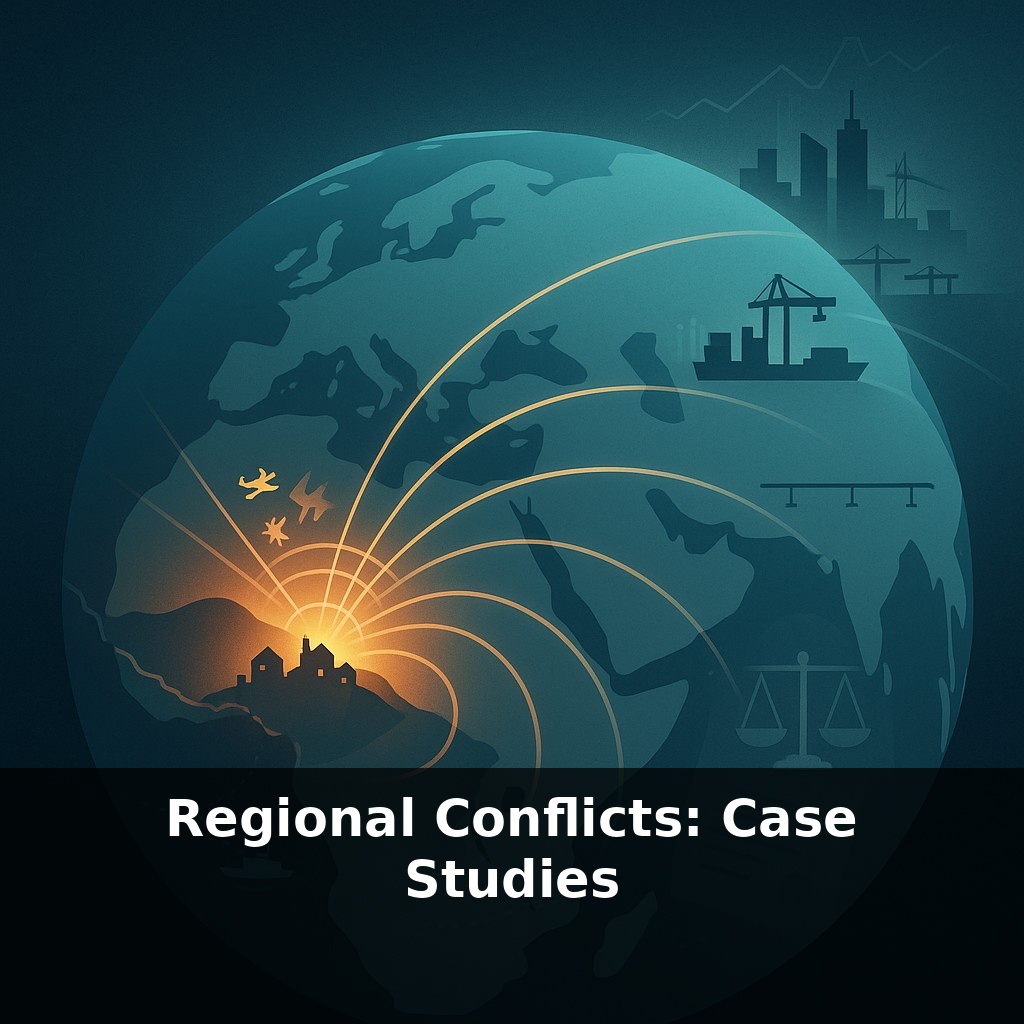
A border clash in one valley. A legal ruling about rocks in distant waters. A drone strike over a disputed hillside. Each looks small, even local, when you zoom in. But pull the camera back and they sit on top of energy corridors, rare‑earth deposits, fiber‑optic cables, and migration routes that millions rely on without thinking. That’s why regional conflicts so often act like a hidden “bug” in the operating system of globalization: a minor line of bad code that can crash programs far away from where it was written. In this episode, we’ll track how three flashpoints—Syria, the South China Sea, and Nagorno‑Karabakh—turn grievances rooted in history and identity into pressures on supply chains, alliances, and even domestic politics in countries that never fire a shot.
Think of each hotspot we’ll explore as a crowded crossroads where too many agendas try to pass at once. Local leaders are jockeying for survival, neighbors are watching their borders, great powers are counting votes in the UN and tankers in nearby sea lanes. Add in arms dealers, energy firms, militant groups, and humanitarian agencies, and you get a kind of geopolitical traffic jam: everyone tapping the brakes, some slamming the accelerator, no one fully in control. Our task is to slow this scene down enough to see who’s steering what, and why the jam keeps returning.
Call up Syria, the South China Sea, and Nagorno‑Karabakh on a map and you’ll see three very different landscapes. But underneath, they follow a similar four‑step script.
First, there’s a local trigger hitting a weakened state. In Syria, protests met with repression cracked open long‑standing grievances about corruption and exclusion. In Nagorno‑Karabakh, the collapse of the Soviet “lock” on borders revived unresolved claims between Armenia and Azerbaijan. Around the South China Sea, domestic nationalism and coastal development sharpened disputes that had simmered for decades. None of these sparks would have burned so hot without hollowed‑out institutions, economic stress, and elites competing for survival.
Second, outside players move in. Some arrive with treaties and alliances, others with covert arms shipments, investment deals, or naval patrols. Iran, Russia, Turkey, Gulf states, Western governments, and non‑state actors all layered their own bets on top of Syria’s battlefield. In the South China Sea, the US, Japan, ASEAN states, and European navies signal interests via “freedom of navigation” operations and defense pacts. Turkey’s provision of Bayraktar drones to Azerbaijan in 2020 wasn’t charity; it was a calculated bid to expand influence and test weapons in live combat.
Third, the conflict spills past its borders. Millions of Syrians on the move reshaped politics from Lebanon to Berlin. Fisheries tensions in the South China Sea push fleets into new waters, colliding with neighbors’ livelihoods. Armenian and Azerbaijani diasporas lobby in Paris, Washington, and Moscow, pulling distant capitals into local narratives.
Finally, any durable settlement has to do two things at once: rearrange local power and reassure outsiders. Ceasefires that ignore refugee return, minority rights, or economic reconstruction are brittle. So are deals that disregard how energy reserves, trade lanes, or defense commitments bind in external actors. The hard part is aligning these layers so that local communities feel they’ve gained a stake in peace, while regional and great powers decide that restraint pays better than escalation.
Your challenge this week: pick one current regional flashpoint in the news and, for three days, trace every external actor mentioned—states, companies, militias, or NGOs. Map who supports whom, what each side wants, and how those goals might clash or overlap. By the end, see if you can sketch a plausible peace deal that would satisfy at least three different actors without simply freezing injustice in place.
Think of these conflicts like a messy software stack: the “app” you see is fighting on the ground, but underneath are layers of code written by arms suppliers, energy traders, and treaty designers. In Syria, a town’s frontline might shift because diesel prices changed after a border crossing was bombed, reshaping which militia can pay fighters this month. In the South China Sea, a single new radar installation can nudge insurance companies to quietly raise premiums on nearby routes, pushing shippers to detour even before any navy fires a shot. In Nagorno‑Karabakh, what looks like a simple ceasefire line doubles as a testbed for new military tech; defense firms watch closely, then market “combat‑proven” systems to other governments. None of this shows up in headlines about talks and truces, yet these quieter incentives—profit, risk, reputation—silently reward some escalations and punish others, making it harder for purely moral appeals to carry the day.
Future conflicts may pivot less on territory and more on data, algorithms, and infrastructure access. Drone swarms, AI‑assisted targeting, and deepfake propaganda let smaller players punch above their weight, while private firms quietly become essential gatekeepers. Think of tech platforms deciding whose footage is seen, insurers pricing in cyber‑risk, or satellite operators choosing which images to release: each tiny policy tweak can tilt negotiation leverage, like subtle rule changes shifting a game’s entire strategy.
When you scan headlines now, try reading them like weather reports: today’s skirmish is a pressure change, today’s sanction a shifting wind. None means a storm on its own, but patterns matter. Over time, you’ll start to see not just where power is used, but how it’s wired—and where small, smart restraints might quietly matter most.
Before next week, ask yourself: Where in the case studies (like the Balkan wars, the Syrian civil war, or the Nagorno-Karabakh conflict) did outside powers’ involvement clearly escalate violence—and can I map one concrete present-day situation where similar patterns might be emerging? When I look at the root causes discussed (ethnic tensions, colonial borders, resource competition), which one do I see most clearly mirrored in a current regional flashpoint I follow, and what specific news sources or voices from the region can I check today to confirm or challenge that impression? If I had to brief a friend in 3 sentences on why one of these conflicts didn’t end when the main peace agreement was signed, what would I say—and what’s one detail from the podcast I’d need to look up again to explain it accurately?