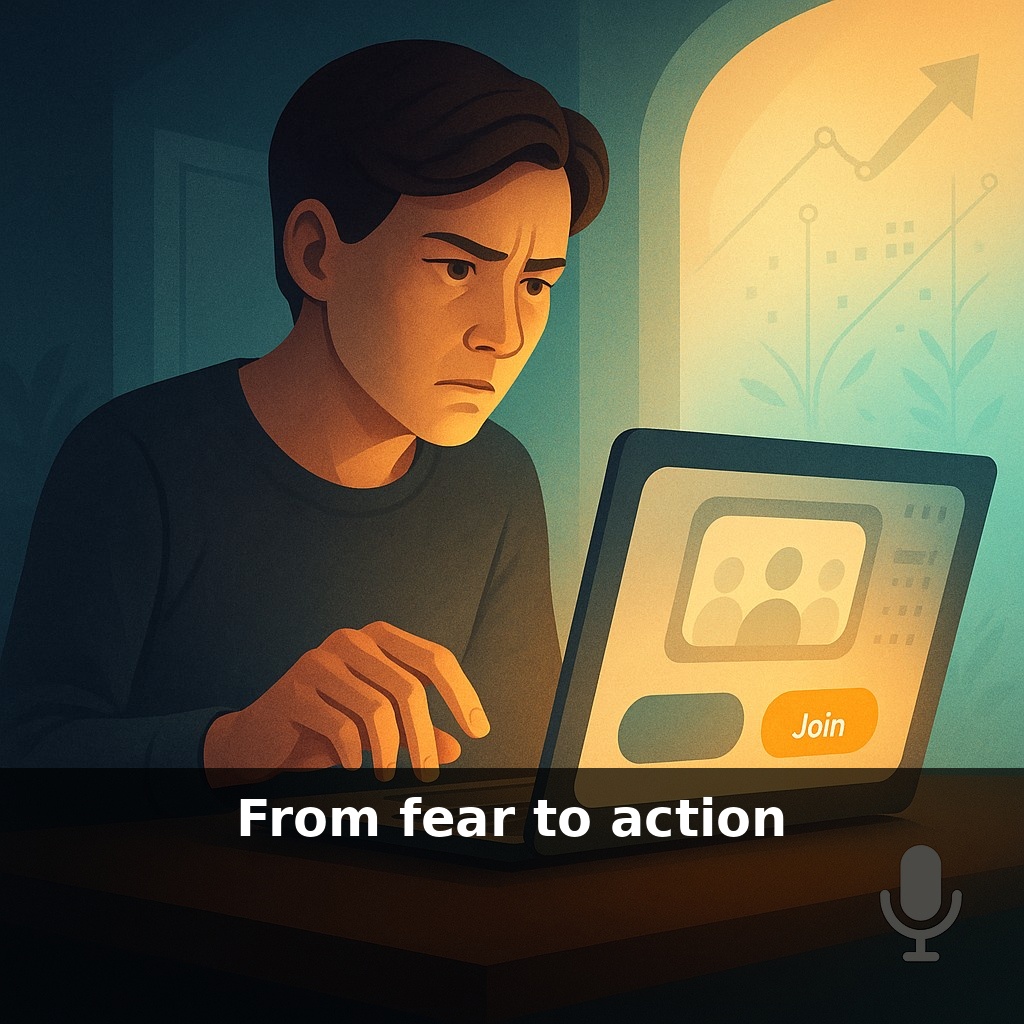
Alex’s name is already on the calendar invite. Their cursor hovers over “cancel” as their heart slams in their chest. They know this promotion talk could change everything—and they’re seconds from backing out. Here’s the real question: are you still waiting to feel braver before you move?
Alex doesn’t cancel. They click “Join,” feeling like they might throw up—and still, that tiny act pulls them into a different future. This is the pivot point most of us miss: fear isn’t the signal to stop; it’s the signal that you’ve reached the edge of who you’ve been so far.
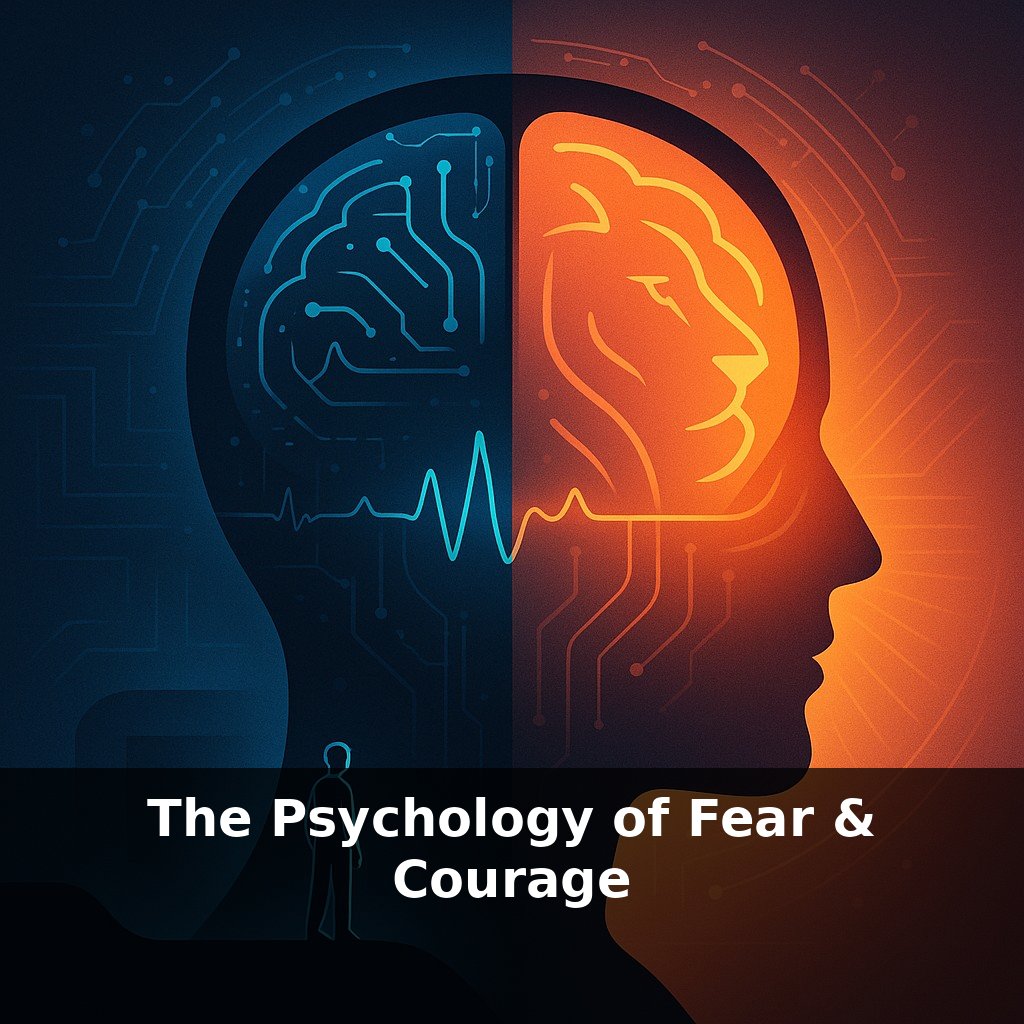
Modern neuroscience backs this up. Your amygdala fires fast, but you get a crucial few hundred milliseconds before your conscious mind decides what to do with that alarm. High performers—from emergency physicians scrubbing in for a risky surgery to founders about to hit “publish” on a public launch—don’t wait to feel fearless. They build micro-rituals: a single sentence they say to themselves, a breathing pattern, a pre-written plan that turns “I’m scared” into “here’s my next move.”
Fear shows you where the stakes actually matter. Action—especially small, structured action—is how you claim that territory instead of surrendering it.
Fear also sharpens attention. That tight chest before a hard conversation? It’s your brain flagging, “This moment matters—don’t go on autopilot.” A nurse double-checking a dosage after a jolt of worry, or a founder re-reading a critical email before sending, are using fear as a built-in highlighter. And when you deliberately pair that highlight with structure—like an implementation intention (“If I feel my throat close up in the meeting, I’ll ask one clarifying question”)—you turn raw alarm into a cue for precise, useful behavior instead of retreat. Fear points; your plan decides where you move.
High performers don’t just “push through” fear; they design with it.
Consider three very different arenas.
First, a trauma surgeon in training. In simulation labs, hospitals don’t wait for a real disaster to test new doctors. They crank up the pressure on purpose: fake blood, alarms, actors screaming. The goal isn’t sadism; it’s wiring a new association. The body still floods with adrenaline, but repeated, graded exposure pairs that surge with clear protocols: check airway, call for blood, re-assess. Over time, the same physical fear begins to predict competent action instead of freeze-or-flee. That’s neuroplasticity in real time: the brain learning that “this feeling means I start my routine.”
Second, a startup founder terrified of investor meetings. One founder I worked with didn’t try to “feel confident.” She built a fear-specific process. Step 1: the night before, she wrote down the three questions she most dreaded. Step 2: she recorded herself answering each in under 60 seconds. Step 3: she watched the video once, not to criticize, but to tweak one thing—tone, posture, or clarity. Each round gave her nervous system a new imprint: anxiety shows up, I know what to do next. Investors noticed the difference long before her fear vanished.
Third, a performer battling stage fright. Musicians in elite orchestras now use heart-rate-variability biofeedback between rehearsals and concerts. They literally watch their stress pattern on a screen while practicing calming techniques, teaching their body that it can return from redline to readiness. The next time fear spikes backstage, their system has already rehearsed the recovery.
Across domains, the pattern is the same: fearful situations are broken into smaller, repeatable units. Each unit gets its own “when X, then Y” response, practiced enough times that the brain upgrades the story from “danger = stop” to “danger = execute protocol.”
You don’t have to operate in an ER or on a stage to use this. Any domain where fear keeps you stuck—money, relationships, health, creative work—can be treated like a training ground. The question shifts from “How do I get rid of this feeling?” to “What specific move do I want this feeling to trigger?”
A software engineer I coached dreaded code reviews. Each “Request changes” felt like a verdict on their worth, so they delayed opening feedback until deadlines loomed. We built a tiny experiment: every time a review notification appeared, they’d open it within 10 minutes and only look for one thing—the *first* line they could improve immediately. No debating fairness, no spiraling; just one concrete fix. Within a month, the dread shifted into a grudging readiness: review ping = fastest chance to level up today.
A therapist described a similar pivot with a client afraid of dating after divorce. Instead of aiming for “Find a partner,” they set a narrow rule: any time anxiety spiked while scrolling profiles, she’d send *one* low-stakes message (“Nice dog—what’s its name?”) before closing the app. The messages weren’t magic. The rule was. Fear became the starter pistol, not the stop sign.
Like a musician using a difficult passage to refine technique, you can let every jolt of fear mark the exact bar where you practice your next deliberate move.
Building on that, here’s the deeper shift: when you keep pairing fear with a specific move, your brain quietly rewires its expectations. Fear stops predicting shutdown and starts predicting motion. Over months, that means fewer stalled evenings replaying worries, and more “I did the thing even though my chest was tight.”
Have you noticed how that changes your self-story?
Alex, a few months in, no longer thought “I hate conflict,” but “I’m the person who speaks up even when my voice shakes.” That’s the real transformation: not a life without fear, but a life where fear no longer gets the final vote.
Building on that identity shift, let’s zoom out. Fear isn’t leaving; it’s your built‑in alarm and power source. Your loop is simple: Identify, Reframe, Plan, Act, Review.
Your challenge this week: pick one thing you’ve been avoiding. Today, only do steps one and two—name the fear, then rename it as a signal of what matters—and put a time on your calendar for the rest.
When fear spikes, replay this episode and walk through it in real time.
So here’s the question to leave echoing in the back of your mind: if fear isn’t a problem to erase but energy to aim, who are you willing to become this week?