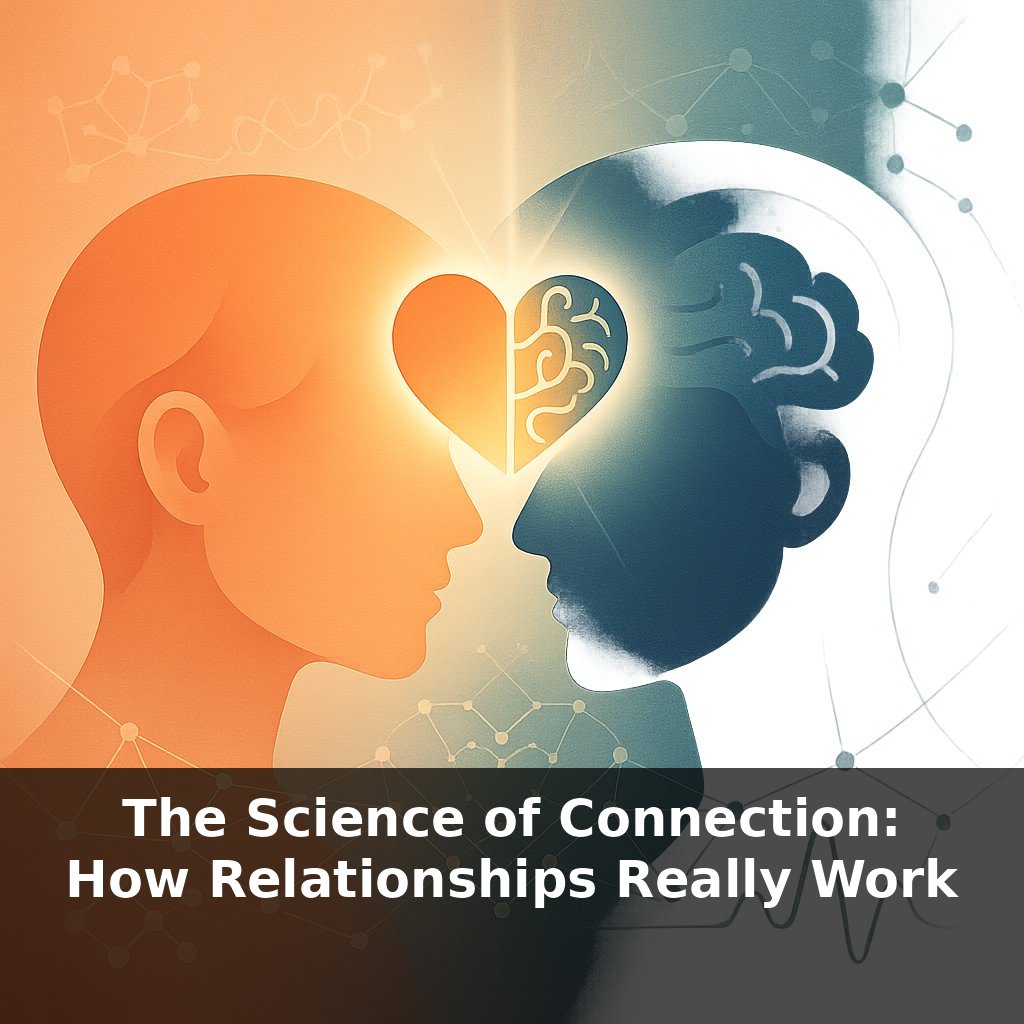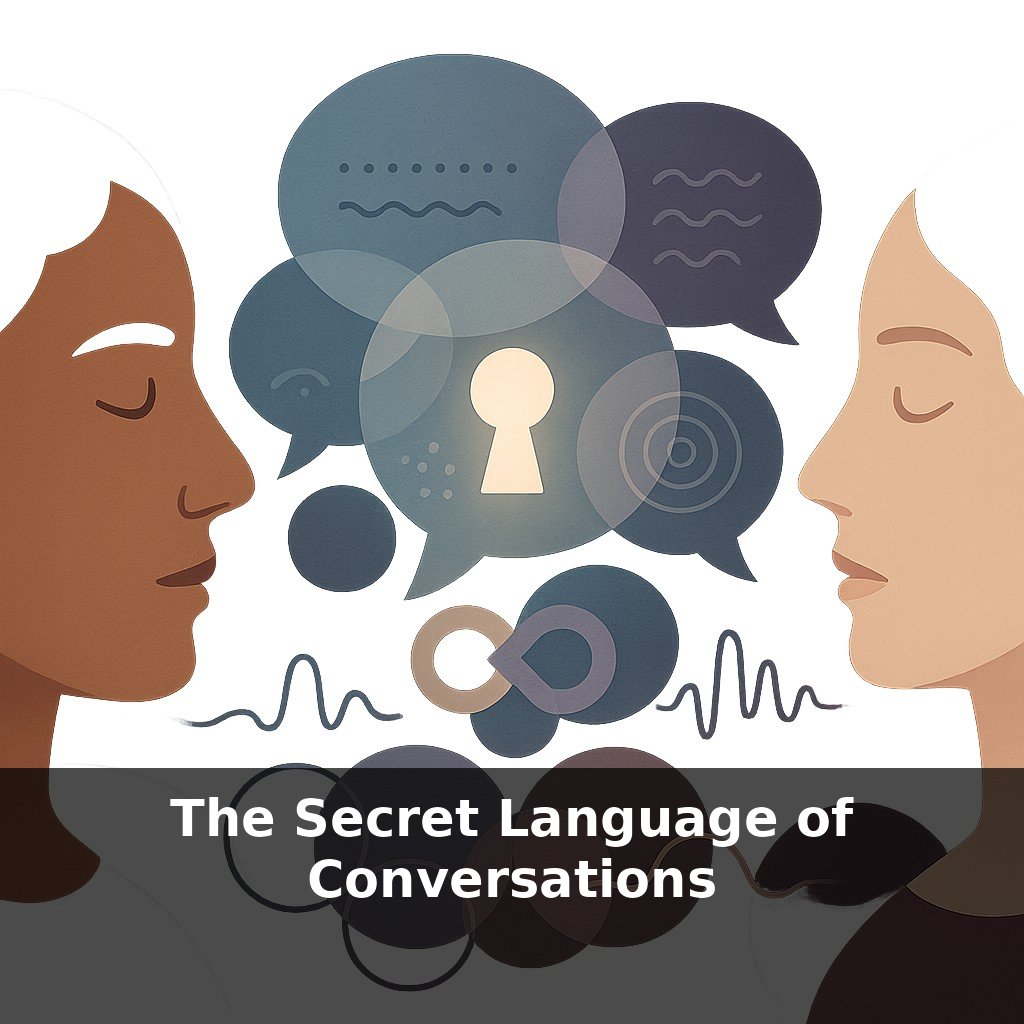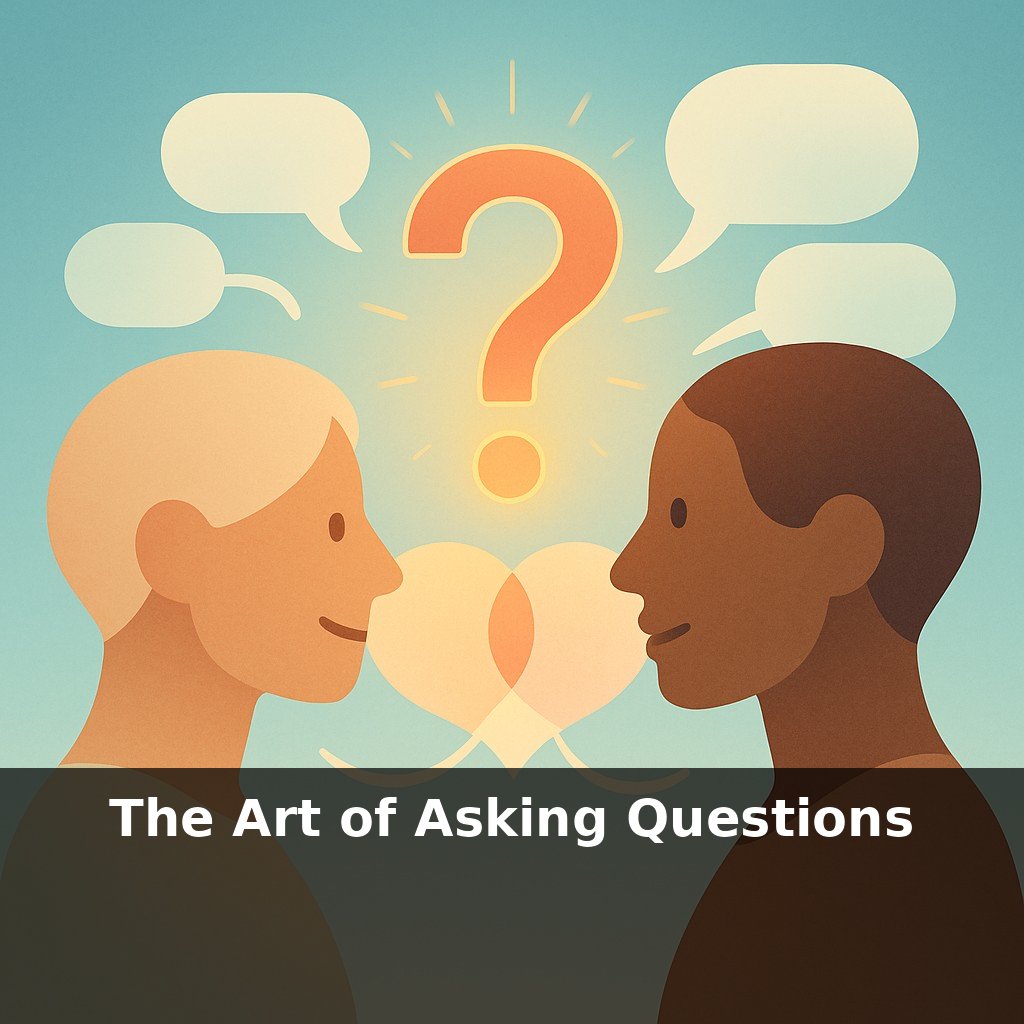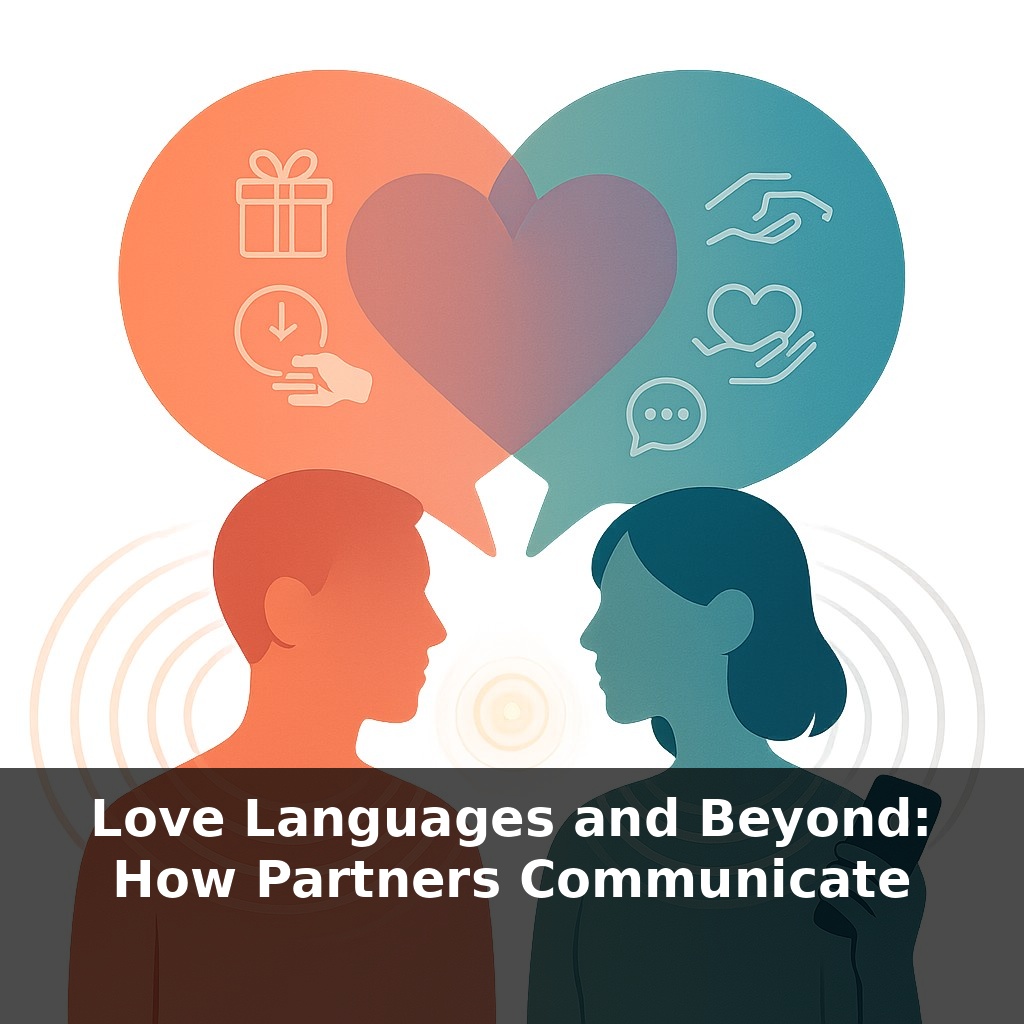
About half of long-term couples are secretly speaking different “love languages”—and most have no idea. One partner plans a rare date night, the other folds all the laundry. Both feel unappreciated. They’re loving loudly, but on different channels. Why does this mismatch matter so much?
“Turning toward” a tiny bid for attention—like answering a partner’s random meme or half-asleep comment—predicts long-term relationship survival better than sharing the same hobbies or personality type. That’s the level of detail real relationship science zooms in on.
In this episode, we’re going beyond the popular idea of love languages and into how partners actually *decode* each other in daily life: attachment style, emotional regulation, and those small, easily-missed signals that say “are you here with me?” A partner with an anxious history might need quicker reassurance; a more avoidant partner might love you fiercely but show it indirectly. When these patterns collide, even genuine care can feel like criticism, distance, or indifference. The goal isn’t to perform the “perfect” language, but to become better translators for each other over time.
Psychologists find that it isn’t just *what* you do to show love, but *when* and *how consistently* you do it that shapes trust. Partners constantly send out micro-updates—tone of voice, eye contact, how fast they text back, whether they stay curious in conflict. Over time, these tiny patterns add up like a relationship “credit score”: generous responses build emotional capital, while dismissive or distracted replies create quiet debt. Even strong couples can get in trouble when stress, burnout, or old habits start to override their good intentions, and those signals get scrambled.
“Matching love languages matters, but it’s only a modest piece of the puzzle,” notes researcher Rebekah Williamson, whose 2022 meta-analysis found only a medium-sized link between language match and satisfaction. That r≈.30 means there’s plenty of room for other forces: whether you respond during conflict instead of shutting down, how quickly you repair after a fight, whether you can stay curious when your partner is upset with *you*.
Think of three overlapping layers. First, there’s preference: which gestures land most deeply for each of you right now. Second, there’s interpretation: the story your brain tells about *why* your partner did—or didn’t—show up in a particular way. Third, there’s responsiveness: how flexibly each of you adjusts when the other is stressed, tired, or in a different season of life.
That middle layer—interpretation—is where many couples quietly derail. The same behavior can mean opposite things depending on the story attached to it. One person receives a practical favor and thinks, “They’re taking care of me.” Another thinks, “They didn’t even look at me; I must not matter.” Over years, these private translations harden into assumptions: “You never appreciate me,” or “Nothing I do is good enough.” The behavior may not be the problem; the *meaning* is.
Healthy partners get very explicit about decoding. Instead of guessing, they ask things like, “When I did X, what did that mean to you?” or “When you said Y, what were you hoping I’d feel?” They also treat preferences as moving targets. A new baby, illness, job loss, or big promotion can flip what feels loving or overwhelming. The person who once craved long talks might, for a while, value logistics help and less input.
Research on “bids for connection” shows that satisfaction rises when couples respond not just to *content* (“I had a rough day”) but to the *need underneath* (“Can you be on my side for a minute?”). That skill combines perspective-taking—remembering your partner’s inner world—with emotional self-control so you can stay engaged even when you’re tired, triggered, or tempted to win the argument instead of protect the bond.
Your challenge this week: For the next 7 days, notice one moment per day when your partner does *anything* that could be a caring gesture—even if it’s not in your favorite style. Briefly name the care you see out loud, in your own words (for example, “I see you trying to make my evening easier”). You’re not judging if it’s the “right” gesture; you’re practicing catching and translating the positive intent in real time.
A useful way to spot your own “decoding style” is to look at how you respond when you’re slightly irritated, not when you’re at your best. Your partner sighs while scrolling; do you assume they’re bored with you, worried about work, or just decompressing? Each interpretation suggests a different internal script—and leads to different behavior. Someone who tends to assume “I’m in trouble” might rush to fix, apologize, or withdraw. Someone who assumes “they’re overwhelmed” might offer practical help or quiet company. Over time, these micro-choices create a pattern of either tension or safety.
Think of it like updating an app’s default settings. Most of us run on old defaults from earlier relationships or family life: maybe “criticism is coming” or “no one will really show up for me.” The work now is noticing those presets and asking, “Does this fit *this* partner, today?” Couples who do well don’t eliminate those old scripts overnight—but they learn to question them out loud and co-create new ones.
As wearables get better at reading stress and calm, they might flag moments when your partner’s “I’m fine” clashes with their racing heart or tense jaw. Apps could then suggest tiny, tailored check-ins—like a quiet text or a 2‑minute debrief—based on your patterns as a couple. Think less “robot coach” and more like a highlighter for chances you usually miss, especially when routines are packed and both of you tend to go on emotional autopilot. The risk: outsourcing curiosity instead of deepening it.
When partners treat communication as an ongoing craft project rather than a fixed trait, the relationship stays more flexible and less brittle. Instead of asking “Do we fit?” they ask “How are we evolving?” Tiny check-ins—like tweaking a recipe—let you adjust for new stress, new dreams, and new fears, so the bond grows with you instead of quietly aging in place.
To go deeper, here are 3 next steps: (1) Take the free official 5 Love Languages quiz (5lovelanguages.com) separately from your partner, then swap results and each highlight one concrete behavior you’ll do this week (e.g., “I’ll plan a no-phones dinner Wednesday for quality time”). (2) Together, listen to Esther Perel’s podcast episode “How’s Work? – The Couple That Works Together” and pause once to answer her signature questions out loud to each other: “When do you feel most loved by me?” and “When do you feel I miss you emotionally, even when I’m right here?”. (3) Grab “Nonviolent Communication” by Marshall Rosenberg (book or audiobook) and choose one real tension you’ve had recently, then both practice the four-step NVC script on it (observation, feeling, need, request) using the exact sentence stems from chapter 3 so you’re not just talking about love languages, but actually communicating them more clearly.