Right now, as you’re listening, your brain is quietly deciding how upset you’ll feel tomorrow. Same job, same partner, same problems—completely different level of distress, based on invisible habits of thought. This episode pulls those habits into the light.
A strange thing about emotional pain: it often isn’t proportional to what happened, but to what it *means* to us. Two people get the same critical email; one shrugs, the other spirals for days. Same words on the screen, completely different inner earthquake. This gap between event and impact is exactly where both modern psychology and Stoic practice point us to look—not to blame ourselves for hurting, but to discover where we still have leverage.
Neuroscience shows that when we consciously reinterpret a situation, we’re not “faking it”; we’re physically shifting which brain circuits dominate our response. The Stoics, without scanners, stumbled onto the same territory by training themselves to question first reactions, not obey them. In this episode, we’ll connect these dots and turn abstract ideas into a concrete, testable way of easing your own distress—not someday, but this week.
Think of your day as a series of “micro-collisions” with reality: a delayed reply, a sharp tone, a strange look in a meeting. Each one prompts an instant inner headline: “They’re ignoring me,” “I messed up,” “This is going to blow up.” What research adds—and the Stoics anticipated—is that these headlines are highly editable, and small edits compound. Like adjusting a recipe by a single ingredient, tiny shifts in how you label events can, over weeks, change the flavor of your entire emotional life. The goal here isn’t numbness, but a cleaner signal between what happens and how you respond.
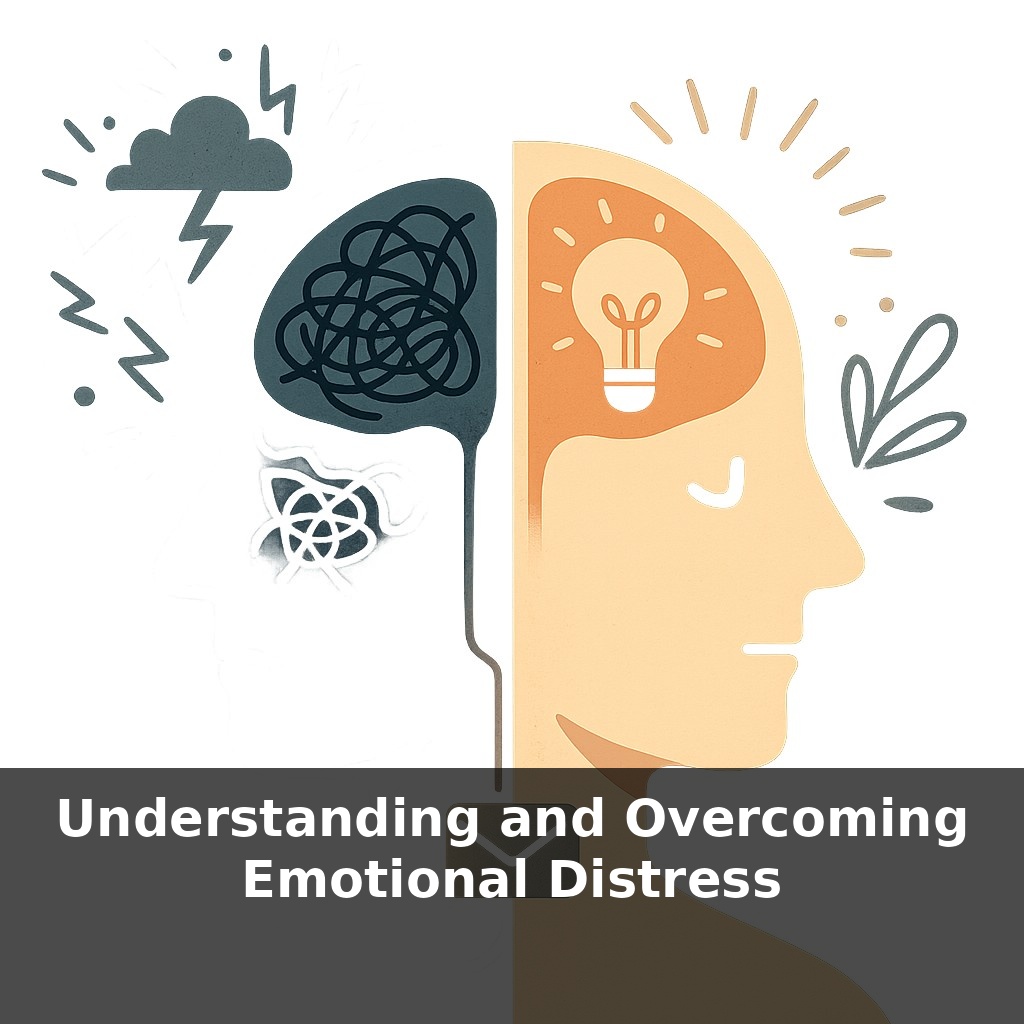
Let’s zoom in on what actually happens in the few seconds after something stings. Research teams studying cognitive reappraisal find a consistent pattern: when people *deliberately* generate an alternative meaning for an event, activity in prefrontal regions ramps up and the amygdala quiets down by about 20%. That’s not a subtle tweak; it’s the difference between “alarm blaring” and “alarm on low volume in the next room.”
Stoic writers were obsessed with this same brief window. Epictetus insists, “It is not things themselves that disturb us, but our opinions about them.” Modern therapists would call those “opinions” automatic thoughts—fast, habitual interpretations that show up before you’ve chosen anything. You can’t stop them from appearing, but you can stop treating them as final.
What’s practically useful is that both CBT and Stoicism converge on a sequence, not a slogan:
1. **Notice the spike.** The tightening in your chest, the urge to fire off a reply, the sudden drop in energy. 2. **Name the thought.** Not the event, but the story: “I’m thinking, ‘This proves I’m incompetent.’” 3. **Test it.** “What are three other explanations that fit the same facts?” This shifts your brain from threat-detection into problem-solving mode. 4. **Choose a working interpretation.** Not the rosiest one, the most *useful* one: “This is unpleasant feedback and also information I can use.” 5. **Act from that interpretation.** One small step—ask a clarifying question, adjust one behavior, schedule practice—anchors the new meaning in your nervous system.
Over time, this sequence becomes a skill rather than a chore. In clinical trials, people who practice it regularly show not only fewer depressive symptoms, but better performance on tasks requiring complex decisions. When your inner landscape isn’t dominated by unmanaged surges, you can actually see options.
Think of it like refactoring messy code in a large software project: you’re not deleting the whole program of your personality, just systematically rewriting the buggy parts that keep crashing your emotional system under stress. Each cleaned-up “function”—one recurring situation you learn to interpret differently—reduces future errors.
Next, we’ll turn this into a structured, week‑long experiment so you can measure, not merely believe, how much leverage you actually have.
Think of a specific recurring stressor at work: a colleague’s late-night messages, a manager’s vague feedback, a client’s silence after a proposal. Instead of treating these as one blended source of “general anxiety,” you can treat each as a separate “case file” you’re investigating.
Start small. Choose one situation that spikes you just a bit, not the one that floors you. Say your manager writes, “We need to talk tomorrow.” Your automatic script might be: “I’m in trouble.” The experiment isn’t to replace that with “Everything is perfect,” but to deliberately generate a few alternative drafts: “Maybe this is about priorities,” “Maybe they need my input,” “Maybe something changed above their level.”
Notice how each draft slightly shifts what you’d do next. In one version, you brace and avoid. In another, you prepare questions. In another, you gather data on your recent work. You’re not hunting for *the* truth in advance; you’re testing which interpretation helps you show up sanely, then letting tomorrow’s reality confirm or correct it. Over weeks, this turns distressing patterns into mapped territory rather than haunted spaces.
Soon, your phone might nudge you not just to “stand up” but to “stand back” from a spiraling story. A wearable could flag rising tension and cue a two-line Stoic prompt, the way GPS suggests a lane change before the exit. Classrooms may treat this like digital hygiene: before posting, students run a quick “thought scan.” As these tools spread, the culture could shift from “I am my mood” to “I can update my mental draft before I hit send.”
Treat this week as field research on your own mind. Each tense moment is fresh data, not a verdict. You’re learning your personal “stress signatures”: the phrases, situations, and tones that reliably spike you. Once you can spot those with the same ease you spot junk mail in your inbox, you’re already less at their mercy.
Before next week, ask yourself: When I last felt emotionally flooded, what were the *exact* early warning signs in my body (tight chest, shallow breathing, clenched jaw), and how would it have changed things if I had paused for 60 seconds to breathe before reacting? In the next few days, when a difficult emotion shows up, can I experiment with saying to myself, “This is anger/sadness/anxiety, not *all of me*,” and notice how that shifts my urge to fix, numb, or avoid it? Thinking about a recurring trigger in my life (a certain person, situation, or criticism), what is one boundary, script, or exit plan I can decide on in advance so that next time I feel distressed, I’m not starting from zero in the heat of the moment?