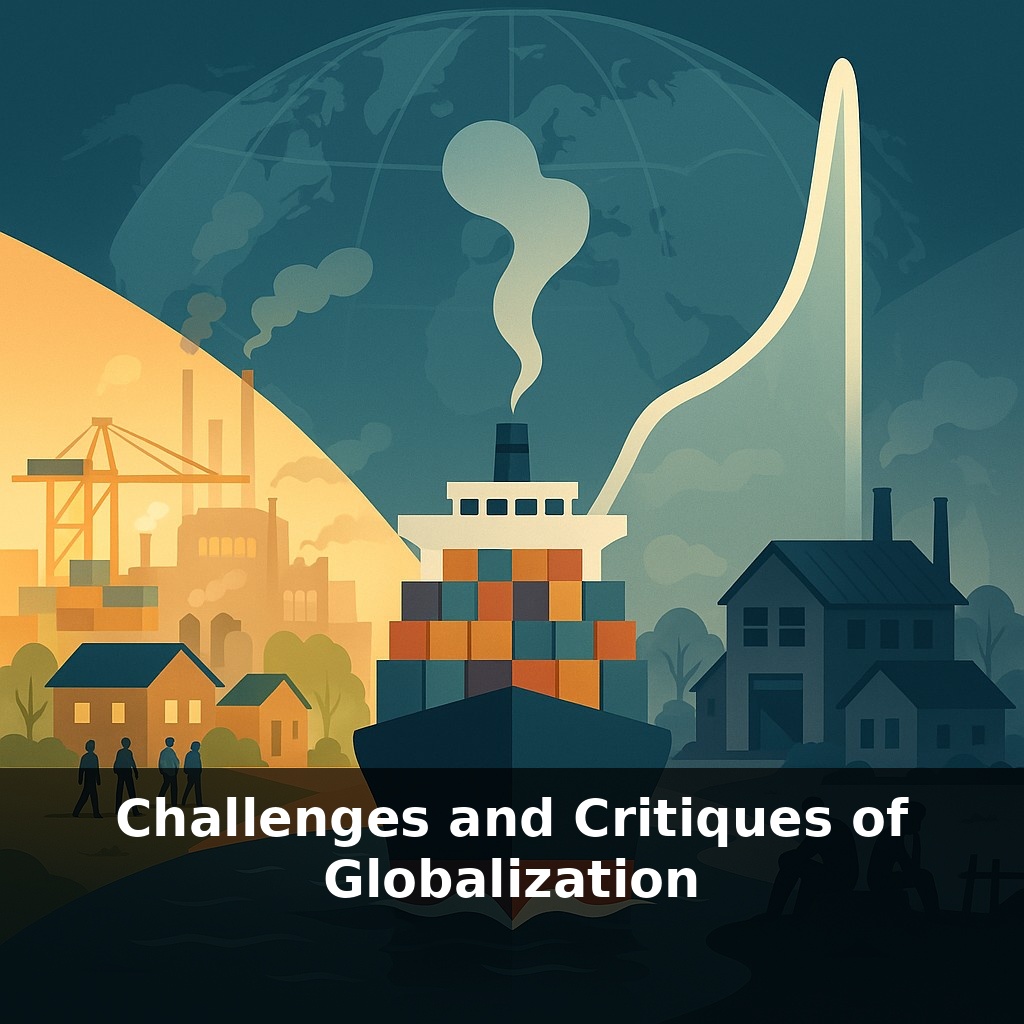
A single cargo ship can pollute more than millions of cars, yet the products it carries often lift families out of poverty. In one town, a new factory brings jobs; in another, a closure wipes them out. How can the same global web create prosperity and pain at the same time?
The puzzle gets sharper when we zoom in on who wins and who loses from this global web. Between 1980 and 2016, the richest 1% captured about 27% of all income growth worldwide. At the same time, hundreds of millions escaped extreme poverty, but nearly half of that progress was concentrated in one country: China. This isn’t a simple story of “globalization is good” or “globalization is bad”; it’s more like a crowded marketplace where a few stalls keep getting bigger, better lit, and closer to the entrance, while many others are pushed to the margins. Cultural industries show this imbalance clearly: four giant companies now control most of the world’s music and film distribution, shaping which stories travel far and which remain local whispers, even as they offer global stages to some artists who never had them before.
Zooming out, a pattern appears: rules and institutions often lag behind the speed of cross-border flows. Trade deals can be negotiated faster than labor protections; investment barriers fall sooner than safeguards for rivers or forests. In practice, this means some countries specialize in cheap production with light regulation, while others specialize in high-end design, finance, and branding. Workers in both can feel trapped—one side in low wages and weak protections, the other in disappearing mid-skill jobs and rising insecurity, even as overall output keeps growing.
A paradox sits at the center of contemporary globalization: the same system that connects billions can quietly loosen the threads that hold societies together. One way to see this is to follow where decisions are actually made. A supply chain may stretch across 20 countries, but a handful of corporate headquarters and financial centers set the terms—what gets produced, where, by whom, and at what price. When profits surge, rewards often flow to shareholders and executives dispersed around the world, while communities tied to a single factory or mine absorb the shocks when strategies change.
This imbalance shows up in bargaining power. A big brand can pit suppliers in Vietnam, Bangladesh, and Ethiopia against one another, negotiating prices down to the last cent. Workers, by contrast, rarely move so freely. Language, visas, families, and housing keep them rooted. The result is a kind of one-sided mobility: capital travels light; people carry heavy anchors.
Critiques of globalization also focus on whose rules travel. Trade and investment agreements often include strong protections for investors—arbitration panels where firms can challenge governments—but far weaker tools for enforcing labor rights, climate commitments, or community consent. A government that tightens environmental laws may face lawsuits; a firm that drains an aquifer or displaces a village often faces little more than bad press.
Cultural consequences are subtler but no less real. Global platforms amplify certain languages, genres, and formats that scale well—catchy hooks, short videos, easily subtitled dramas—while local art forms without obvious commercial appeal struggle to cross borders. Minority languages can shrink from daily use to ceremonial occasions once global media dominate home screens.
Environmentally, production can chase the path of least resistance, shifting to places with looser enforcement as older hubs tighten standards. Emissions are then effectively “outsourced,” allowing wealthy consumers to enjoy cleaner air at home while their carbon footprint grows abroad.
Yet resistance and reinvention travel too. Regional trade pacts with labor and green clauses, city-level climate alliances, cross-border unions among gig workers, and campaigns for digital platform regulation all suggest that globalization’s rules are not fixed. They are being contested, revised, and sometimes reversed in real time.
A garment worker in Dhaka sewing shirts for a European brand, a software tester in Lagos checking apps for a U.S. startup, and a salmon farmer in Chile supplying sushi chains in Tokyo rarely see one another, yet their fates can hinge on the same quarterly earnings call. When demand dips, it’s not just numbers on a spreadsheet; it’s overtime vanished in one place and sudden night shifts in another. Think of globalization like a sprawling rail system designed by distant engineers: express trains link major hubs with sleek efficiency, while local lines are underfunded, delayed, or quietly shut down if traffic falls. On streaming platforms, a K‑pop group can top charts in Brazil while a traditional singer in the same city struggles to book a neighborhood venue; the algorithm decides whose “station” gets more trains. Even ecosystems are pulled into this network: forests cleared for soy that fattens livestock abroad, rivers strained by lithium mining to power distant electric cars, coral reefs stressed by warming seas tied to energy use continents away.
New rules are emerging in unexpected places. City mayors link up to set climate goals; small island states push for loss‑and‑damage funds; youth movements pressure brands with viral boycotts. Digital tools let dispersed workers coordinate like musicians syncing to a shared beat, even across borders. Your challenge this week: trace one everyday item you use back two steps—supplier and supplier’s supplier—and note who bears the risk at each link.
As you peel back these layers, the pattern is less a simple chain and more a woven cloth—threads of law, habit, and profit crossing in ways few people fully see. Power hides in contract clauses, code, and credit ratings. The open question is whether future rules will be stitched mainly in boardrooms, or also in classrooms, parliaments, and streets.
Here’s your challenge this week: Pick one everyday product you use that’s clearly tied to global supply chains—like your smartphone, a fast-fashion item, or supermarket coffee—and trace its journey from raw materials to your hands using at least two non-corporate sources (e.g., NGO reports, independent journalism, or academic articles). Then, compare that supply chain to a local or regional alternative (for example, fair-trade coffee, a repair/refurb phone shop, or locally made clothing) by checking price, labor conditions, and environmental impact. Before the week ends, shift at least one actual purchase decision based on what you learned—swap one globalized option for a more ethical or localized alternative and tell one person what you changed and why.