A single honest sentence, spoken the wrong way, can damage a relationship more than a full-blown argument. Yet research shows people remember your tone far more than your words. So here’s the puzzle: how do you tell the raw truth… without turning up the emotional volume?
Most of us were never actually taught how to say hard things kindly—we just picked up habits from family, school, or work. Some of those habits work; many quietly poison our connections. Maybe you grew up in a “don’t rock the boat” home, so you swallow frustration until it leaks out as sarcasm. Or you learned that whoever speaks loudest “wins,” so honesty now feels tied to intensity. Neither pattern is your fault, but both are changeable.
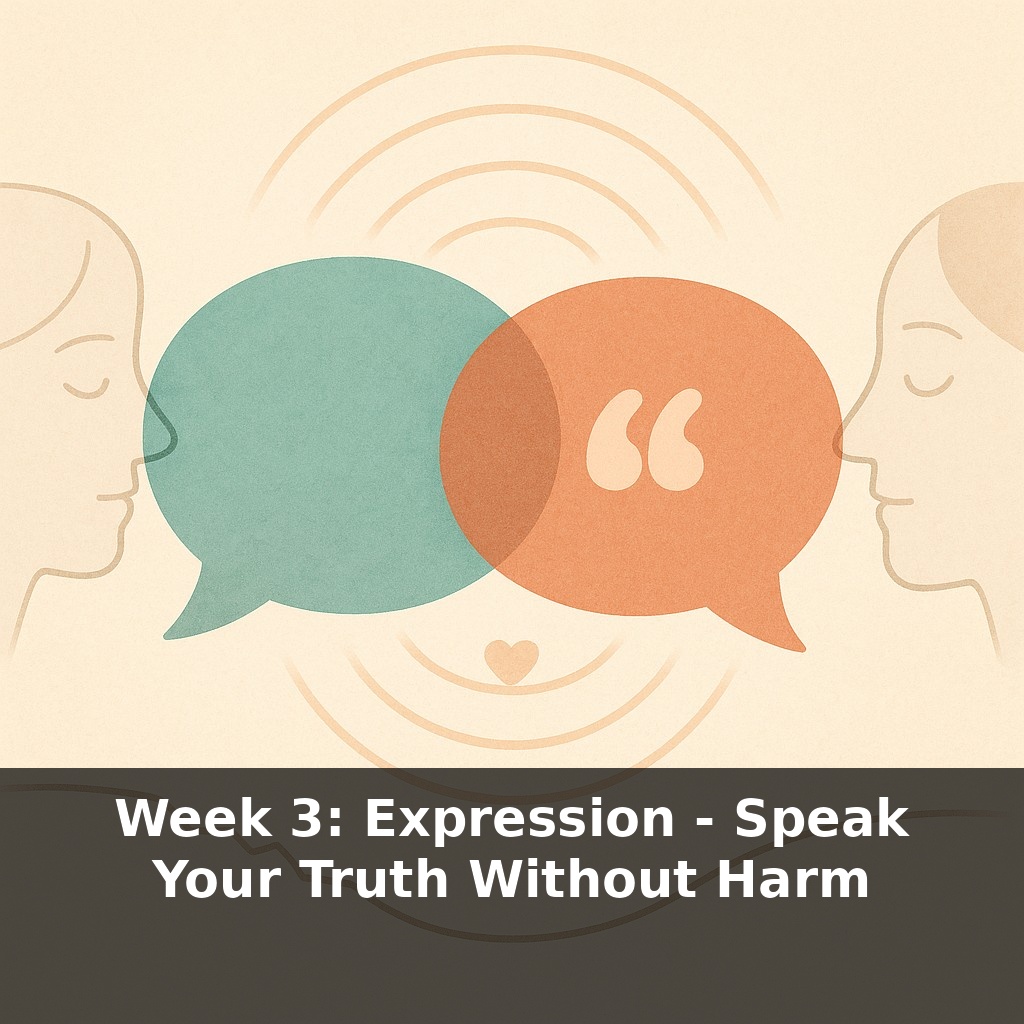
This week, we’ll treat expression less like venting and more like a skill you can design on purpose. Research-backed tools like “I-statements,” emotion labeling, and brief check-ins before sensitive conversations don’t water down your message—they protect it. You’ll practice sharing something real without apologizing for it, and without using it as a weapon. The goal isn’t polite silence; it’s impact without unnecessary injury.
When you start changing how you speak, the first surprise is usually internal: your body reacts. Your throat tightens right before you say what you really think. Your chest drops when someone frowns at your “I-statement.” That’s not weakness; it’s your nervous system flagging risk. This week, we’re not just tweaking phrases—we’re retraining that alarm system. Think less about “perfect wording” and more about staying grounded while you’re honest. Like adjusting a recipe, the shift is often tiny: one extra breath, one slower sentence, one curious question before you defend. Those micro-adjustments are where expression turns into connection.
Most people treat “speaking up” as one move: either you say it or you don’t. Research paints a different picture: expression has layers. What you say, how you say it, when you say it, and whether the other person is able and willing to receive it. Skip any layer, and even a fair point can land like an attack.
Start with *permission*. Not formal approval, but basic consent: “Is now a good time for some honest feedback about yesterday’s meeting?” This sounds small, yet it flips the dynamic from ambush to collaboration. In lab settings, when people know a tough message is coming and feel they can opt out, their stress markers drop. That makes you more likely to be heard, not just endured.
Next is *focus*. Many of us unload a whole file cabinet when we’re finally brave enough to speak. The brain on the receiving end, already scanning for threat, gets overwhelmed. Instead of a global judgment (“You never listen to me”), zoom into one observable moment: “When I was explaining my idea and you checked email, I felt unimportant.” The mind can work with specifics; it can only brace against generalizations.
Then there’s *shared reality*. Your version of events is always partial. Conflicts harden when each person argues for their own movie, frame by frame. A simple shift—“Here’s how it looked from my side; how did it look from yours?”—turns the conversation from verdict to investigation. Oxytocin, the bonding hormone, rises not when we agree on everything, but when we feel we’re genuinely exploring together.
A helpful test: are you trying to *connect* or to *correct*? Correction isn’t bad—the relationship needs your honesty. But if you correct without signaling connection (“I care about us, which is why I want to talk about this”), the other person’s system hears it as rejection.
Think of it like updating software: you’re not throwing out the whole device; you’re patching glitches so it runs closer to how both of you want. That mindset—“we’re improving the system” instead of “I’m fixing you”—quietly reshapes your words, timing, and posture.
Finally, remember that expression is iterative. You can say, “I’m not sure I’m getting this right; can you tell me how that lands?” Repair in real time beats holding out for the perfect sentence you never say.
You can test all of this in small, ordinary moments. Say your partner cooks dinner and forgets you’re trying to eat less takeout. One version: “You never listen; I said I wanted to cook more.” Another: “When we ordered in tonight, a part of me felt like my goal didn’t matter here. Can we plan one night this week to cook together?” The facts are similar, but the second invites collaboration instead of courtroom defense.
At work, swap “This report is a mess” for “On page three, I got lost in the numbers and wasn’t sure what decision you’re pointing us toward.” You’re still being candid, just directing your precision at the problem, not the person.
Or think of it like updating a shared calendar app: instead of deleting someone’s events, you propose color-coding and clearer labels. You’re changing how information shows up between you so it’s easier for both people to “see” what matters and respond without guesswork.
As tools start “listening” with us—video calls that flag rising tension, wearables that note stress spikes—your skill in honest, low‑harm expression becomes a kind of communication fitness. Think of it like compound interest in a savings account: every small, respectful truth you share can make future talks cheaper emotionally. Teams, families, even online communities could develop shared “expression norms,” where people expect candor plus care as the default, not the exception.
Treat this week like learning a new recipe: you’ll botch a few steps, adjust the seasoning, and slowly discover what actually works with the people in your life. Over time, patterns emerge—who needs more space, who thrives on quick repair. Keep noticing, tweaking, and returning. Honest words, offered this way, can become a daily source of quiet repair.
To go deeper, here are 3 next steps: (1) Watch Marshall Rosenberg’s 20-minute “Nonviolent Communication – Observations, Feelings, Needs, Requests” video on YouTube, then pause after each section and translate one recent conflict into his 4-step framework. (2) Download the “Feelings & Needs Inventory” PDF from the Center for Nonviolent Communication and keep it open while you listen to a tough news segment or podcast, actively labeling what feelings and needs might be present for each person speaking. (3) Pick one “hard conversation” you’ve been avoiding and prep for it using the “Crucial Conversations” model (from the book *Crucial Conversations*): outline your “story,” then script a 2–3 sentence “I” statement that shares your truth, names impact, and ends with a clear, kind request you’re willing to actually say out loud today.