 2min preview
The Great Depression's Peculiar Savings Strategies
📝 Transcript
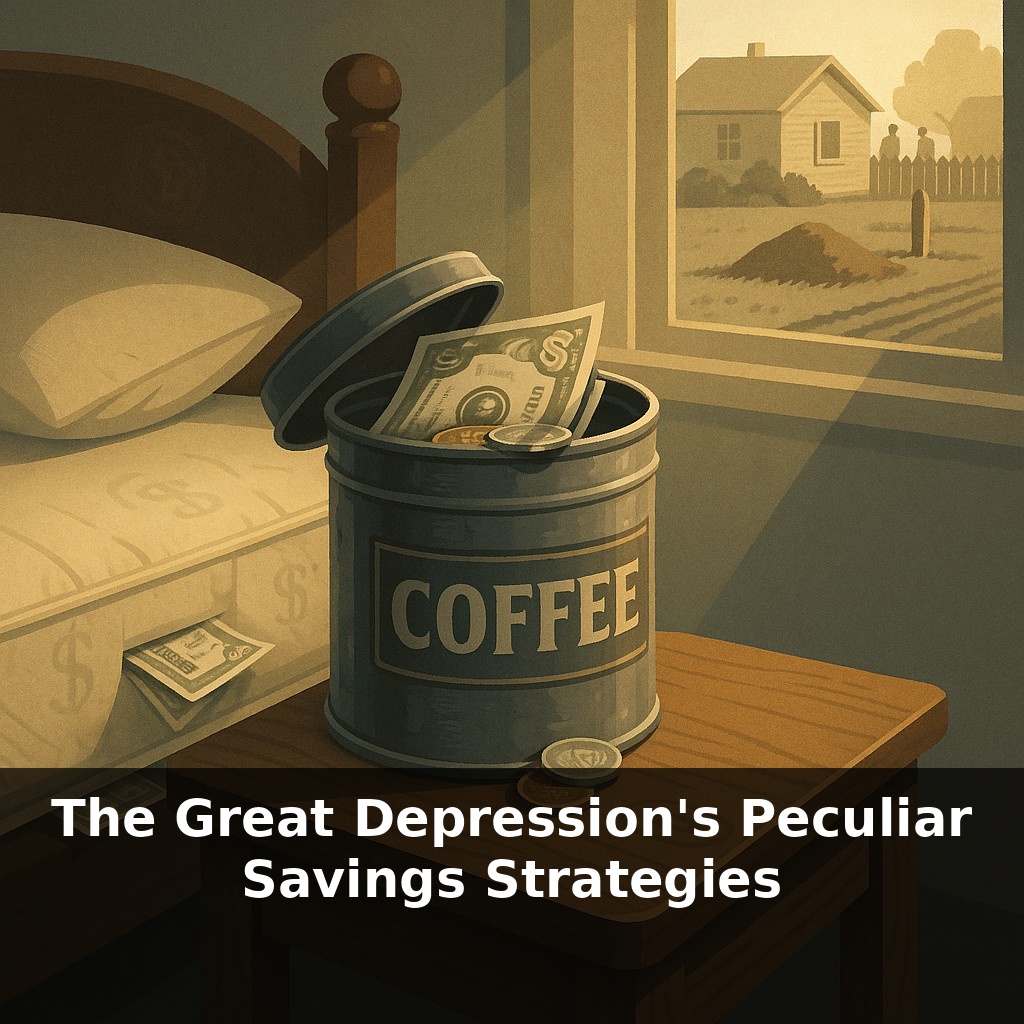
In early 1933, so much cash vanished into mattresses, coffee tins, and backyard gardens that the government couldn’t even track it. A bank on your street might lock its doors forever—so families turned their homes, and even their neighbors, into improvised financial systems.
So families got creative. Cash was only one way to store value—and suddenly, it was one of the riskiest. People began treating almost anything that could hold purchasing power as a kind of mini‑budget. A side yard with a few chickens became part grocery store, part savings account. A fully stocked pantry was less about comfort and more about knowing next month’s meals were already “prepaid.”
Neighbors stitched together safety nets that felt more reliable than distant institutions. Church groups ran informal loan circles. Local merchants extended long tabs to customers they trusted, quietly tracking IOUs behind the counter. Even time itself became a unit of value: you might “save” your carpentry skills today and “withdraw” help from a mechanic weeks later.
Subscribe to read the full transcript and listen to this episode
Subscribe to unlockSubscribe for $1.99/month to unlock the full episode.
From this course

Unusual Budgets in Unusual Times
6 episodesUnlock all episodes
Full access to 6 episodes and everything on OwlUp.
Subscribe — $1.99/monthLess than a coffee ☕ · Cancel anytime