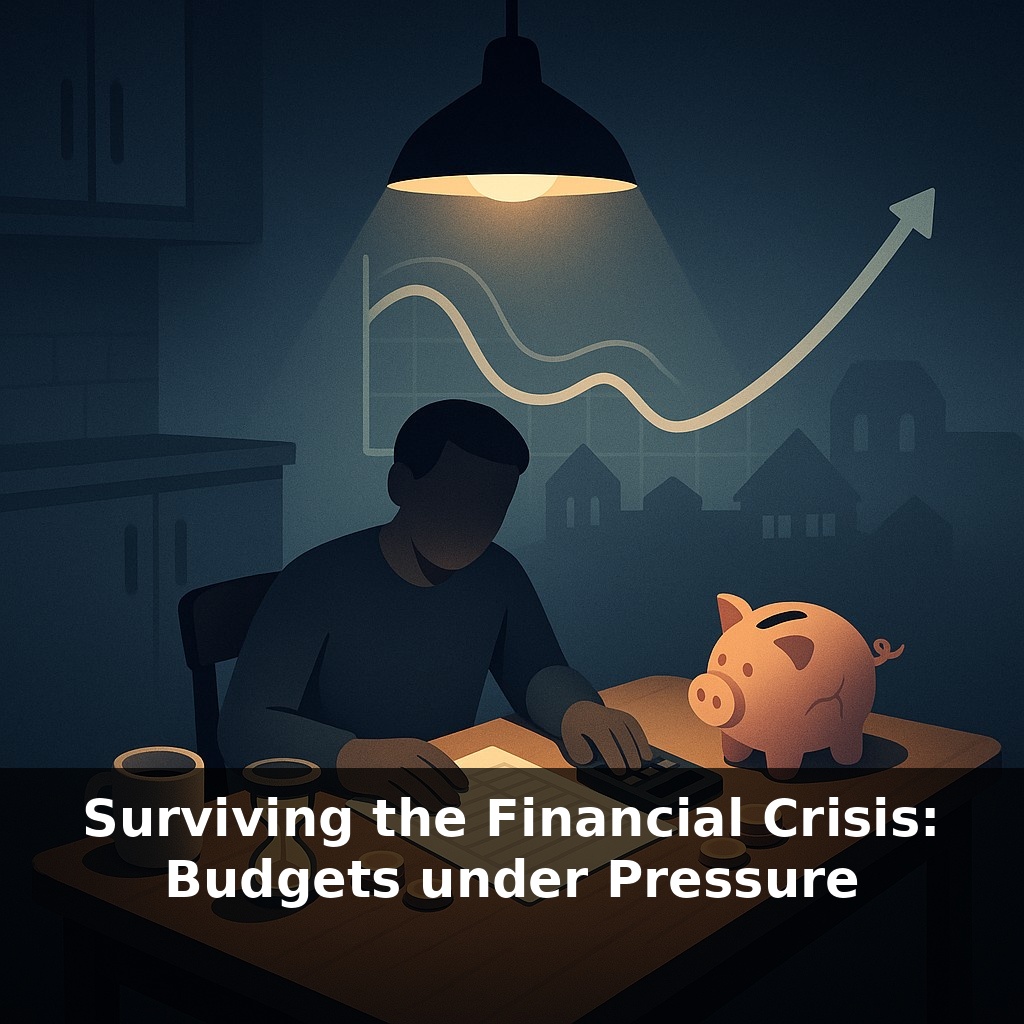
In the last major crisis, about half of small businesses had barely a month of cash. In a dimly lit kitchen, a family huddles around their table, tension thick in the air. Across town, a shop owner clutches his empty order book, while the mayor, deep in thought, marks revisions on next year’s budget. What survives when the numbers don’t?
In every crisis, one uncomfortable truth keeps resurfacing: most of what we spend money on is negotiable, but we only discover *how negotiable* when the pressure hits. A household suddenly decides the second car can go. A firm quietly kills pet projects that once looked untouchable. A city delays a prestige stadium to keep buses running. Under stress, budgets reveal what people *actually* value, not what they claimed to value when times were easy.
Across past shocks, three patterns separate those who bend from those who break: they slash everything that isn’t mission‑critical, they keep updating their plans as conditions change, and they get unusually creative about sharing costs or income with others. The question for this episode isn’t “how much do you have?” but “how fast can you reshuffle what you have when circumstances flip overnight?”
Across the last two major shocks, the entities that coped best weren’t necessarily frugal saints beforehand; they were the ones that had already practiced changing direction quickly. Some households had side incomes that could be dialed up when main wages dipped. Some firms quietly ran “plan B” and “plan C” models in the background, so when sales fell 40 %, they weren’t guessing in the dark. Some cities pre‑negotiated clauses in contracts so big suppliers shared pain instead of walking away. Under pressure, the advantage shifts to whoever treated flexibility as a daily habit, not a one‑off emergency drill.
When money tightens, most people start by hunting for “waste.” That’s a start, but the data from past crises suggest the real divide is subtler: *who is willing to rebuild their budget from scratch while the ground is still shaking*. That’s where zero‑based and rolling approaches come in, and why they show up again and again in the recovery stories.
Zero‑based budgeting sounds brutal, but in practice it’s a disciplined question: “If we were starting today, would we still spend on this at all—and at this level?” A manufacturer in 2009 ran this exercise line by line. Instead of slicing 10 % off every department, they completely shut down a legacy product that soaked up engineers and marketing spend but contributed almost no margin. Savings were redirected into a smaller set of products that still sold even in recession. Within 18 months, profits were up despite lower total revenue. Households do a quieter version of this when they stop asking “Which subscriptions should we trim?” and start asking “What are the three non‑negotiables—and what must serve those?”
Rolling forecasts add the time dimension. Rather than locking in a 12‑month view and defending it, you’re always looking 3–6 months ahead and updating as new information lands. A regional restaurant chain during COVID didn’t cling to its pre‑pandemic annual plan. Every month, they refreshed their assumptions on seating capacity, delivery demand, and wage subsidies. That meant they could close two locations early, move staff into delivery hubs, and renegotiate leases before arrears piled up. The result: they avoided bankruptcy while nearby rivals, stuck defending outdated budgets, ran out of options.
Diversified income is the third leg. Not chasing ten random hustles, but deliberately building two or three distinct streams that don’t all fail the same way. After 2008, some contractors paired cyclical work (like renovations) with steadier maintenance contracts. During COVID, artists who had already experimented with online classes saw income dips, not collapses, when venues shut.
Think of these tools less as emergency tricks and more as a standing architecture: the way you design your financial “building” so that when an earthquake hits, the structure flexes instead of crumbling.
A freelance designer in 2020 didn’t just trim software subscriptions; she redrew her entire money map. Client work became “Tier A,” but she also set up two “Tier B” projects: a small template shop and a paid newsletter. Each had its own mini‑budget and target: the shop aimed to cover software, the newsletter to cover rent. When client work froze for three months, those two B‑streams didn’t replace her full income, but they kept her from taking on high‑interest debt and gave her leverage to refuse underpaid gigs.
A mid‑sized city took a similar layered approach with services. Instead of a single monolithic budget, transit, sanitation, and health each built a “core,” “lean,” and “surge” version of their plans, with triggers tied to tax receipts and hospital loads. That pre‑agreed menu let them move quickly from nice‑to‑have to must‑have without weeks of political fighting.
Athletes talk about “training under load”: practicing skills while tired so they hold up in competition. Some firms now run budget stress drills twice a year—short, time‑boxed simulations where teams must cut 15 % in 48 hours, then document what broke and what surprisingly didn’t.
Winners in the next wave of shocks may be those whose money plans talk to their lives in real time. As climate alerts, supply data, and job-market signals stream in, budgets could respond like noise‑cancelling headphones, dampening financial “static” before you consciously notice it. Yet more automation raises new questions: who sets the rules, and whose values do they encode? The real power may sit with people who can read these systems—and override them when context beats code.
Instead of chasing perfect numbers, treat money plans as experiments. Try micro‑bets: a month on a “bare bones” setting, a quarter testing shared tools or space, a season piloting one new revenue idea. Keep what holds under stress, discard the rest. Over time, that habit turns fragile paychecks into sturdier, more adjustable systems.
Here’s your challenge this week: Freeze all non‑essential spending for the next 7 days—no takeout, streaming upgrades, impulse Amazon buys, or “just browsing” online carts—and track every payment that still goes out (rent, debt, groceries, utilities). By Sunday night, calculate exactly how much you would normally have spent on those non‑essentials and move that dollar amount into a separate “Crisis Cushion” savings bucket. Then, choose **one** recurring expense (like a subscription, delivery service, or premium plan) and either cancel it or downgrade it before midnight tonight.