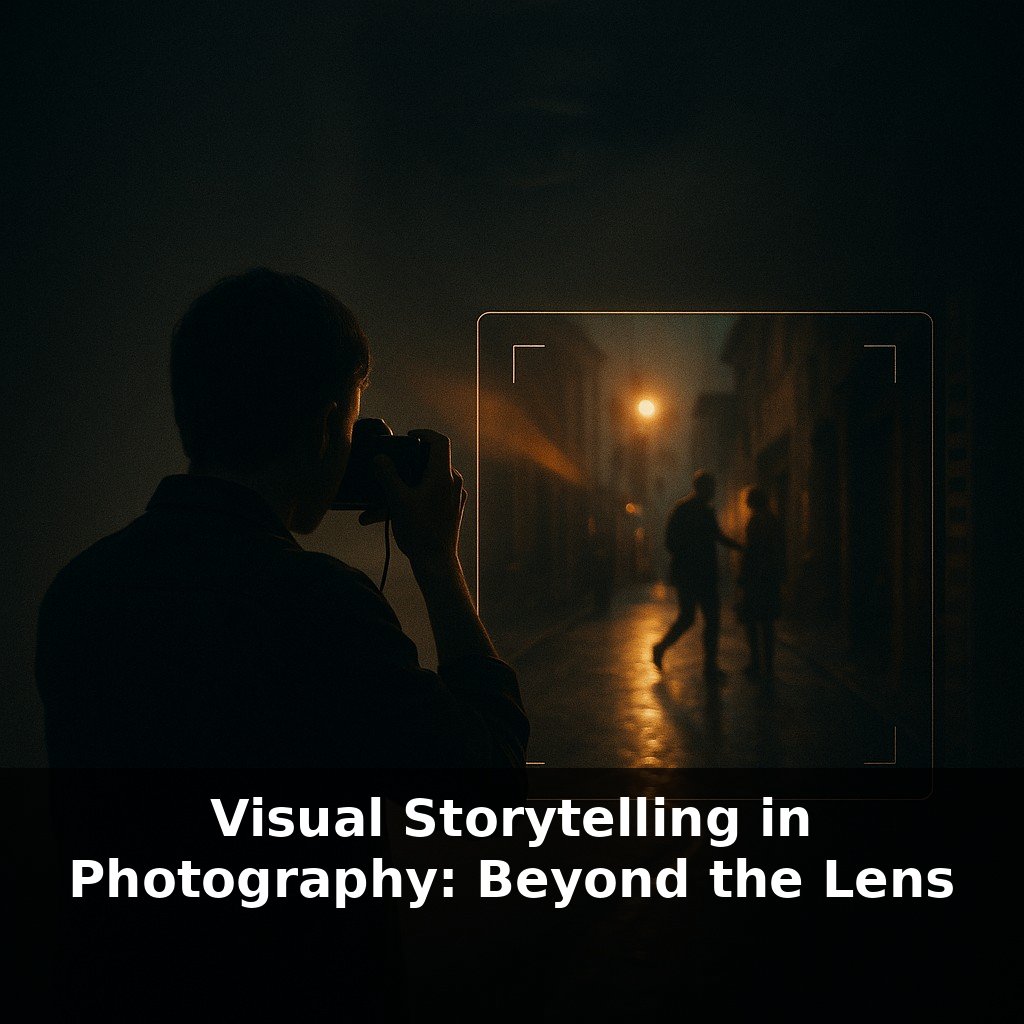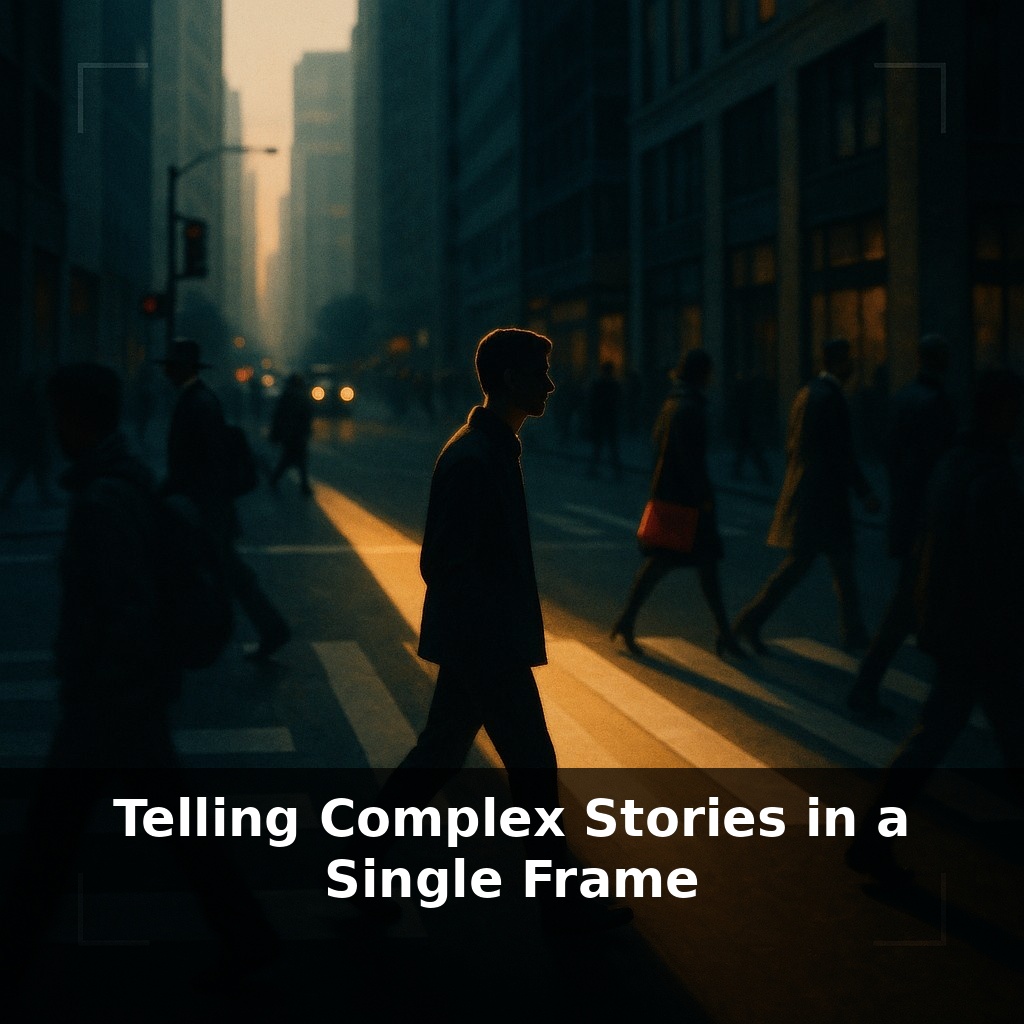
Viewers decide in a fraction of a second whether to keep looking at your photo—or to flick it away forever. Now, freeze on that tiny slice of time: a crowded street, a single frame, and somehow, quietly, a whole story about power, class, and desire is unfolding.
So if that sliver of attention is all you get, the question becomes: what can you load into a single frame without turning it into visual noise? The answer isn’t “more objects,” but more intention. Think of the way a street corner can quietly reveal a city’s class divide: a luxury storefront glowing in the background, delivery drivers idling at the curb, a passerby checking prices through the glass. None of them “pose,” yet together they sketch an unwritten essay. In a strong single-frame story, the subject is only the first layer. The surrounding characters, the direction of their gazes, the way light falls differently on each, and the small, almost throwaway details—posters, reflections, discarded objects—start to behave like supporting sentences around a main idea, each one nudging the narrative in a specific direction without saying a word.
To work this way, you have to stop treating the frame as a passive container and start treating it as a miniature stage. Every actor and prop you place—or allow—to remain inside it should earn their role. Think about how a bus stop becomes more than transport: a torn concert flyer hinting at last week’s protest, a half-erased timetable showing neglect, a commuter gripping a résumé folder, kids reflected in the glass with ice creams. None of these shout, but together they shift the subtext. Your job is to notice these quiet clues early enough to move your feet, re-align your angle, and let them coexist in one charged rectangle.
In practice, the doorway into complex single-frame stories is almost always spatial: how you stack meaning from front to back. Instead of scanning scenes left to right, begin training yourself to scan in depth. Ask, “If this person is my foreground, what in the mid-ground and background could either echo or contradict their situation?” A worker eating lunch on a curb becomes more than a portrait if, behind them, a recruitment fair banner promises “Unlimited Opportunity,” and farther back, a construction crane silently rewrites the skyline. None of those elements are random; they’re a chain of visual cause and effect.
Start by deciding what your frame is *really* about, even if you can’t name it perfectly. Is it exhaustion? Aspiration? Isolation in crowds? Once you have that rough theme, you’re not just hunting for a “good subject,” you’re hunting for relationships—between people, between people and architecture, between light and expression. Move your position until those relationships line up in a way that feels charged rather than cluttered. A tiny shift to your left might suddenly align three strangers’ gazes, or place a billboard slogan directly above the one person who contradicts it.
Light and color then become your editorial tools. Instead of only asking, “Is the light flattering?” try, “What story does this light make unavoidable?” A pool of late sun can isolate your key character while leaving the surrounding chaos a step darker, so the eye lands where you need it to. Color can act like recurring phrases in a poem: the same red in a protest sign, a shirt, and a traffic light quietly ties disparate parts of the frame into one emotional thread.
Details are where your photograph earns re-reads. Look for small objects or gestures that add a second or third reading *without* requiring explanation: a wedding ring turned inward, tape marks on a gallery wall where a painting has just been removed, a security camera pointed away from the actual action. These are not Easter eggs for cleverness’ sake; they’re pressure points. If removed, the image would still function, but with them, it deepens. Over time, you’ll start to recognize that most scenes offer you a surface story and, hidden in plain sight, two or three smaller, sharper truths waiting just outside your initial frame—until you step to the side and invite them in.
Think of a neighborhood market at closing time. You’re drawn first to the vendor counting coins in the foreground, but let your eye drift: in the mid-ground, a kid stretches to stack leftover fruit; in the distance, a metal shutter comes down over a faded “Grand Opening” sign. One frame, three different relationships to the same place—money, labor, memory. None of this requires a caption, only that you noticed how these threads intersect for a few seconds.
Or consider a beach after a storm: a couple arguing in sharp focus; farther back, volunteers collecting trash; on the horizon, container ships waiting to dock. If you shift your angle so the ships hover above the couple’s heads and the trash bags form a line between them, the scene starts to hum with questions about responsibility and consequence.
This is where experimentation matters. Try shooting a scene wide, then progressively tighter, asking each time: “What hidden interaction did I just lose—or reveal?”
In a few years, your “single frame” may be less a frozen moment and more a smart container. Depth data could let you subtly refocus emphasis after the shot—almost like rewriting a sentence without changing the words. AR layers might reveal alternate cuts: tap once to see a character’s earlier appearance in another street; tap again for archival echoes of the same corner decades ago. The challenge will shift from only noticing layers to deciding which ones deserve to be visible, and when.
Treat each scene like a small city you’re mapping over time. On one visit, you might only find the main road; on the next, a side alley appears. With practice, you’ll start sensing where the “hidden streets” of meaning probably are, even before you raise the camera—and your frame becomes less a reaction, more a deliberate discovery.
Here’s your challenge this week: Choose one ordinary scene from your daily life (your commute, your kitchen, your workspace) and create a single image that suggests a “before and after” story without showing either explicitly. Use at least three visual storytelling tools discussed in the episode—like juxtaposition (two contrasting elements in the same frame), a strong focal point, and purposeful negative space—to hint at what happened and what might happen next. Limit yourself to just five shots of that scene, then pick the one frame that tells the most layered story and share it with one person, asking them to describe the story they see without any explanation from you.