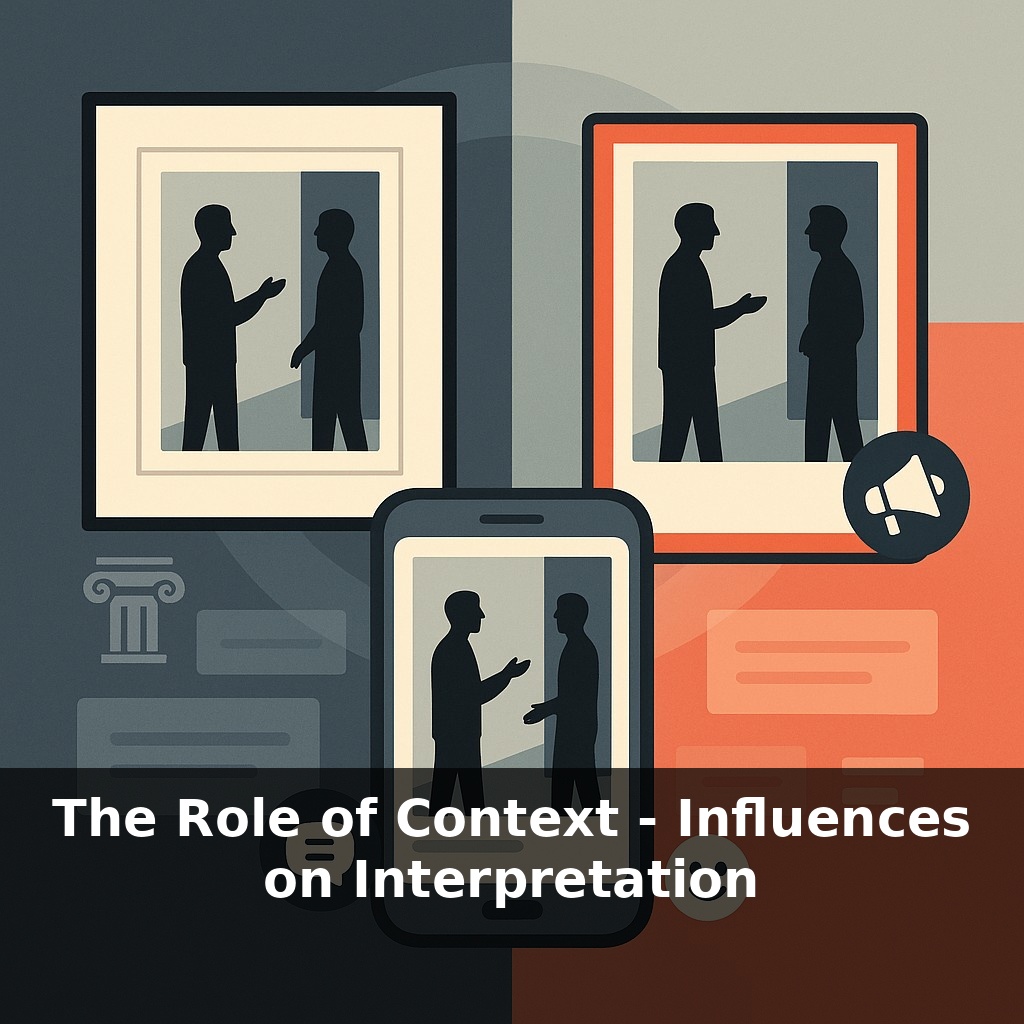
Around the world, people snap well over a trillion photos a year—yet no two viewers see the same image the same way. A war photo on a museum wall, the same file on a politician’s campaign poster, and again in a meme—three contexts, three completely different truths.
Scroll through your feed and notice how your reaction shifts before and after you read a caption. The photo hasn’t changed a pixel, yet it can flip from “cute moment” to “uncomfortable” in seconds. Photographers and editors know this power well. That’s why major contests like World Press Photo demand RAW files and full background details—and still reject thousands of entries when the surrounding information doesn’t hold up. Even subtle framing choices matter: hang a photo in a sleek gallery, drop it into a breaking-news article, or print it on a protest sign, and you’ve effectively rewritten its job description. Eye-tracking research backs this up: a short line of text can pull your gaze to a different face or gesture almost instantly, nudging you toward a new story without ever touching the image itself.
Open any photo app and you’re swimming in an ocean of images, but what clings to them—hashtags, headlines, who shared them—acts like invisible currents pushing you toward one reading over another. A selfie looks different when it’s posted after a breakup versus after a job offer; the pixels stay put, the stakes don’t. Cultural baggage piles on too: a gesture that reads as playful in one country may register as rude or political in another. Historical timing layers yet more weight. A candid crowd scene posted days before an election or hours after a disaster can suddenly feel charged, even if it was shot months earlier.
Think about how quickly a single frame can be reassigned a new role. The same protest photo might serve one day as evidence in a human-rights report, the next as a stock image on a corporate slideshow, and later as a background texture in an album cover. Nothing in the pixels discloses which “job” it’s doing; that comes from the story wrapped around it.
Three levers quietly steer that story: sequence, placement, and audience.
Sequence first. A lone image of a flooded street can feel like a freak event. Place it after three frames of melting glaciers and extreme weather, and your brain files it under “climate crisis.” Reverse the order—show joyful neighborhood life before and after—and it may register more as resilience than catastrophe. Photobooks and photo essays lean hard on this: they don’t just show you photographs, they choreograph your emotional route through them.
Placement does a similar kind of work. A portrait printed floor‑to‑ceiling in a gallery invites contemplation; the same file squeezed into a tiny thumbnail beside a clickbait headline feels disposable or sensational. On a charity website it can signal urgency; on a luxury brand’s campaign it signals aspiration. Where the picture lives hints at what you’re expected to do with it: feel, donate, buy, vote, or simply scroll on.
Then there’s audience. Post a family snapshot in a private chat and it reads as memory. The identical image, leaked into a tabloid, can morph into scandal or gossip. Even within one culture, different groups bring wildly different reference points—religious communities, niche fandoms, professional circles. What looks neutral to you may scream “inside joke” or “dog whistle” to someone else.
This is why “the camera never lies” falls apart so easily. Interpretation isn’t an optional layer; it’s baked into how images circulate. In a world where over a trillion new photos appear each year, small shifts in context can be the difference between a picture sparking empathy, anger, purchase, or nothing at all. For visual storytellers, learning to anticipate those shifts isn’t just a creative flourish—it’s the craft.
Look at how companies quietly test this every day. A tech brand might run the same product shot in two ways: on a clean white page for investors, then tucked into a messy desk scene for students. The file is identical; the story shifts from “stable asset” to “creative tool.” Activists know this too. A portrait of a nurse holding a mask lands one way on a hospital wall, very differently on a crowdfunding page, and differently again when wheat-pasted on a city sidewalk. Each setting nudges you toward a new role—colleague, donor, passerby. Even your own archive behaves like this. Scroll back to a party photo from years ago: who was there, what you now know, and what’s happened since all rewrite that frame. Context in photography is like a change in weather on a hike: the same trail feels inviting in sun, ominous under storm clouds, even though the ground beneath your feet hasn’t moved.
Soon, you may tap a photo and peel back layers: who verified it, how it’s been used, what people in the frame say about it. Interactive context could feel more like exploring a map than reading a label—zooming from global provenance to personal testimony. Schools might treat image-reading like learning a new language, with students comparing multiple “translations” of the same frame. And viewers could become active co-authors, choosing which narrative paths a photograph takes.
As you move through feeds, galleries, and billboards, notice how your own mood, beliefs, and recent experiences tint what you see—like colored glasses you forget you’re wearing. Shift one of those inner lenses and the same frame can feel utterly different. Your challenge this week: treat each photo as a question, not an answer, and see what changes.