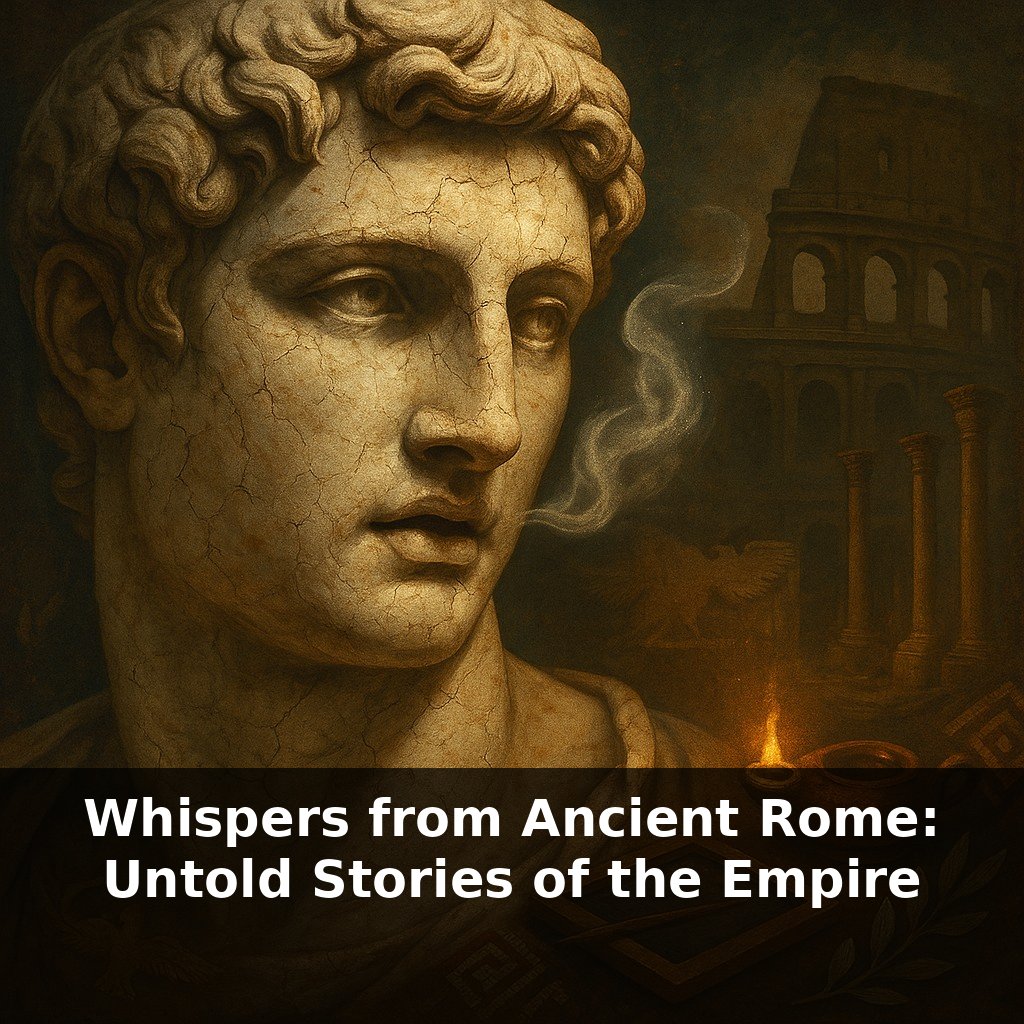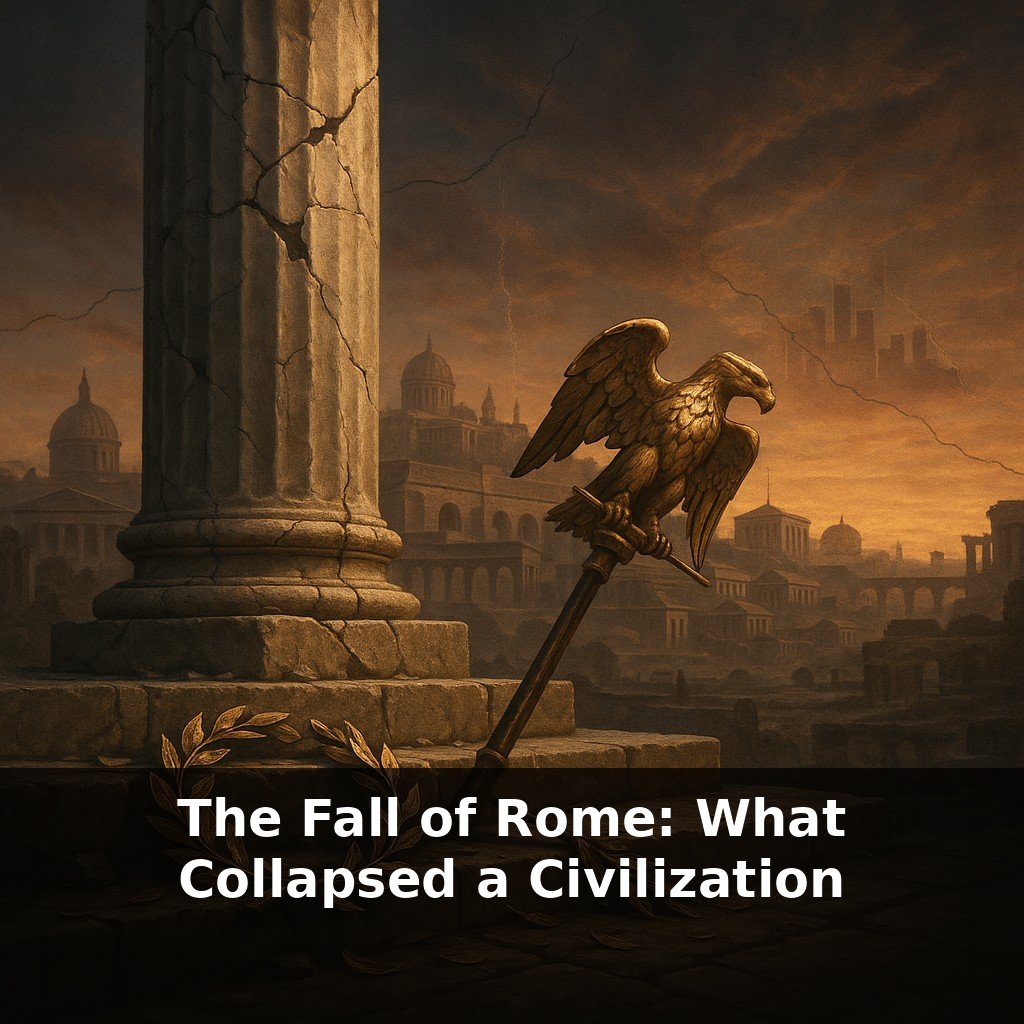
Roman myths outlived the empire that birthed them. A god’s name is carved on stones across three continents; a poem an emperor refused to let die still shapes how we talk about destiny. In this episode, we step into those stories—and trace how they quietly rule our modern world.
When Romans swore an oath “by Jupiter,” they weren’t just being dramatic; they were tapping into a legal and political power source everyone understood. Those names you met in the last episode didn’t stay trapped in temples and epics—they leaked into courtrooms, battlefields, family rituals, even business deals. Think of the myths as background apps constantly running in Roman life: you might not focus on them, but they shape what your device can do, and what it refuses to do. A general claiming Mars’ favor, a bride invoking Juno, a merchant praying to Mercury before a risky shipment—all were plugging their private hopes into a public story. That story didn’t only organize religion; it organized obedience, pride, and the sense that Rome’s rules were more than human decisions—they were backed by the universe itself.
Roman power didn’t float in the air; it was anchored in stone, metal, and verse. Over 50,000 inscriptions naming Jupiter weren’t just pious graffiti—they were like a network of pins on a vast imperial map, quietly marking who was really in charge. The Aeneid, almost burned by its own author, became a kind of “origin contract” for Rome’s future, quoted by teachers as eagerly as by politicians. Even temples pulled double duty: the Temple of Saturn guarded the state’s gold and silver, so walking up its steps felt less like entering a church and more like stepping into the empire’s vault.
Romans didn’t just tell myths; they *edited* them whenever politics demanded it. When Julius Caesar wanted to look inevitable, his family leaned hard on the claim that they descended from Venus through Aeneas. Overnight, a household pedigree became a cosmic endorsement: opposing Caesar could be framed as resisting the family of a goddess. Augustus refined this trick: he sponsored art and poetry that highlighted some myths, downplayed others, and quietly suggested that Roman history had been aiming at *him* all along.
This kind of narrative engineering ran deep. When a new province was conquered, Rome didn’t simply crush local gods—it often paired them with Roman ones. A Celtic sky god might be officially labeled “Jupiter X,” a local war god “Mars Y.” On the ground, people still prayed to their familiar deity, but on inscriptions and in official rituals, those prayers now flowed through Roman names. Mythology acted like a translation layer, giving conquered peoples room to recognize themselves while still performing loyalty to Rome.
Inside the city, that same logic scaled down into homes and streets. Household shrines to the Lares and Penates watched over food storage, doorways, and family health. The state never tried to erase those intimate devotions; instead, it mirrored them in public festivals. The result was a nested system: emperor and empire at the top, city gods in the middle, family protectors beneath—all speaking a shared symbolic language. You could be a soldier on the Rhine or a baker in Ostia and still feel plugged into the same divine hierarchy.
Roman writers, meanwhile, used myths as a toolkit rather than a rulebook. Philosophers read stories of Jupiter’s thunderbolts as metaphors for justice, or Venus’ power as an image of desire and social bonds. Satirists mocked the gods to criticize emperors without naming them. Mythology let authors argue about power, morality, and fear in a coded way, safe enough to publish but sharp enough to sting.
Over centuries, these stories soaked into Latin phrases that later passed into European languages: “mercurial” for quick and changeable, “martial” for warlike, “venereal” for desires tied (awkwardly) to Venus. Even stripped of temples and sacrifices, Roman gods survived as adjectives, quiet reminders that an ancient value system still hums inside modern speech.
Modern scientists still quietly raid this ancient toolkit. Planetary features on Mars have Latin names: “Noctis Labyrinthus,” “Valles Marineris,” a visual map of how Roman language became scientific shorthand. Lawyers reach for “habeas corpus” or “amicus curiae,” phrases born in Latin legal culture that smuggle in Roman ideas about bodies, citizens, and friendship before the law. Even sports commentary borrows the mood: a “colosseum atmosphere,” “gladiator mentality,” or a team described as an “invincible legion” wraps modern games in imperial drama.
Think of how code libraries work in programming: you don’t see the source every time, but functions you call were written long ago by someone else. Roman names and stories operate like an old but reliable library—present in astronomy, law, medicine (“venereal”), and political rhetoric (“crossing the Rubicon”), giving modern actions a ready‑made script.
Your challenge this week: each time you read news about space, law, or politics, flag one word or phrase that ultimately traces back to Rome—and ask what value or power claim it quietly carries.
As AI, VR and private spaceflight mature, Roman myth may become less museum piece and more software template. Branding teams already strip‑mine its names; next, game studios and virtual architects could borrow its city‑gods and household spirits to design digital “civic religions” that nudge behavior. The ethical puzzle: who controls these invisible scripts—and what happens when users start rewriting them, as Romans once rewrote conquered gods?
Roman stories don’t just sit in museums; they lurk in app names, mission patches, movie titles, even luxury car badges, like spices you can taste without seeing. As new myths grow around algorithms and starships, we’re quietly deciding which ancient flavors to keep—and which to swap out—for the next empire: the digital one.
Here’s your challenge this week: Pick one Roman mythological figure mentioned in the episode—like Jupiter, Venus, Mars, or Minerva—and deliberately “cast” them into a modern setting you care about (your workplace, your city, or your online life). Then, for three days in a row, spend 10 minutes each day tracking where you see their influence show up in real life (in brand logos, building names, media, politics, or everyday expressions) and take at least one photo or screenshot each day as evidence. At the end of the three days, choose the single most surprising modern appearance you found and explain it, out loud or in a voice note, as if you were teaching a friend how Roman mythology is still shaping that thing today.