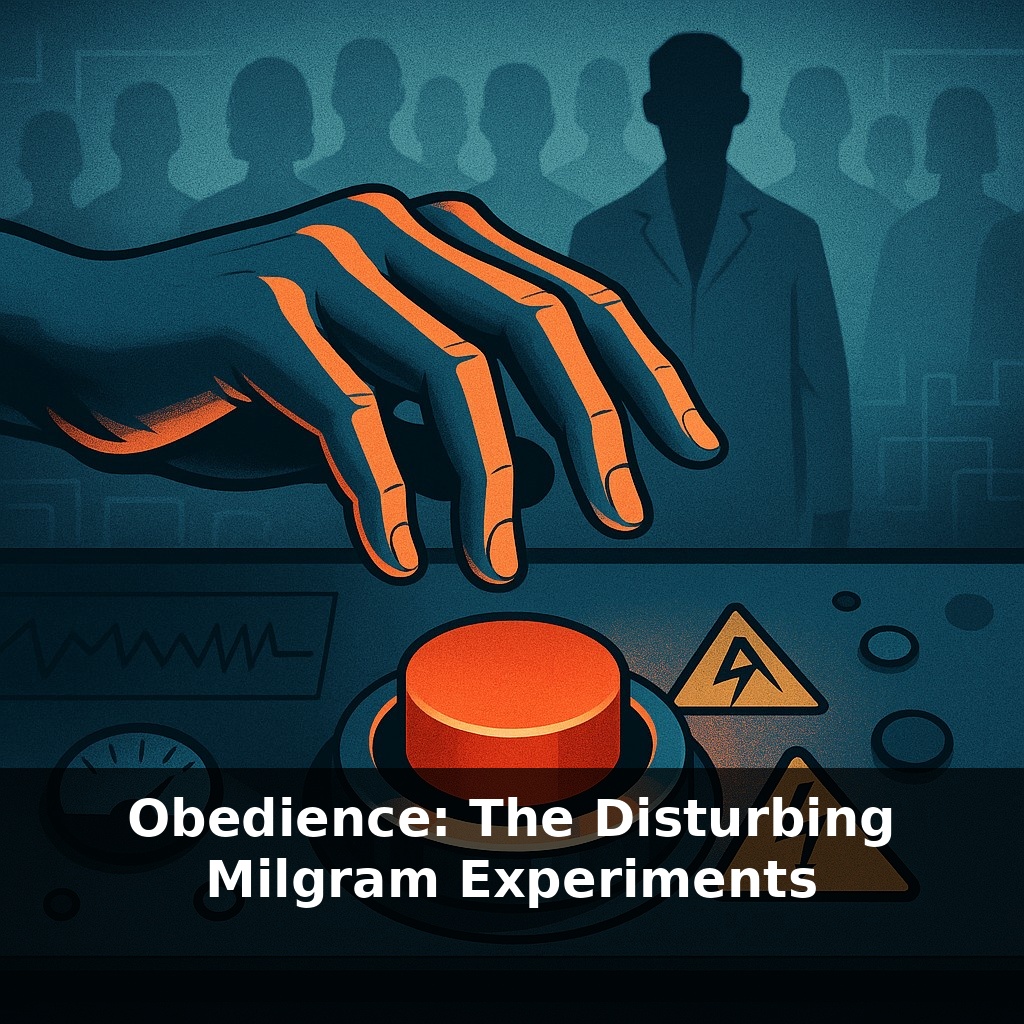
About two-thirds of people in a famous psychology study calmly pressed a button they thought could kill an innocent stranger. No gun to their head. Just a polite man in a lab coat saying, “The experiment requires that you continue.” Why did so many… obey?
The unsettling part is not just what happened in that lab, but how unremarkable the people were. No monsters, no fanatics—teachers, salespeople, engineers, parents. The kind of folks you’d chat with in a grocery line. They arrived thinking they were helping with a memory test, joked nervously, checked on the “learner,” and still, step by step, crossed lines they swore they’d never cross. It’s like following a detailed recipe from a famous chef: you stop sniffing the pan and just trust the instructions, even when the sauce looks burned. In those sessions, small, seemingly harmless steps piled up, each one only slightly worse than the last, until participants found themselves in a place their private morals insisted they’d never go—yet their fingers stayed on the switch.
Milgram’s setup was deceptively ordinary: a Yale office, a clipboard, a volunteer “teacher,” and a stranger “learner” behind a wall. The shocks weren’t real, but the conflict in the “teachers” was. Some laughed nervously, some protested, some begged to stop—yet most still went on when the experimenter calmly insisted. This wasn’t about sadism; it was about how status, setting, and scripted prompts can quietly redraw the borders of “acceptable.” Those lab details matter, because they map disturbingly well onto boardrooms, hospital wards, Zoom calls, and even group chats today.
Authority in Milgram’s lab didn’t just sit in the white coat; it was built into the script, the room, and the expectations. Participants had been invited by a prestigious university, greeted formally, handed a small payment up front. That money wasn’t a bribe so much as a subtle contract: “You agreed to be part of this; you should follow through.” Backing out started to feel less like a right and more like breaking a promise.
Milgram found that tiny tweaks to context dramatically changed how far people went. When the “experimenter” gave orders by phone instead of in person, obedience dropped sharply. When the study moved from Yale’s impressive campus to a dingy office in town, compliance fell again. Swap the calm scientist for an ordinary person in everyday clothes, and suddenly participants felt freer to say no. Shift who seemed more legitimate—the researcher or the suffering “learner”—and allegiance shifted with it.
Proximity mattered too. When the “teacher” had to physically press the learner’s hand onto a shock plate, rates of maximum shocks dropped. Seeing, hearing, and touching the target pulled people back toward their own judgment. When others in the room openly refused to continue, most participants followed their lead; when peers complied, resistance nearly vanished. Authority wasn’t operating in a vacuum—it was braided together with group norms and social comparison.
This is why Milgram talked about an “agentic state”: people stop asking “What do I think is right?” and start asking “What does my role require?” In corporate scandals and medical errors, internal documents later reveal a similar mental shift: employees or staff describing themselves as “just executing the plan,” even when the plan horrified them in hindsight. In those moments, personal responsibility is quietly outsourced upward.
Milgram’s later, lesser-known variations even hinted at small protective factors. When participants had a chance to discuss the setup beforehand, question instructions, or see someone else successfully refuse, more of them drew a firm line. The same authority, the same task—yet the meaning of “you must go on” suddenly looked negotiable.
Think about the last time you were in a hospital, at an airport, or on a corporate onboarding call. The badges, uniforms, lanyards, email signatures, and jargon quietly signal: “These people know what they’re doing; fall in line.” In high-risk fields, that deference can both save lives and endanger them. Aviation learned this the hard way: older crash reports show co‑pilots noticing something wrong but hesitating to challenge the captain. Modern “crew resource management” training was built to attack exactly that hesitation, drilling the right to question and the duty to speak up into everyone’s role.
Corporate life has its own version. A junior analyst spots a number that looks off in a financial model, but a senior partner says, “Run it as is; the client meeting is in an hour.” That moment is less about math and more about whether the analyst feels permission to resist. One reason some tech firms use “blameless post‑mortems” is to lower the cost of saying, “I disagreed, but I went along,” and then redesign those subtle pressures before they harden into disaster.
Milgram’s work hints that future “moral fire drills” may matter as much as technical training. As AI systems and remote interfaces enter offices, hospitals, and battlefields, the risk isn’t just rogue machines—it’s overly obedient humans clicking “approve” because a dashboard glows green. Think of a trading platform that forces you to re‑enter a risky order with a short written justification: the brief pause can yank you out of autopilot and back into ownership of the choice.
Your challenge this week: notice one moment each day when you feel nudged by a title, uniform, or polished interface to “just go along.” Pause long enough to silently ask, “If this were my decision alone, would I still do it?” Like tasting a dish before serving it, that tiny check can turn blind following into deliberate choice.