 2min preview
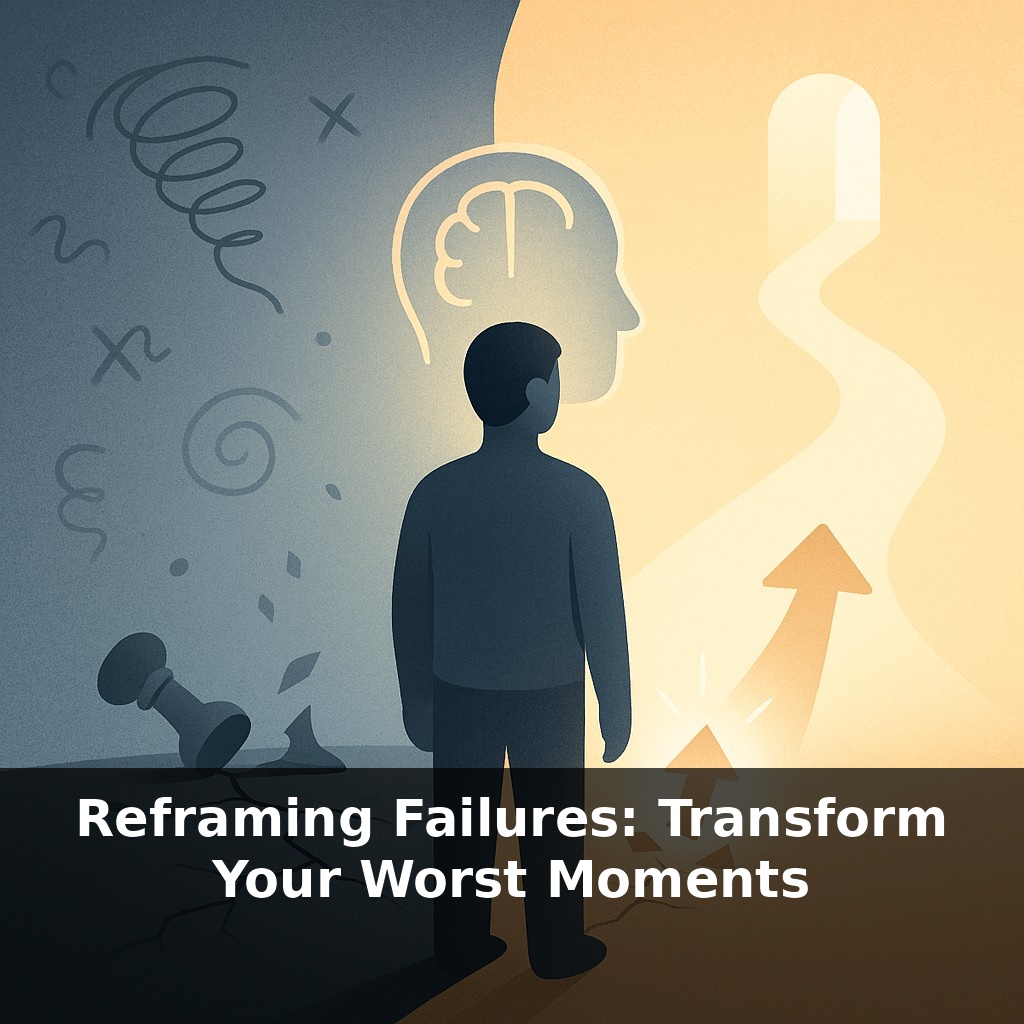
Reframing Failures: Transform Your Worst Moments
📝 Transcript
Right after a major failure, your brain quietly releases the same chemical it uses for rewards. In that moment, one tiny choice—how you explain the failure to yourself—can send you toward a breakthrough… or into a spiral you’ll still feel months from now.
Most of us were never taught what to *do* in that critical moment after things go wrong. School graded outcomes, not interpretations. Workplaces often praise flawless execution, not honest post-mortems. So we learn to treat setbacks like verdicts on who we are, instead of clues about what to try next. Yet researchers keep finding the same pattern: people who stay curious about their worst moments don’t just “feel better”—they literally extract more usable data from the exact same event. The key shift is moving from “Why am I like this?” to “What is this trying to teach me?” That’s where tools like growth-mindset framing, cognitive reappraisal, and self-compassion come in. They’re not about sugarcoating or pretending it didn’t hurt; they’re about turning a painful result into a sharper lens, so each misstep secretly funds your future competence.
Most people run three unhelpful “default scripts” after something goes wrong. The first is the prosecutor: you scan the scene only for evidence that you’re guilty of not being good enough. The second is the escape artist: you minimize, distract, or move on so fast you never learn anything. The third is the historian: you treat this one setback as proof that “this always happens” or “never works.” Research-backed reframing doesn’t mean denying pain; it means gently interrupting these scripts long enough to ask better questions—specific, behavioral, and future-focused instead of global, personal, and permanent.
Subscribe to read the full transcript and listen to this episode
Subscribe to unlockSubscribe for $1.99/month to unlock the full episode.
From this course

Write Your History: Transform How You See Your Story
8 episodesUnlock all episodes
Full access to 8 episodes and everything on OwlUp.
Subscribe — $1.99/monthLess than a coffee ☕ · Cancel anytime