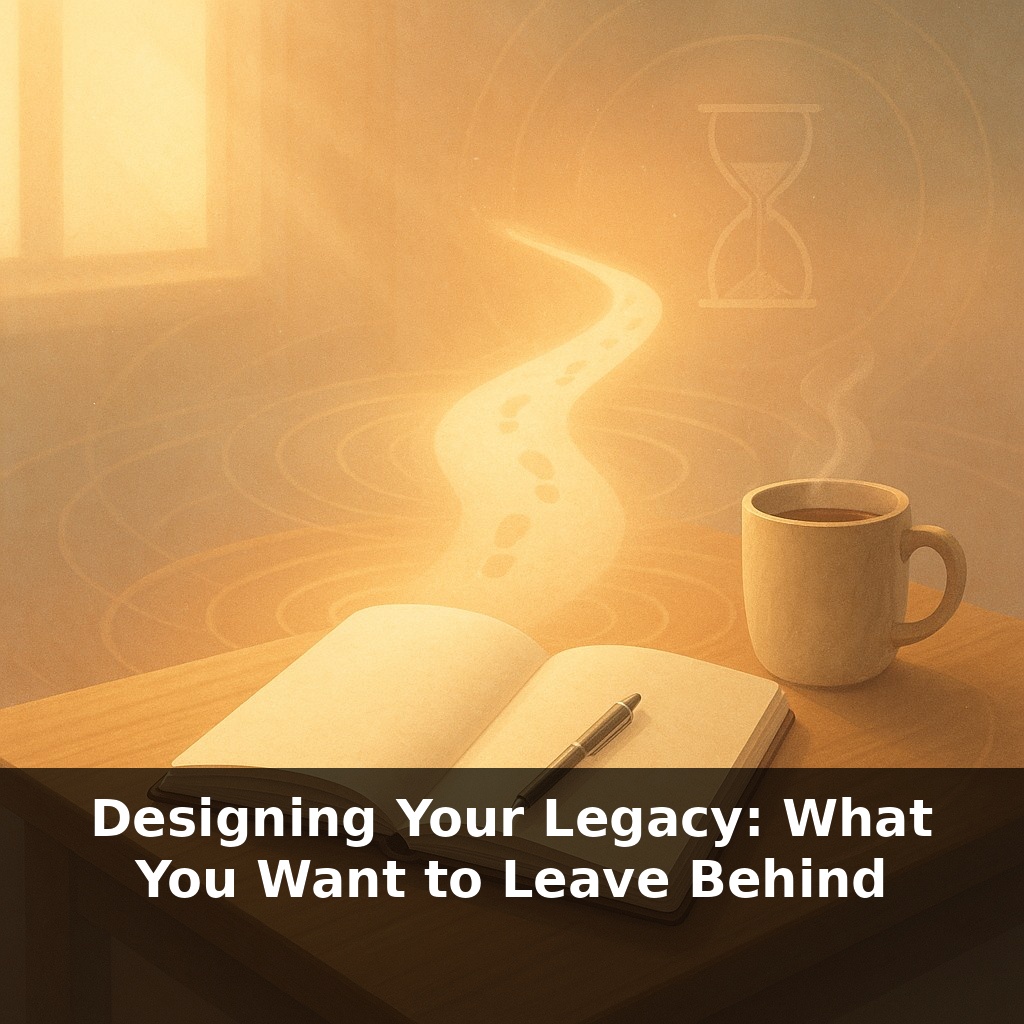
“Most people say they care deeply about how they’ll be remembered—but only a fraction have ever said it out loud, even to themselves. You’re answering emails, scrolling your feed, cooking dinner… and quietly building a legacy you never actually chose. That gap is where today’s episode lives.”
According to recent research, people who take even one hour to clarify what they want to leave behind report higher wellbeing months later—not because life gets easier, but because their days start to line up with something that feels worth the effort. You’ve already seen how an unexamined life can quietly drift into an accidental legacy. Now we’ll flip that: what happens when you design it on purpose?
This isn’t about drafting a legal document or engraving some grand statement in stone. It’s more like editing a playlist you’ve been adding songs to for years without noticing the theme. Which tracks still sound like you? Which ones don’t fit anymore?
We’ll explore how people turn vague hopes into specific promises, how small daily choices stack into stories, and how to make sure the “you” people remember actually matches the one you meant to be.
Researchers are finding that when people name the impact they want to have—and then tie it to ordinary routines—their behavior shifts in measurable ways. One study showed that writing a single “legacy letter” boosted wellbeing half a year later; another found that employees who see how their tasks serve a bigger mission are more than twice as engaged. Yet most of this “legacy work” doesn’t happen in grand moments. It shows up in calendar invites, in the way you end a meeting, in the conversations you choose not to postpone. That’s where your future story is quietly being drafted.
Only 37% of adults have a formal will, but twice that number say they care how they’ll be remembered. That gap isn’t just about paperwork; it’s about leaving the story of your life on “default settings” instead of design.
So how do people actually move from caring in theory to changing something in practice?
Researchers notice a pattern: the people who follow through don’t start with “What will be said at my funeral?” They start with, “Who, specifically, do I want to be better off because I was here—and how would we notice?” The more concrete the answer, the easier it is to reverse‑engineer your days.
In studies of mentoring and volunteering, for example, broad wishes like “help the next generation” rarely changed behavior. But when participants committed to something like “mentor two first-gen college students each year,” follow‑through jumped by up to 40%. The shift wasn’t in motivation; it was in precision.
You can apply the same move in different arenas:
- Relationships: “Be a good parent” becomes “protect one tech‑free hour with my kid every evening, no matter what.” - Work: “Do meaningful work” becomes “choose at least one project each quarter that clearly aligns with my company’s mission, and say no to one that doesn’t.” - Community: “Give back” becomes “join the Wednesday neighborhood cleanup for the next three months.”
Money can be part of this, but it’s not the whole picture. A modest donor‑advised fund, a recurring micro‑donation, or a small scholarship can carry your name forward—but values and stories are what teach people how to use those resources. That’s why some families now pair financial plans with “ethical wills”: short documents that spell out what matters to them, the mistakes they’ve made, the kinds of courage they hope descendants will practice.
Technology adds another layer. Your digital footprint—old posts, tagged photos, blog comments—already tells a story about you to strangers and future relatives who may never meet you. Some people are starting to curate this on purpose: recording short video messages, scheduling emails to be released later, or using blockchain time‑locks so letters or gifts arrive decades down the road.
None of this requires being wealthy or well‑known. Research on “micro‑legacies” shows that consistent, small commitments—weekly phone calls to an isolated relative, hosting a monthly study group, quietly sponsoring someone’s training—often ripple further than any single grand gesture. They create traditions other people can copy, extend, and pass on.
Your challenge this week: For seven days, notice every time you’re about to say, “I should really…” about the future—then stop and rewrite that thought as a specific, countable commitment (who, how often, for how long). Keep a simple list. At the end of the week, circle one item you’re willing to test for the next 30 days and tell one other person you’re doing it.
A helpful way to spot the shape of your legacy-in-progress is to look at where your effort clusters. Think of a week like a pot on the stove: where are you actually turning up the heat? Some people discover that most of their “extra” energy goes into teaching coworkers, troubleshooting for friends, or quietly “translating” complex topics for others. That pattern suggests a legacy of clarity and guidance, whether or not they ever carry an official mentor title.
Try this: scan last month’s calendar and messages. Highlight moments when someone reached out to you not because they had to, but because they trusted you—your judgment, your humor, your discretion. A friend asking you to read their draft resignation email points to a different kind of impact than a neighbor calling you first during a crisis.
You can also look at what people already copy from you. Maybe colleagues adopt your meeting format, or younger cousins borrow your phrases. Those small imitations are early footprints of the story you’re leaving behind.
A paradox is emerging: as life expectancy rises, the “window” for shaping how you’re remembered both widens and fragments. You may end up with several distinct chapters—careers, locations, even identities—each leaving a different trace. That raises new questions: will you be okay if one era overshadows the others? As AI and VR make it easier to store every version of you, the real power may lie in choosing what to **edit out**, not just what to preserve, so your future story feels coherent, not crowded.
So as you test small commitments, pay attention to which ones feel oddly energizing, like a recipe that “just works” every time you make it. Those are clues. Over time, you’re less scripting an epic and more refining a house style: the way you handle conflict, share credit, pass on knowledge. That style is what people will quietly quote long after you stop speaking.
To go deeper, here are 3 next steps:
1) Block 30 minutes today to complete the free “Legacy Letter” template at livingwisdomlegacy.com (or a similar legacy letter resource) and actually draft one letter to a specific person you love, using stories that reflect the values you want to be remembered for (not your achievements). 2) Grab a copy of *The 7 Habits of Highly Effective People* and read Habit 2: “Begin With the End in Mind” tonight; while you read, keep your phone open to the Notes app and translate 3 of your “end in mind” ideas into concrete legacy projects (e.g., mentoring one younger colleague this year, recording 10 family stories, funding one cause you care about). 3) Set up a free account with a secure digital vault tool like Everplans or Trust & Will and upload at least three key “legacy artifacts” today (for example: your current will or beneficiary info, a one-page document listing your core values, and a short voice note telling a story you want future generations to hear).