Your next awkward conversation at work might be the very thing that saves your reputation. A Harvard study found that teams who talk about problems every week finish projects noticeably faster. So why do smart people wait until things blow up before saying a word?
Here’s the quiet trap new managers fall into: you spot something off—an unclear email your direct report sent, a tense exchange in a meeting, a deadline barely hit—and you tell yourself, “I’ll bring it up in our next one-on-one.” Then that one-on-one gets moved. A week passes. The moment goes fuzzy. Now the feedback feels nitpicky or awkward, so you skip it. Multiply that by 10–20 moments, and suddenly you’re “surprised” by a performance issue that was actually broadcasting warning signals for weeks. Early feedback isn’t about being harsher; it’s about being smaller and more specific. Short, timely check-ins keep tiny misunderstandings from hardening into stories like “they’re uncommitted” or “my manager doesn’t trust me”—on both sides of the relationship.
So in your first 90 days, your real job isn’t just assigning work—it’s adjusting the team’s aim in small degrees, over and over. That’s where early feedback lives: in the tiny course corrections most people overlook. The research is clear: feedback given close to the moment is more accurate, better remembered, and more likely to change behavior. It also signals, “I’m paying attention and I care how this goes,” which quietly builds trust. Think of each brief conversation as adding one brushstroke to the working relationship; no single stroke defines the picture, but together they create something you can both recognize and improve.
Most new managers think the “hard” part of feedback is choosing the right words. The real difficulty is getting the timing and scope right: saying one specific thing, soon, instead of waiting until you have a whole case file built up.
This is why the 48‑hour window matters. Beyond two days, your memory starts stitching in assumptions: what you think their tone meant, why you believe they did it, how it “always” goes with this person. The behavior is now wrapped in a story—and people argue with stories. They can, however, look at a single, recent, observable moment and talk about it with you.
To do that well, shrink both the target and the ask.
Shrinking the target means talking about one concrete behavior, not the person’s identity or general style. Compare:
- “You’re not very detail‑oriented.” vs. - “In yesterday’s status update, the dates for A and B didn’t match what we agreed in planning.”
The second is easier to hear because it’s anchored to something they can see and remember. It also makes it far more likely you’ll discover context you missed—competing priorities, unclear instructions, tool issues—rather than jumping straight to character judgments.
Shrinking the ask means you’re not demanding a personality overhaul. You’re inviting a next step: “Next time, let’s do X instead.” You’re co‑designing a small experiment, not issuing a verdict. That makes the conversation lighter without making it vague.
There’s another benefit to staying small and timely: you normalize feedback as maintenance, not emergency response. When you regularly talk about the little things, people stop interpreting every comment as a sign of impending doom. That’s a core ingredient of psychological safety: the sense that being imperfect here is allowed—as long as we talk about it and adjust.
Notice too that this works just as powerfully with strengths. Catching someone doing something effective and naming exactly what worked (“the way you summarized the trade‑offs in that meeting made the decision easier”) reinforces useful patterns far more than generic praise.
Over time, these micro‑moments create a running dialogue about how you work together, not an annual trial about whether you’re good enough.
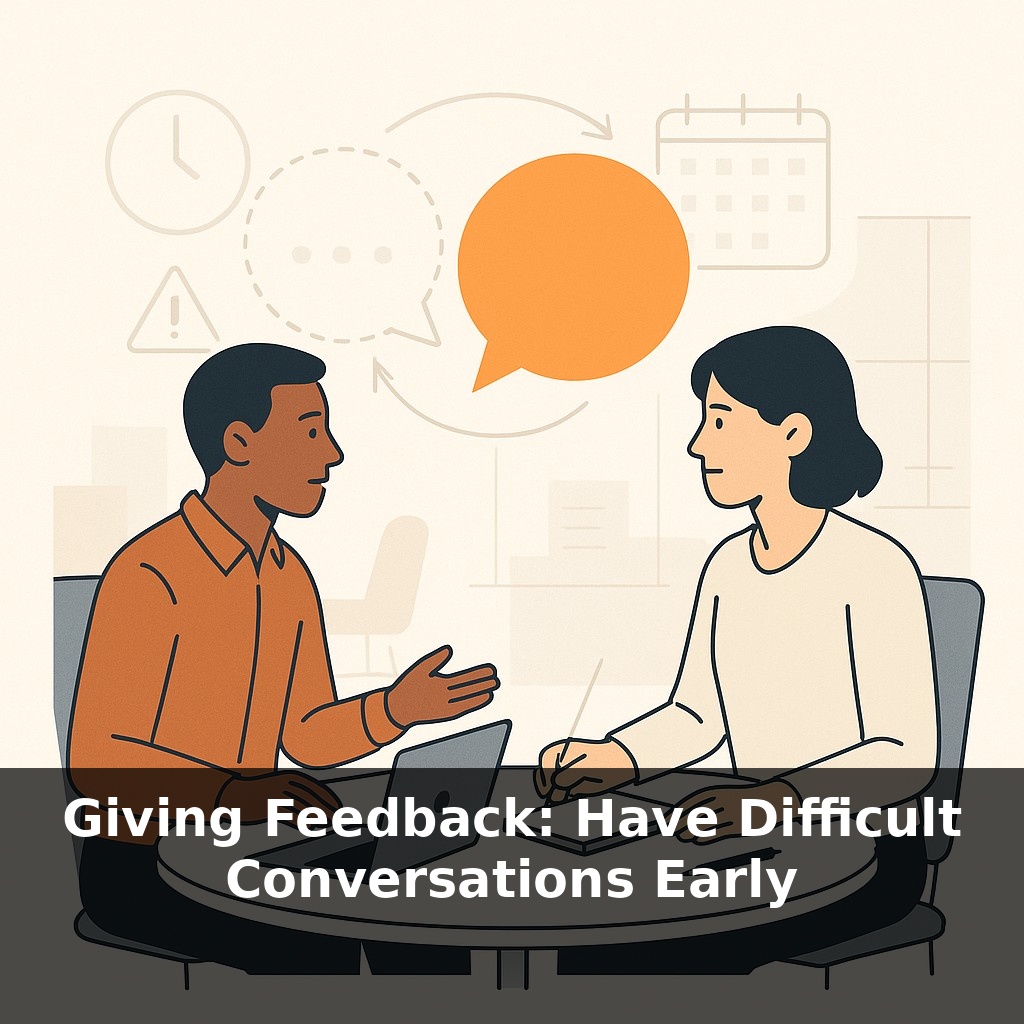
You’re in a stand‑up, your analyst walks through a deck, and one chart quietly derails the room—confusing labels, unclear conclusion. After the meeting, you’ve got a choice: let it slide and hope “they’ll figure it out,” or take 5 minutes the same day to say, “That third slide lost people—next time, try one clear takeaway at the top.” One response protects comfort; the other protects learning.
Notice how small you can keep this. You’re not reviewing their whole performance, just tuning one dial. Do this once a month and it feels like criticism. Do it twice a week and it feels like how work happens here.
You can also go first. If you sense tension after you push back on someone’s idea, try: “I was pretty direct in that meeting. How did that land? Anything I should do differently next time?” You’re signaling that feedback isn’t just something you give; it’s something you expect to receive—and adjust to—in real time.
Weekly feedback loops are becoming the new operating system for modern teams. As AI tools start surfacing patterns in how you write, meet, and decide, your real advantage won’t be access to data—it’ll be your skill at turning tiny signals into human conversations. Think of a weather radar quietly warning of a storm; leaders who respond early can redirect work, reset expectations, or protect capacity long before issues show up in metrics, burnout scores, or exit interviews.
So your next step isn’t mastering a script; it’s building a rhythm. Treat each small comment as a sketch, not a verdict—something both of you can redraw. Over time, these sketches turn into a shared map: where this person shines, where they get stuck, and how you can move together faster without burning out or losing trust along the way.
Try this experiment: Pick one person you’ve been avoiding giving feedback to and, within the next 24 hours, invite them to a 15-minute “quick debrief” chat about a *single* recent moment (e.g., yesterday’s client call, last week’s handoff, or the slide deck you just shipped). In the conversation, start with, “Can I share something I’m noticing early, before it turns into a bigger issue?” and then give feedback using this exact structure: (1) specific observation (“When X happened…”), (2) impact (“It led to…”), (3) request (“Next time, could you…?”). Afterward, immediately rate the conversation from 1–10 on two things—how early it felt (vs. waiting) and how honest it felt—and jot down one tweak you’d make before trying the same structure with a second person later this week.