Hidden dynamics in your workplace might contribute more to your promotion than your actual skills. Your ability to manage those above you could secretly hold the key to advancing your career. One quick shift in how you update your manager this week can quietly change how they see your potential for the rest of the year.
71% of managers say they’d rather get too much information than not enough—yet most employees still leave them guessing. In your first 90 days, this gap quietly shapes which projects you’re trusted with, how much autonomy you get, and whether your manager sleeps well when your name is on something important.
Today, think less about “performing” for your manager and more about running a joint experiment: what if your updates and questions were designed to make their decisions easier? That means tuning into their pressures, not just your to‑do list; noticing which details they jump on and which they wave away; and spotting the moments when a 3‑minute heads‑up could prevent a 3‑week fire drill.
You’re not trying to be impressive—you’re trying to be predictably useful.
Think of this week as reconnaissance: you’re mapping the terrain around your boss, not charging ahead with hero moves. Start by noticing what keeps them in motion—where their calendar bunches up, which names or projects make them lean forward, when their Slack or email suddenly goes quiet. Those patterns are clues to the constraints they’re managing that never show up on an org chart. Like watching storm fronts roll in, you’re learning which clouds always mean rain here—and which just look dramatic but blow past harmlessly. The goal isn’t to avoid weather; it’s to stop being surprised by it.
Most people stop their “manager research” at personality: are they detail‑oriented or big‑picture, introvert or extrovert? That’s too shallow to be useful. You want to understand three deeper layers: what they’re optimizing for, how they like to decide, and where they feel exposed.
First: what they’re optimizing for. Listen to the verbs and metrics they repeat. Do they say “ship,” “hit the date,” “unblock,” or do they say “quality,” “risk,” “reputation”? A boss who keeps asking “How does this ladder to our OKRs?” is playing a different game than one who keeps asking “What will customers feel here?” Keep a tiny private glossary of those phrases; they’re your hint about what “good” looks like in their head.
Second: how they like to decide. Some managers want options with pros/cons. Others want a clear recommendation they can quickly yes/no. Notice what happens when you bring them open questions versus proposed answers. If they consistently ask, “What would you do?” or “What’s your take?”, treat that as a request: don’t show up with a blank page again. If they instead ask for more data, your prep needs to include one level deeper of evidence next time.
Third: where they feel exposed. This isn’t about their insecurities; it’s about their real risks. A director who was burned by a public launch failure will scrutinize anything customer‑facing. A new manager who just inherited a shaky team will be sensitive about execution reliability. When they ask extra questions in certain zones, that’s a tell. Your job is to put stronger guardrails there before they ask.
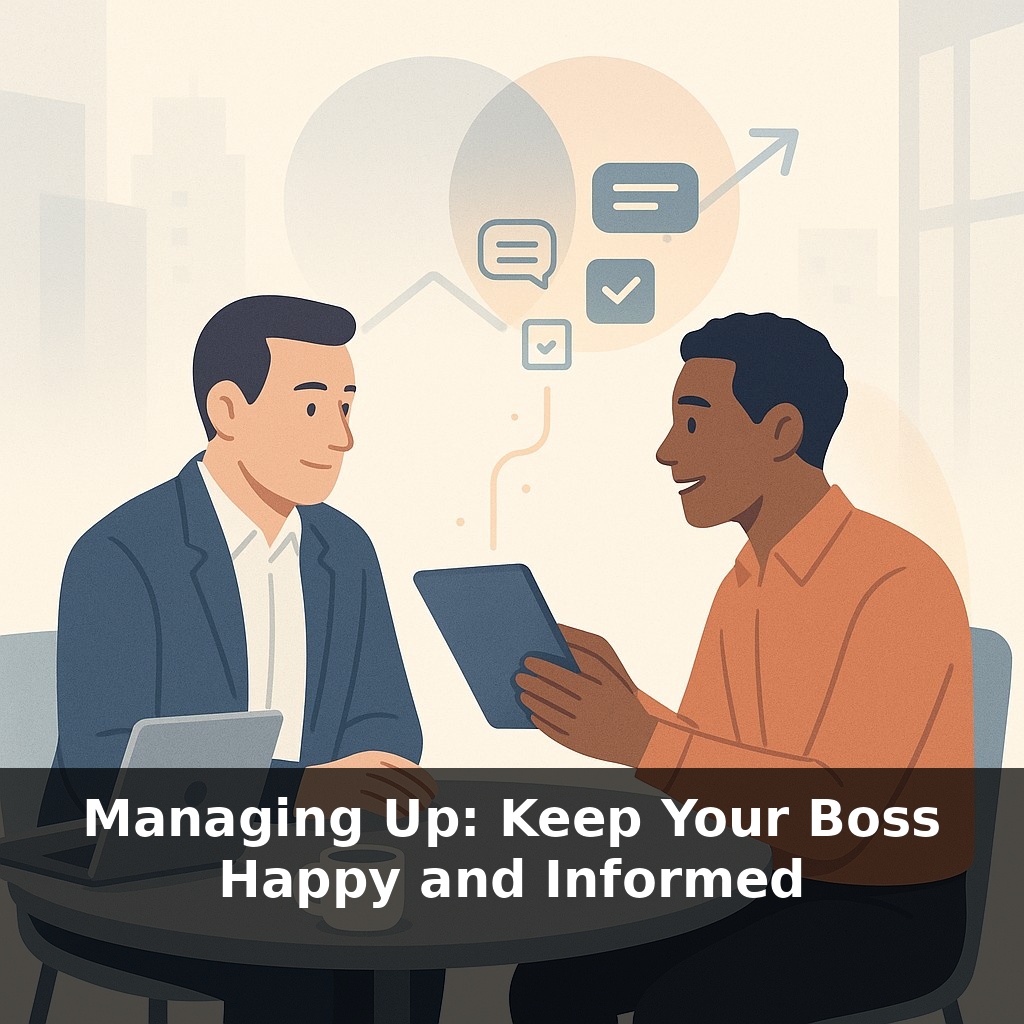
A practical way to pull all this together: standardize your updates around three beats—status, risk, and ask. Status: a one‑line “here’s where we are,” expressed in their language. Risk: the one or two things that could realistically slip or break, with your current mitigation. Ask: what you need from them specifically—decision, escalation, feedback, or just awareness.
Over time, this turns your conversations from “reporting up” into joint problem‑solving. The more clearly you frame trade‑offs the way they see the world, the less they need to dig, and the more they can start handing you bigger calls to make on your own.
Try treating your first few weeks like fieldwork: you’re quietly collecting data on what actually earns attention and what slides by. In one tech company, a new hire noticed her manager always skimmed long Slack threads but never missed calendar subject lines. She started naming updates like mini-headlines—“Customer X at risk: need pricing decision”—and watched response times shrink from days to minutes.
In a hospital, residents learn fast that some attendings care most about lab numbers, others about how the patient looks the moment they walk in. The sharp residents tailor their handoffs accordingly: same patient, same facts, different order and emphasis. That’s managing up in practice—respecting the other person’s mental model instead of insisting on your own.
You can also borrow from product teams: run “micro‑launches” of new update styles. Try a tighter format one week, a visual summary the next, and watch which one your manager naturally forwards, saves, or quotes back. Their behavior is feedback, even if they never say a word.
Managing up quietly rewires who gets invited into bigger rooms. As AI tools start auto-digesting your emails, tickets, and docs, the real differentiator won’t be who types the status note—it’ll be who frames the story behind it. Think of your updates less like receipts and more like movie trailers: quick context, real stakes, clear next scene. As projects sprawl across teams and time zones, the people who can do that for multiple leaders at once will shape which bets the company actually makes.
Over the next 90 days, treat every touchpoint with your manager as a tiny prototype: adjust timing, format, and depth, then watch what lands. Your challenge this week: pick one recurring interaction and redesign it—shorter, clearer, more focused on trade‑offs. Like tuning an instrument, small tweaks now can change how you’re heard for the rest of your role.