
Introduction to APIs: The Bridging Blocks of Tech
📝 Transcript
Right now, almost every tap, swipe, and click you make online quietly passes through invisible gates. You order food, hail a ride, check a map—each feels simple, but dozens of hidden conversations between apps decide what happens next. Today, we’re going to uncover those voices.
Those digital conversations aren’t random chatter—they follow strict rules. That’s where APIs come in: they define who can speak, what can be asked, and what kind of answer must come back. Open your weather app: it doesn’t store the planet’s climate history; it calls an API that specializes in that data. Scroll through social media: every fresh post, like, and follow is synchronized through APIs connecting countless services behind the scenes. Even logging in with “Sign in with Google” or “Continue with Apple” is your identity moving across platforms via APIs. As we explore this series, we’ll see how these rules shape not just code, but business models, user experiences, and the speed at which new ideas can reach the real world.
In this episode, we’re zooming out from individual taps and swipes to the vast infrastructure that makes them possible. More than 90% of global web traffic now flows through at least one API call, and companies treat these connections as seriously as highways or power grids. Cloud platforms expose services through them, startups grow by offering specialized data, and even household devices quietly depend on these links. Think of a city waking up: traffic lights, trains, and deliveries must coordinate. APIs are how our digital “city” agrees on timing, access, and trust at massive scale.
Pause for a moment on that “90% of web traffic” stat. That isn’t just a technical curiosity; it means most of what happens online is no longer about humans talking to websites, but systems talking to systems on our behalf. Behind one “Buy Now” click, your device may trigger a cascade: a pricing service confirms the cost, an inventory API checks stock in a distant warehouse, a payments API talks to your bank, and a shipping API books a delivery slot—all in fractions of a second, all without you seeing any of it.
This shift changes how software gets built. Instead of coding everything from scratch, teams increasingly assemble applications from existing building blocks exposed as APIs: maps from Google or Mapbox, payments from Stripe, SMS from Twilio, authentication from Okta. A tiny startup can launch a polished product in weeks because so many hard problems—fraud detection, currency conversion, global scaling—are “outsourced” to specialized providers and accessed through their interfaces.
It also changes who can build. Tools like Zapier, Make, and countless “no-code” platforms sit on top of APIs and let non-programmers connect them visually: “When a new lead appears in my CRM, create a task, send a Slack message, and add a row to this spreadsheet.” Under the hood, each step is an API call. The person wiring this together might never see raw JSON, but they’re still orchestrating those same conversations.
Performance and reliability become critical when everything depends on these links. An API that responds in 100 ms vs. 800 ms can mean the difference between a fluid checkout and an abandoned cart. Companies monitor error rates, throttling limits, and regional latency the way airlines monitor flight delays—because if a key provider slows down, every dependent app feels it.
And there isn’t just one “flavor” of interface. REST remains common for web services, but GraphQL offers flexible querying, gRPC emphasizes speed and type safety, WebSockets keep real-time channels open, and older SOAP services still quietly run core banking and telecom operations. Choosing between them is less about fashion and more about needs: streaming vs. request–response, strict contracts vs. flexibility, human-readability vs. raw speed.
Your challenge this week: notice every time a product or website offers to “connect” with something else—linking accounts, sharing data, syncing content—and, for three of them, dig one layer deeper. Search their docs or support pages to find the name of the API or developer platform behind that connection. Write down what data moves, in which direction, and what might break if that API went down for an hour.
Think of APIs less as silent background helpers and more as curated routes through a wild landscape. A fitness app, for instance, might call one provider for step counts, another for heart-rate zones, and a third for route elevation. Each provider decides which “trails” are open: maybe heart-rate data is available only after explicit consent, while aggregated step trends are open for broader insights. This is where API design becomes almost like cartography—choosing what to expose, how clearly to label it, and where to put guardrails.
Consider how this plays out in real products. Spotify lets other apps control playback or display what you’re listening to, but not download raw music files. Banking “open finance” APIs let budgeting tools see transaction histories, yet block them from initiating transfers without strict checks. These boundaries aren’t accidental; they balance usefulness, privacy, and risk.
Over time, patterns emerge: rate limits cap how fast travelers move, versioning redraws maps, and deprecated paths quietly close.
As APIs multiply, they’re quietly shaping rules of fairness and power online. Who gets to plug into which streams of data—and on what terms—can determine which startups blossom and which never launch. Think of artists choosing which parts of a painting to reveal: some details stay private, others are licensed, a few are given away to inspire remixes. As more sectors standardize these exposure choices, “openness” itself may become a competitive feature users actively compare.
As these connectors spread, they start to feel less like wiring and more like a shared language cultures use to trade stories and tools. The more fluent you become, the more you can remix services into something personal—your own “dialect” of the web. This series will keep zooming in, mapping how small interface choices can quietly tilt entire markets.
Try this experiment: Pick one public API (like the OpenWeather API or the PokéAPI) and use an online tool like Postman or Hoppscotch to actually send a live request and see the JSON response come back. Next, change one thing in the request—like a city name, a Pokémon ID, or a query parameter—and watch exactly how the response changes. Finally, sketch (on paper or a whiteboard) a tiny “app idea” using that same API—draw boxes for “User”, “Your App”, and “API”, and label the exact request/response you just saw so you can literally see the bridge you just used in action.
From this course
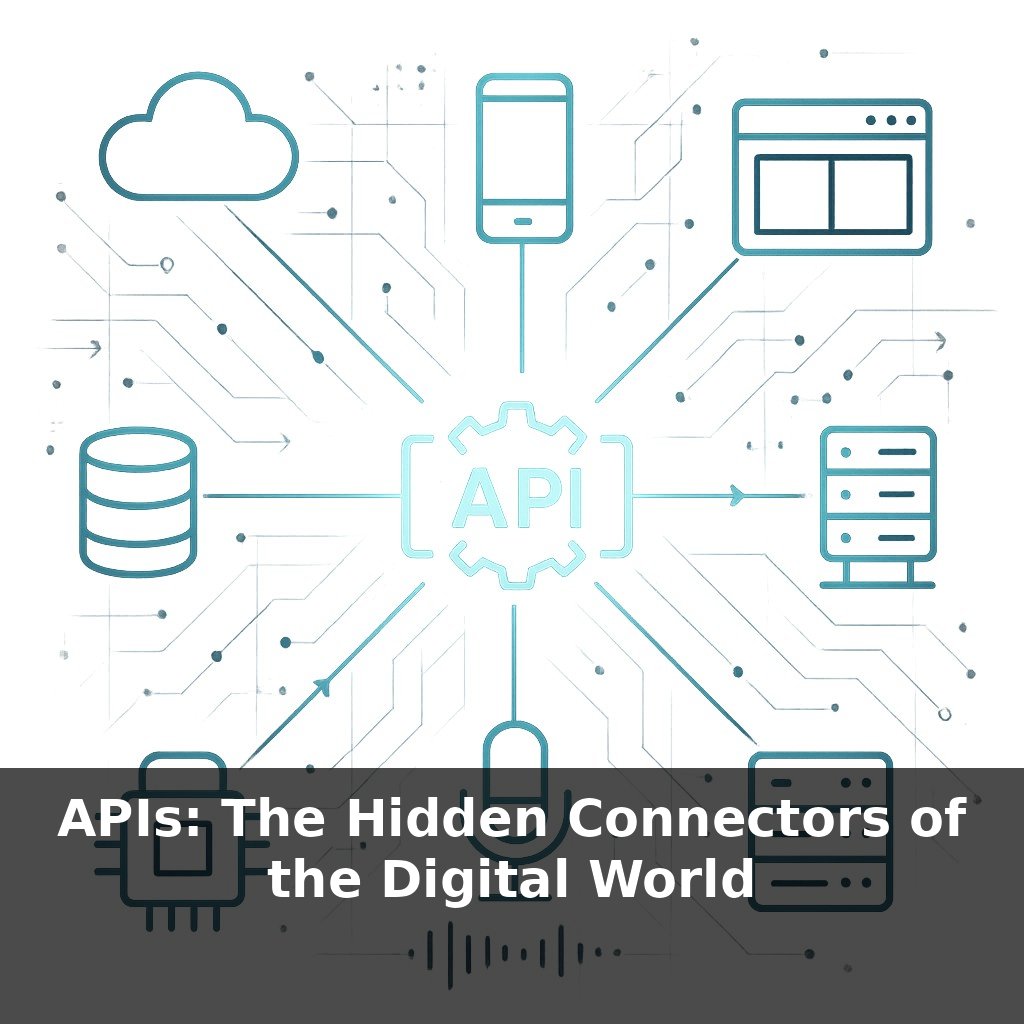
APIs: The Hidden Connectors of the Digital World
6 episodesUnlock all episodes
Full access to 6 episodes and everything on OwlUp.
Subscribe — $1.99/monthLess than a coffee ☕ · Cancel anytime

