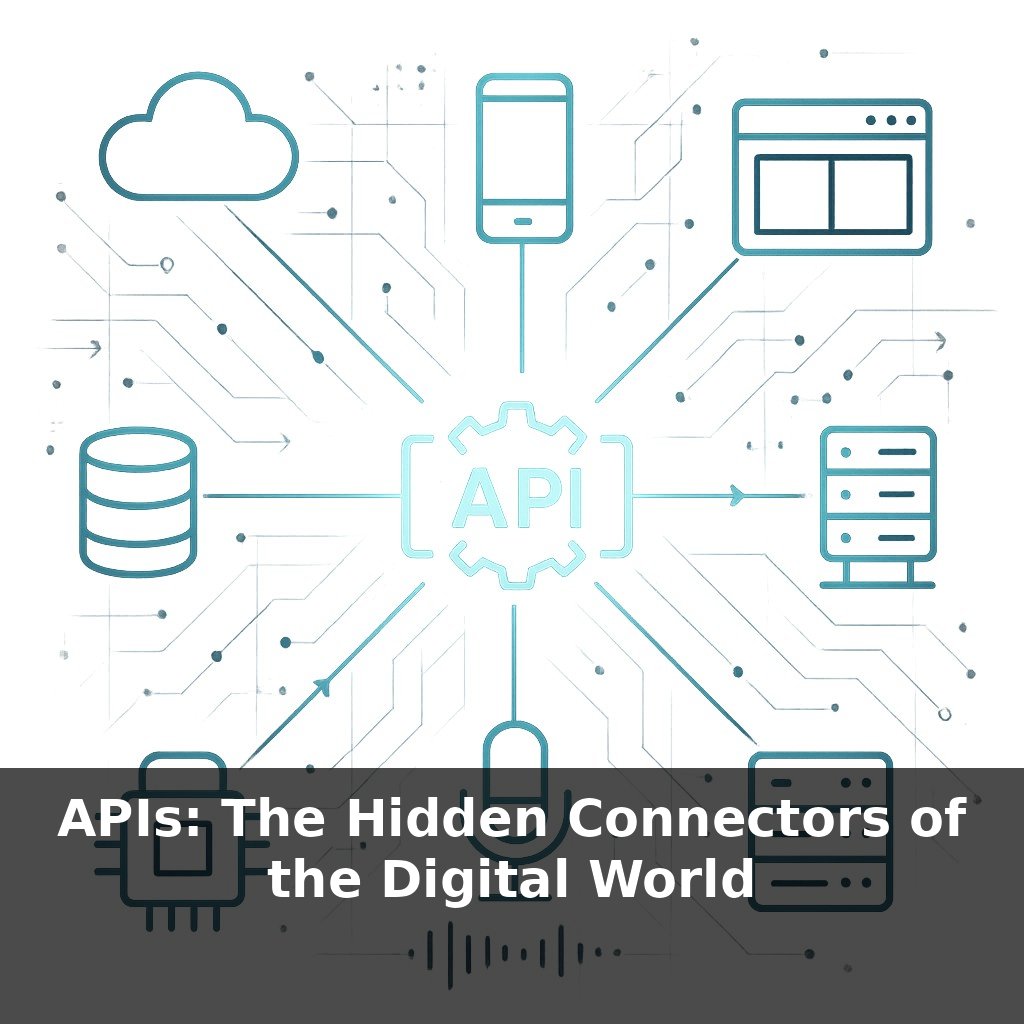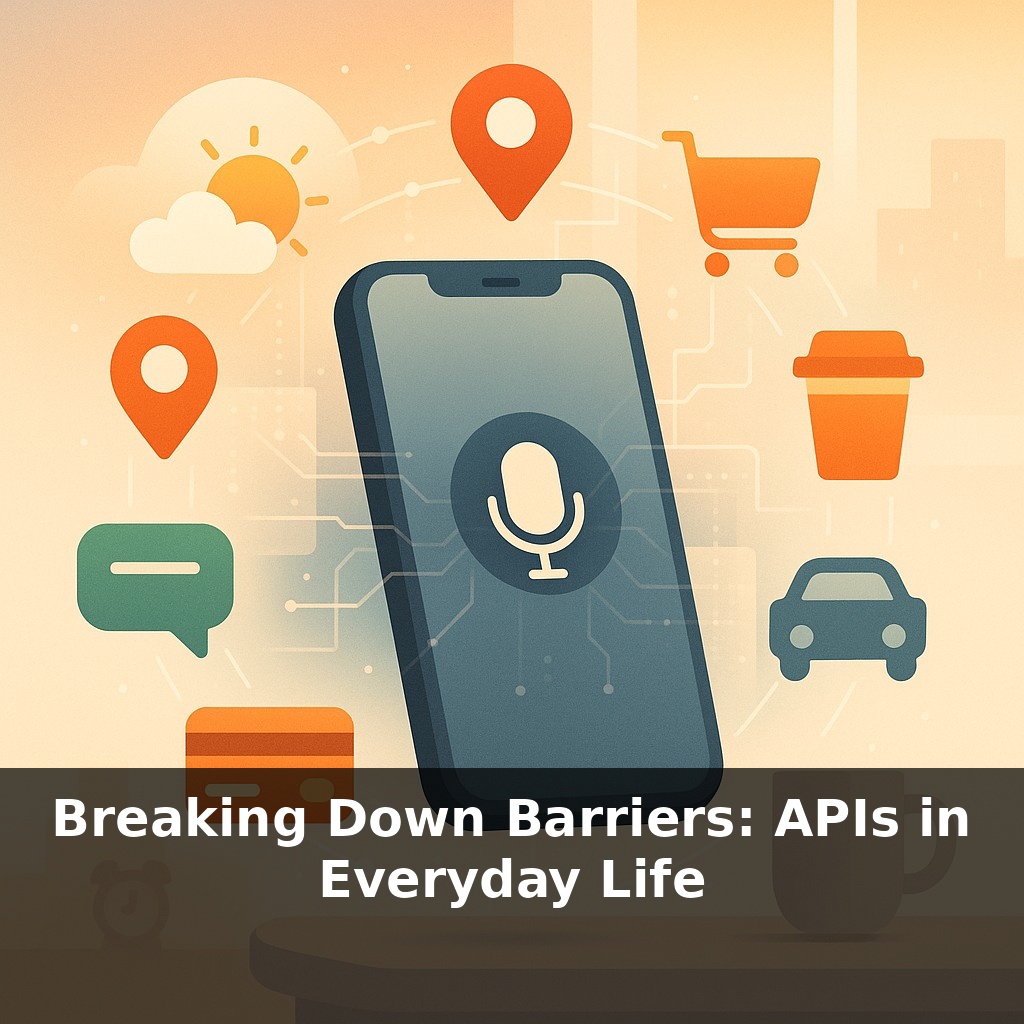
Right now, nearly all the taps, swipes, and clicks you make online are quietly routed through invisible digital middlemen. You tap to pay, get a text that your package moved one town over, ask for tomorrow’s weather—and these hidden connectors quietly make it all feel effortless.
Think about your morning routine. Your alarm shuts off on your phone, a calendar reminder pops up, a ride-share estimate appears, and a coffee app flashes a “skip the line” offer. Different companies, different apps, different data sources—yet everything lines up just in time, like a well-rehearsed street performance. None of these services were built as one giant system. They’re stitched together through agreed-upon ways of talking, so each app can confidently say, “Here’s what I need, here’s what I’ll give back.” That’s why startups can plug into payment systems without becoming banks, fitness apps can sync with wearables they didn’t design, and travel sites can surface flights from airlines they don’t own—all without you seeing the seams.
Behind those smooth handoffs between apps is a quieter shift in how products are built. Instead of companies trying to do everything themselves, they’re increasingly treating their capabilities as building blocks others can reuse. Order a taxi from inside a maps app, stream music inside a game, log in with a single button across dozens of sites—each moment relies on one team exposing just enough of its service for others to plug into. It’s less like crafting a single masterpiece and more like contributing tiles to a shared city mural, where each new piece expands what’s possible for everyone.
Scroll through your home screen and almost every icon depends on this quiet infrastructure. Your banking app pulls real-time card activity from a fraud-detection service. Your food delivery app checks restaurant menus, traffic estimates, and payment gateways in seconds. Your airline app pings baggage systems, weather feeds, and airport databases. Each one is calling out to specialized services you’ll never see, yet you feel the results as “this app just works.”
This is why APIs show up in over 90% of global web traffic: they’re the standard way modern software gets leverage. Instead of rebuilding maps, messaging, identity, or payments from scratch, teams plug into providers that focus on doing one thing extremely well. That shortcut isn’t just about saving effort—it changes what products can even attempt. A two-person startup can offer global logistics tracking or enterprise-grade authentication because someone else has exposed those capabilities in a controlled, reusable way.
Inside companies, that pattern scales up dramatically. The average enterprise now juggles more than 1,200 internal APIs, each representing a piece of functionality: “create shipment,” “check inventory,” “calculate tax,” “score credit risk.” Product teams string these together into new flows—say, one API to estimate delivery dates, another to confirm stock, another to finalize payment—without coordinating a dozen departments every time. The result is faster experiments: a new checkout flow, a new subscription offer, a new region launch.
On the consumer side, recommendations and personalization ride this same wave. When Amazon surfaces “customers who bought this also bought…,” it’s not one massive monolith guessing; it’s a recommendation engine exposed through interfaces that other parts of the business—and external partners—can call. That’s how suggestions appear in emails, on product pages, in mobile apps, even in third‑party sites that embed Amazon listings. The intelligence is centralized; the reach is multiplied.
Smart homes take this further by wiring APIs into physical space. Tell a voice assistant you’re “leaving home,” and a chain reaction follows: one call to a scene service, which fans out to lighting, thermostat, security, and blinds. Different brands, different manufacturers, one coordinated outcome that feels like the house itself understands context.
As the number of these connections explodes, so does the responsibility. APIs are locked behind keys, permissions, and encryption; most never face the public internet at all. But they quietly determine which ideas are easy to build, which partnerships are possible, and how quickly new experiences can spread from one corner of the digital world into your daily routine.
Walk through a typical weekend and you’ll see these connectors steering more than screens. Book a last‑minute getaway: one app surfaces boutique stays, another shows local events, a third offers airport rides timed to your flight. Underneath, hotel systems, ticketing platforms, and transport networks expose just enough of their “availability” to be remixed into a single, fluid plan.
Or think about a neighborhood café that wants to punch above its weight. Instead of hiring engineers to build loyalty programs, weather‑based promos, and delivery tracking, it can stitch together services: a marketing tool that triggers offers when rain is forecast, a lightweight ordering system that syncs with multiple couriers, a review dashboard that pulls in comments from several platforms. The café becomes part of a larger digital landscape without surrendering its identity.
Like paths in a forest gradually turning into marked trails, each new connection others find useful tends to get formalized, widened, and reused—until it quietly reshapes how everyone moves.
Over the next few years, those connectors will stop feeling like “tech” and start feeling like part of the environment. Your grocery list could quietly rearrange itself when your train is delayed, or museum exhibits might react to your interests the way a jazz band riffs off the room. APIs will fade into the background as policy, ethics, and design choices move to the front—who’s allowed to connect to what, and on whose terms, will shape how fair and personal these experiences feel.
As more of your day links together this way, the open‑vs‑closed questions start to matter: will you stroll a coastline with public paths, or a gated stretch of private docks? Your challenge this week: notice every moment when one brand suddenly “knows” context from another—and ask who decided that connection was allowed in the first place.