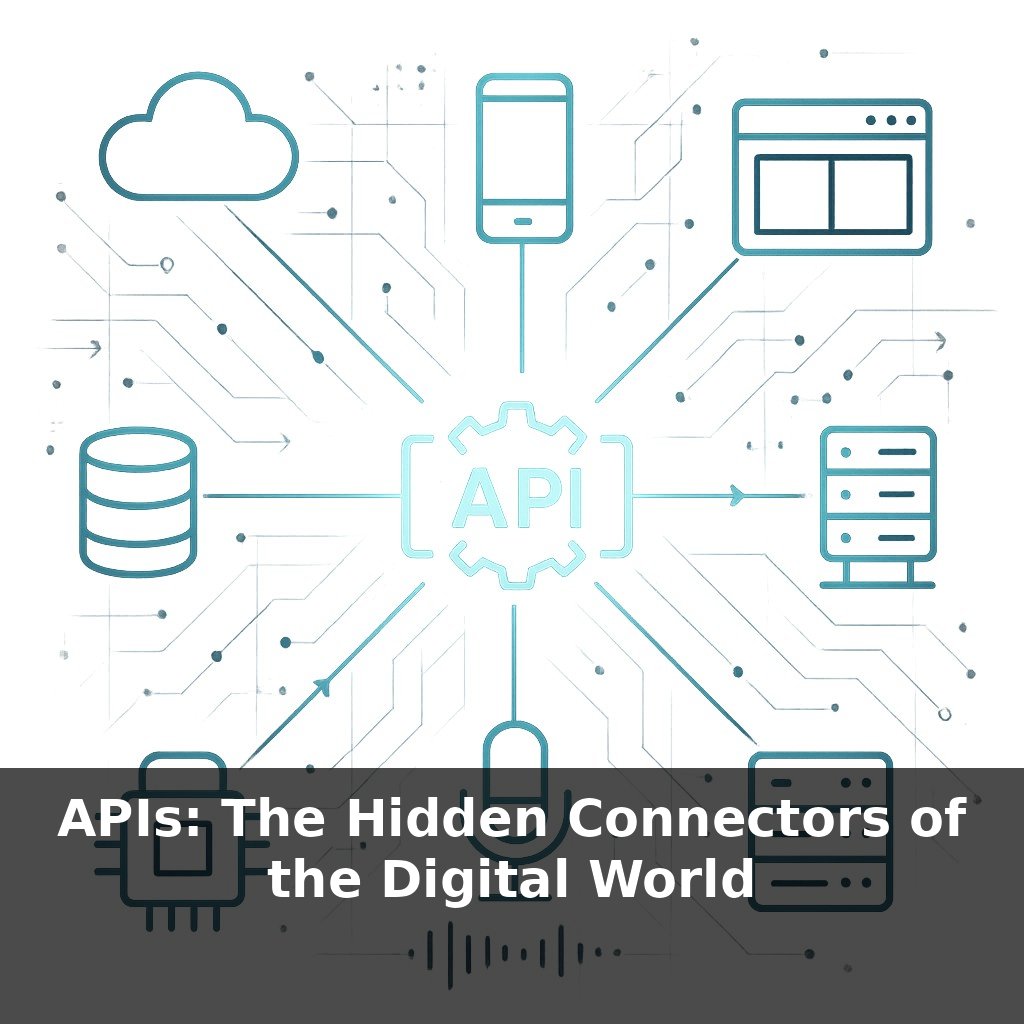
Right now, almost every app you touch is quietly following the same unwritten rule: “speak API, or stay silent.” You scroll, pay, share a photo—and behind the scenes, invisible handshakes decide what connects, what’s blocked, and who gets left out of the conversation.
Gartner estimates that nine out of ten web-enabled applications now lean on external APIs, but that number barely hints at how deeply they’re reshaping connection itself. Those quiet exchanges no longer just move data; they redraw the boundaries of organisations, blur the line between “inside” and “outside,” and turn partnerships into live, programmable links. A retailer can plug into Stripe and start handling payments in minutes. A startup can stitch together mapping, messaging, and identity from giants it’s never met. And inside companies, Amazon-style mandates to expose capabilities through APIs have turned once-isolated teams into composable building blocks. The result isn’t just faster software—it’s a world where relationships, services, and even trust are increasingly mediated by these shared digital touchpoints, forcing us to rethink what it really means to be connected.
Ninety percent of modern apps now quietly lean on others’ capabilities, but the deeper shift is how this rewires power and possibility. When Stripe’s APIs move over a trillion dollars a year, that’s not just convenience—it’s influence over who can participate in the digital economy and on what terms. When an internal mandate like Amazon’s yields an $80.1B cloud business, it shows how technical choices reshape corporate gravity. Even individual developers, 86% of whom depend on these interfaces, are less “building alone” and more curating from a vast, shared library of live services.
Ninety percent of apps leaning on others isn’t just a technical milestone; it’s a social reconfiguration. When so much of what we do flows through shared digital touchpoints, the question quietly shifts from “can these systems talk?” to “who decides what they’re allowed to say—and to whom?”
APIs redraw boundaries in three directions at once.
First, they stretch what any one organisation can realistically claim as “its” product. A ride-hailing service isn’t only its cars and drivers; it’s also whatever its APIs can reach on demand—fraud checks from one provider, navigation from another, payouts from a third. Swap a provider and the experience morphs. The perimeter of the company is no longer the office or even the codebase; it’s the set of programmable relationships it can activate.
Second, they invert who gets to set the rules of participation. When a platform publishes an interface, it effectively writes a constitution for its ecosystem: here’s what’s possible, here’s what’s forbidden, here’s what we’ll measure and bill for. Developers don’t just “use” it; they negotiate with it, bending their ideas around rate limits, data shapes, and changing terms of service. A single version bump can ripple across thousands of businesses that built on top.
Third, they quietly encode values. Choices about what’s exposed and what’s withheld become decisions about transparency, privacy, and fairness. A health service that offers rich data access to insurers but minimal visibility to patients is making an ethical choice, even if it’s framed as a technical roadmap. A social platform that makes it easy for advertisers to target but hard for users to export their network is deciding whose agency matters most.
As more devices, spaces, and services plug into these channels, “interconnected” stops meaning “everything linked to everything” and starts meaning “everything linked through someone’s rules.” That’s both empowering and precarious: it lets a tiny startup assemble global-scale capabilities, but it also concentrates leverage in whoever owns the most widely adopted interfaces.
The deeper opportunity is to treat these links less as one-way pipes and more as negotiated relationships—where interoperability, consent, and resilience are designed in, not bolted on. Your experience of the digital world will increasingly depend on how wisely, and how justly, those negotiations are made.
A music app that pulls your playlists into a fitness service is more than a neat trick; it’s a tiny, programmable alliance between companies that may never speak directly. A city’s transport system opening controlled access to timetables and delay data lets dozens of independent apps choreograph rush-hour decisions in real time. In healthcare, carefully scoped data access can let a small clinic plug into hospital diagnostics without surrendering full control of patient records. Even “login with X” buttons are quiet agreements about identity, risk, and who gets to see what about you. These links can also be withdrawn: a social platform tightening data access can instantly shrink an ecosystem of third-party tools. APIs are less like static pipes and more like treaties—renegotiated, versioned, sometimes broken—through which coordination, power, and opportunity keep being redistributed.
As more of daily life routes through these digital agreements, influence shifts in subtle ways. A tweak to one interface might reroute whole markets, like a river redirected by a small dam. New roles emerge: architects who choreograph meshes of services, and stewards who audit whose interests those meshes serve. Tomorrow’s “infrastructure” may be less about cables and towers, and more about whose rules quietly govern how our tools combine, share, and adapt in real time.
In this new terrain, power lies with those who choreograph how tools cooperate, not just those who own them. Like a city’s evolving street map, routes between services can be widened, tolled, or closed, reshaping who can reach whom. Your challenge this week: trace one digital task end‑to‑end and notice how many silent junctions your journey crosses.