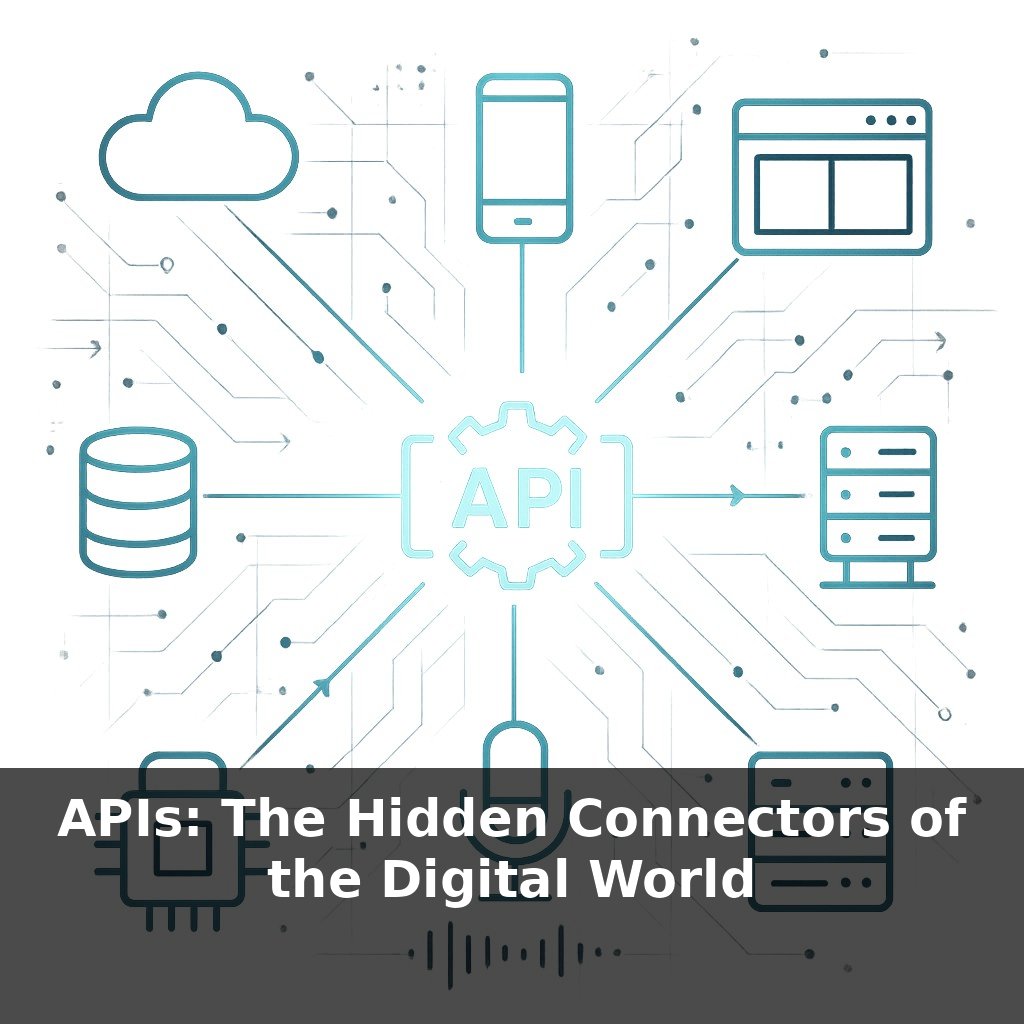
Right now, as you listen, your phone has quietly talked to at least a dozen other systems—none built by the same company. No meetings. No contracts. Yet they cooperate flawlessly. In this episode, we’ll uncover the hidden language that makes that quiet teamwork possible.
That “quiet teamwork” isn’t magic—it’s choreography. And the choreographer is something developers treat almost like a legal document: an API contract. It spells out, in precise, unforgiving detail, which questions a system will answer, how you’re allowed to ask them, and what the reply will look like.
This is how a ride‑share app can pull maps from one company, payments from another, and notifications from yet another—on demand, in milliseconds. Miss a tiny detail in that contract, and the dance falls apart: no driver location, failed payment, broken receipt.
In this episode, we’ll move from the lofty idea of “systems talking” down into the nuts and bolts: the URLs, methods, formats, and security rules that turn an abstract concept into a working, trustworthy connection between real-world software.
But not all “contracts” are created equal. Some are sprawling, legacy agreements no one dares to touch; others are sleek, single‑purpose pacts that do one thing extremely well. Modern APIs lean hard toward the latter. Instead of one giant system trying to do everything, companies now break capabilities into thousands of tiny, focused endpoints—each with its own rules and guarantees. That’s how a large enterprise can quietly run 15,000+ internal APIs, swapping pieces in and out over time without tearing the whole system down or freezing development.
To turn that neat contract into something a machine can actually use, developers codify it into a few concrete layers: structure, behavior, and protection.
First comes structure: which “things” the API exposes. Instead of one vague “doStuff” doorway, you get distinct entry points for customers, orders, payments, notifications, and so on—each with a clear, narrow purpose. This is where REST, GraphQL, SOAP, and gRPC part ways. REST tends to give you many small, focused endpoints; GraphQL offers one flexible gateway where clients describe exactly which fields they want; SOAP and gRPC define rigid message formats that are extremely predictable and efficient, which is why they still thrive in banking and telecom.
Then comes behavior: what actually happens when a request arrives. Inside the provider’s system, that call might fan out to multiple microservices, cache layers, and databases you never see. You don’t get raw database access; you get curated capabilities. The provider decides which actions are allowed, which fields are visible, how errors are reported, and how much load is acceptable. Stripe’s sub‑two‑minute “first successful call” stat isn’t luck—it’s the result of obsessively controlling this behavior so the first interaction feels almost frictionless.
On top of that sits protection. An API that’s easy to call but open to everyone is a liability. This is where keys, OAuth 2.0, and mutual TLS enter. A simple key says “we know which application is calling.” OAuth adds, “and we know which user, and what they’re allowed to do.” Mutual TLS goes further, verifying both sides at the network level—critical when financial or health data is on the line.
Think of well‑designed APIs like a national park trail system: clearly marked paths (endpoints), posted rules (limits and permissions), and ranger stations (auth and monitoring) that keep visitors safe while preserving the ecosystem.
Multiply that by thousands of APIs in a single enterprise and you get a living, shifting landscape. Some paths are experimental and short‑lived; others are ancient and heavily used. The craft of API design is deciding which trails to build, how stable to keep them, and how much freedom to offer without letting the forest burn.
When this all clicks, everyday apps start to look less like black boxes and more like modular kits. Open your banking app and you’re often seeing your bank’s own APIs stitched to a credit‑scoring service, a fraud‑detection platform, even a third‑party currency‑conversion feed. None of those teams ship the same codebase, yet their endpoints line up tightly enough that balances, alerts, and exchange rates appear as one seamless view.
The same is happening in less obvious places. A logistics company might expose package‑tracking APIs to partners while consuming traffic, weather, and port‑status APIs behind the scenes to reroute shipments in real time. A game studio might plug in separate APIs for chat, leaderboards, payments, and matchmaking, swapping providers without rewriting the core game.
In practice, “using an API” becomes less about knowing what’s inside and more about choosing which external powers you’re willing to rely on—and which internal capabilities you’re ready to expose to others.
APIs are starting to feel less like plumbing and more like creative tools. As AI models learn to read business goals and spit out working integrations, “connecting systems” shifts from a specialist task to something closer to sketching. A marketer might describe a campaign and watch APIs link ad platforms, analytics, and billing. Like adding new instruments to a band, each fresh API can change the sound of a product without rewriting the whole score.
As more of these contracts accumulate, they start to feel less like plumbing and more like a creative medium. APIs let you remix maps with payments, logistics with weather, chat with AI—almost like layering translucent paints to reveal new colors. Your challenge this week: notice every time one app “borrows” a feature that clearly lives somewhere else.