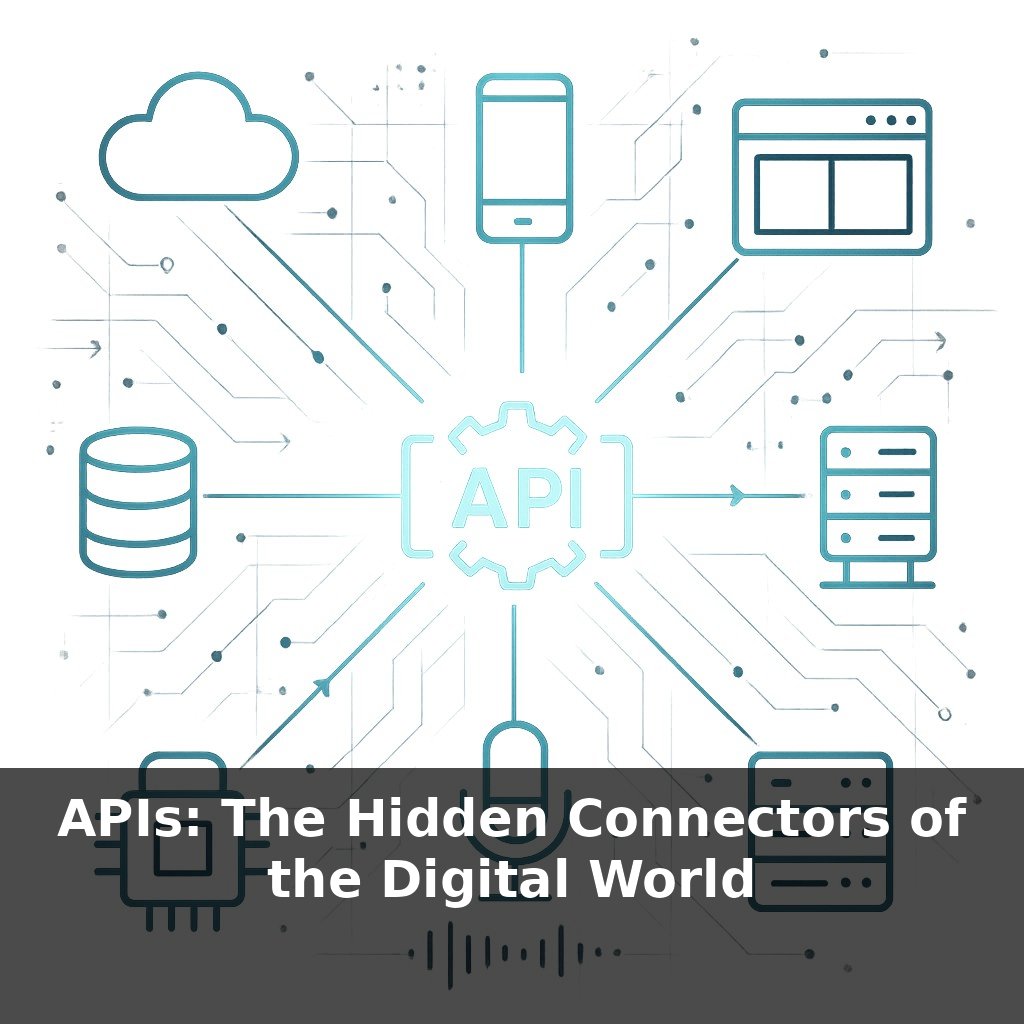
Right now, companies you’ve never heard of are quietly moving billions of dollars and messages, yet they don’t own the apps you use or the phones you hold. Their power lives in one hidden layer: the tiny digital handshakes that let everything online talk to everything else.
In 2022, one company—Stripe—made roughly 90% of its $14B revenue from something most users never see: its public APIs. Another—Twilio—quietly routed 127 billion SMS messages through simple calls developers embed in their apps. These aren’t side features; they *are* the business.
As networks accelerate toward 5G and 6G, and as billions of new devices come online, those quiet connectors stop being “developer plumbing” and turn into strategic infrastructure. The companies that win won’t just have the best apps; they’ll have the most reliable, secure, and discoverable ways for others to plug into them.
Think of a city that doesn’t just build roads for its own buses, but publishes clear maps, rules, and fast lanes so any service—from food trucks to ambulances—can move efficiently. APIs are how the digital world is redrawing those maps in real time.
By 2025, Gartner expects half of all B2B transactions to happen through real-time connections—no batch files, no overnight waits, just instant machine-to-machine deals. That shift collides with three forces at once: 5G/6G lowering network delays, edge computing pushing logic closer to devices, and the Internet of Everything flooding the world with sensors and actuators. The result isn’t just “more integrations”; it’s a world where pricing, logistics, and personalization update continuously because the connective tissue is fast enough to keep up, and standardized enough that any compliant system can join the flow.
127 billion SMS in a year, 90% of $14B from one interface, half of B2B trade shifting to real time—numbers like these hint at something deeper: connectivity itself is becoming a product. Not just *what* a business does, but *how easily* others can invoke it, embed it, and automate it.
That’s where the evolution of interface design gets interesting. The old pattern—one synchronous request, one response—is giving way to richer styles. Streaming APIs let you subscribe to events instead of polling. AsyncAPI is rising because systems don’t just “call” each other anymore; they converse over time, emitting updates, reacting to signals, coordinating across clouds. In that world, the contract isn’t only “here’s an endpoint,” it’s “here’s the choreography of messages you can expect across their lifecycle.”
Dial the lens down to devices and latency targets under 10 ms and you see why protocols like gRPC matter. They shrink overhead and pair naturally with edge gateways that terminate local calls, fan them into internal services, and enforce policies close to where data originates. Those gateways become policy engines as much as traffic routers: who can call what, how often, and under which compliance rules.
Security, once an afterthought, becomes existential. Many of the worst breaches in recent years have exploited “internal” interfaces that were undocumented, inconsistently authenticated, or over-privileged. Treating every interface as if it might be exposed tomorrow—clear scopes, least privilege, auditable access—is quickly turning into standard practice, not paranoia.
Governance is the other half of the story. Large organizations now talk about “API products” with roadmaps, SLAs, and deprecation strategies. Versioning moves from “we’ll change it when we must” to careful evolution: additive changes, compatibility windows, and sunset policies communicated months in advance. Documentation stops being a static reference and becomes interactive, executable, and observed—backed by real usage data that shows where consumers struggle.
The paradox is this: the more invisible these interfaces become to end users, the more deliberate and disciplined the teams behind them must be.
A retailer opening its “digital doors” doesn’t just expose a product catalog; it curates who can see inventory levels, reserve stock, or trigger same-hour delivery—and under what limits. A partner’s warehouse system might subscribe to low-stock events, while a marketing platform only receives anonymized demand trends. The same connective layer, very different slices of power.
To make this sustainable, leading teams now treat interface design more like urban planning than one-off construction. They define zoning rules: which internal capabilities are allowed to be exposed, which must stay private, and which can be shared only with tightly vetted collaborators. Some banks, for instance, create internal marketplaces where teams “publish” capabilities that others can discover and request access to, complete with pricing tiers and usage dashboards.
In this world, the most valuable capability isn’t just speed; it’s controlled composability—letting others build boldly on top of you, without losing track of where your responsibilities end.
Half of B2B trade moving to real‑time interfaces forces a mindset shift: connectivity becomes a board‑level concern, not just an IT detail. As usage‑based metering spreads, even “boring” capabilities—identity checks, fraud scoring, micro‑insurance—turn into revenue lines. Expect autonomous agents to become voracious interface consumers, stitching together niche services on demand, much like a conductor assembling musicians from different orchestras for a single, unrepeatable performance.
As software quietly trades data at ever finer intervals, whole markets may start to look more like jazz than marching bands—loosely scored, constantly adapting. The next leap isn’t just faster links, but smarter ones: contracts that self‑adjust, policies that learn from behavior, and ecosystems where you don’t just connect once, you continuously renegotiate how you fit.
Try this experiment: Pick one real-world workflow you use (like checking order status or pulling customer data) and replace it with a single API call from a public API (e.g., Stripe, Twilio, or a weather/transport API) wired into a simple script or no-code tool like Zapier/Make. Set a 90-minute timer to: (1) get an API key, (2) hit one endpoint in their docs, and (3) connect the response to something visible—like a Slack message, Google Sheet row, or dashboard widget. For the next week, track how often you *use* that new API-powered shortcut versus your old manual method, and note where it breaks or feels clunky. At the end of the week, decide whether to double down (add a second API to the same flow) or kill it and redesign based on what you learned.