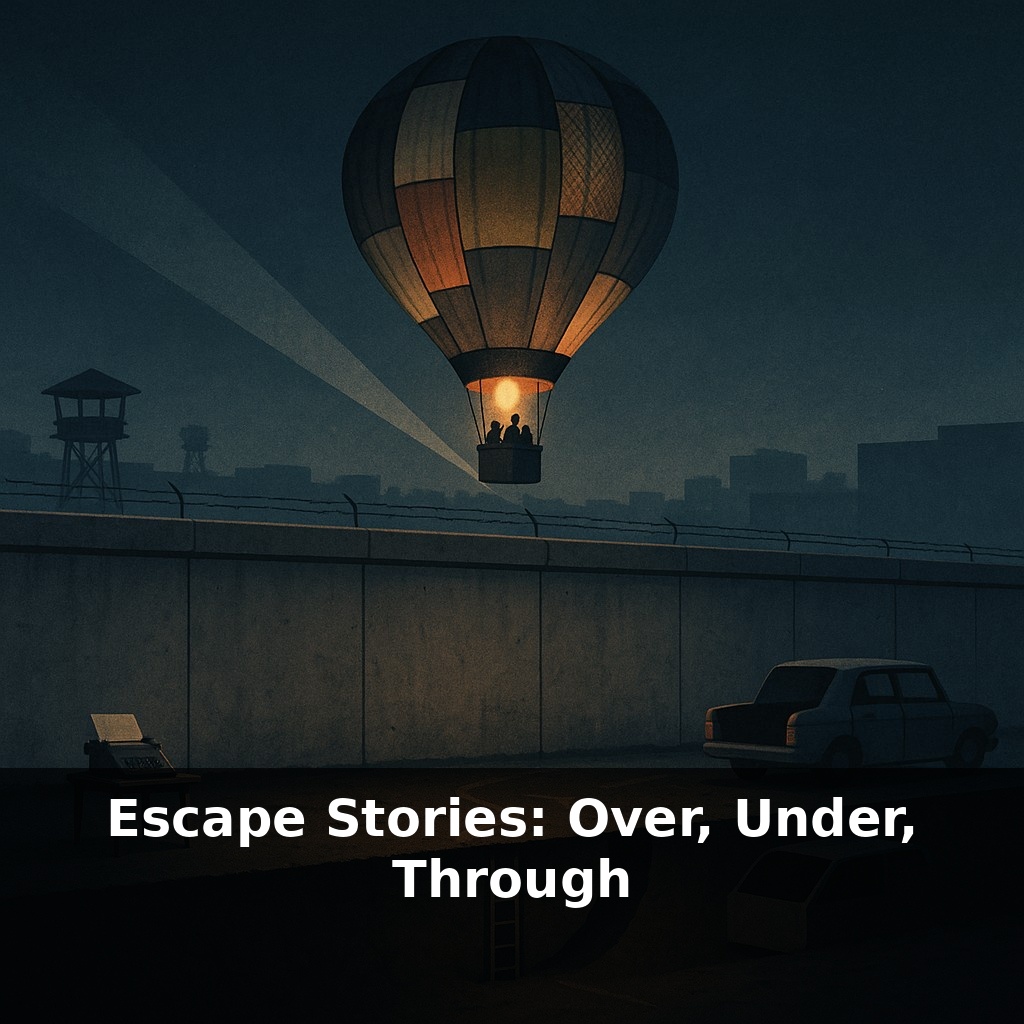
A homemade hot-air balloon, sewn from household fabric, rises in the dark over East Germany—inside, two families gamble everything on the wind. Beneath them, others are digging, sawing, hiding in car trunks. One wall, countless escape routes. How do people decide to risk that jump?
Some escapes began with a shovel. Others with a typewriter.
While some East Germans risked night skies or hidden compartments, others went “over, under, through” by bending the system itself—studying border-guard routines, learning which clerks could be bribed, which regulations had loopholes wide enough to slip a life through. One family spent months staging fake quarrels to convince authorities their marriage had truly broken down, because a plausible divorce could sometimes open a path to travel papers.
These plans had to be layered: forged invitations from the West, carefully timed train tickets, a believable backstory rehearsed like musicians practicing until every note felt natural. One slip at a checkpoint could mean prison, not freedom. Yet people kept refining these strategies, sharing quiet rumors of “someone who made it” the way others might swap recipes—except the stakes were years, not flavors.
Some plans ran on sweat and shovels; others ran on information. The more the border hardened, the more value shifted to tiny details: which border crossings had aging scanners, which shift changes created a few minutes of confusion, which Western radio broadcasts hinted at policy rifts inside the regime. People watched the Wall the way bird‑watchers study migration patterns—quietly logging changes in uniforms, guard dogs, lighting, even the angle of searchlights. A new antenna on a tower, a suddenly blocked side street, a guard transferred: each sign could mean a route was closing or, briefly, opening.
Some of the boldest “over, under, through” stories began with people treating the Wall less like a barrier and more like a puzzle that kept changing shape.
Early on, “under” meant crude holes dug with shovels and picks. By the mid‑1960s, it had become an engineering problem. Students and mechanics counted sewer pipes, checked soil types, and measured how far sound carried through basements. A tunnel wasn’t just a hole; it was a system: hidden entrances in coal cellars, air vents disguised as broken bricks, electric cables run off existing wiring so no new meter readings gave them away. Builders timed noisy work to factory shifts or tram schedules to mask vibrations. Some even mapped out Stasi offices above them, calculating which rooms were least likely to be occupied at night.
“Over” evolved just as quickly. People watched how guards reacted to storms, fog, holidays, football matches. They learned that fireworks or thunder could briefly overwhelm searchlights and dogs. Microlight gliders, modified kites, and homemade zip‑lines appeared in the 1980s, each relying less on brute courage and more on understanding how long confusion lasted when something unexpected filled the sky.
The “through” routes—ramming border fences with buses or squeezing into converted car compartments—depended on rhythm. Regular commuters noticed which lanes at a crossing always backed up, which bored guard waved cars through when a long queue formed, which colleague at the wheel could keep chatting just enough to seem harmless but not so much it felt rehearsed.
Each method forced its planners to think like both the hunter and the hunted. They asked: If I were the guard, where would I look first? If I were the engineer, where would this wall be weakest after a hard winter? If I were an official, which rule would I tighten next? That double vision didn’t guarantee success, but it filtered out fantasies early. Many ideas died on kitchen tables, crossed out on scrap paper, once someone realized a single unlockable door or unbribable clerk made the whole chain break.
Yet those abandoned blueprints had value: they taught people where the system really flexed—and where it absolutely did not.
A few planners treated the Wall like a hostile syllabus: study enough past “exam questions,” and patterns appeared. One group combed West German newspapers for tiny court notices about failed attempts—who was caught where, at what time, with what tools. Each incident was another data point in a growing mental map. Others listened to Western traffic reports, not for delays, but for odd, repeated jams near certain checkpoints—hints that inspections had quietly tightened.
Some would‑be tunnelers visited construction fairs in the West, memorizing new drilling equipment and then sketching simplified versions they might jury‑rig from parts at home. A former miner sketched cross‑sections of different soils from memory, marking which layers swallowed noise best. Like a jazz quartet, small cells improvised around fixed constraints: one person obsessed over timing, another over documents, another over human reactions. When a plan was finally scrapped, they didn’t say “it failed,” but “we learned where not to press next time,” and moved on to the next variation.
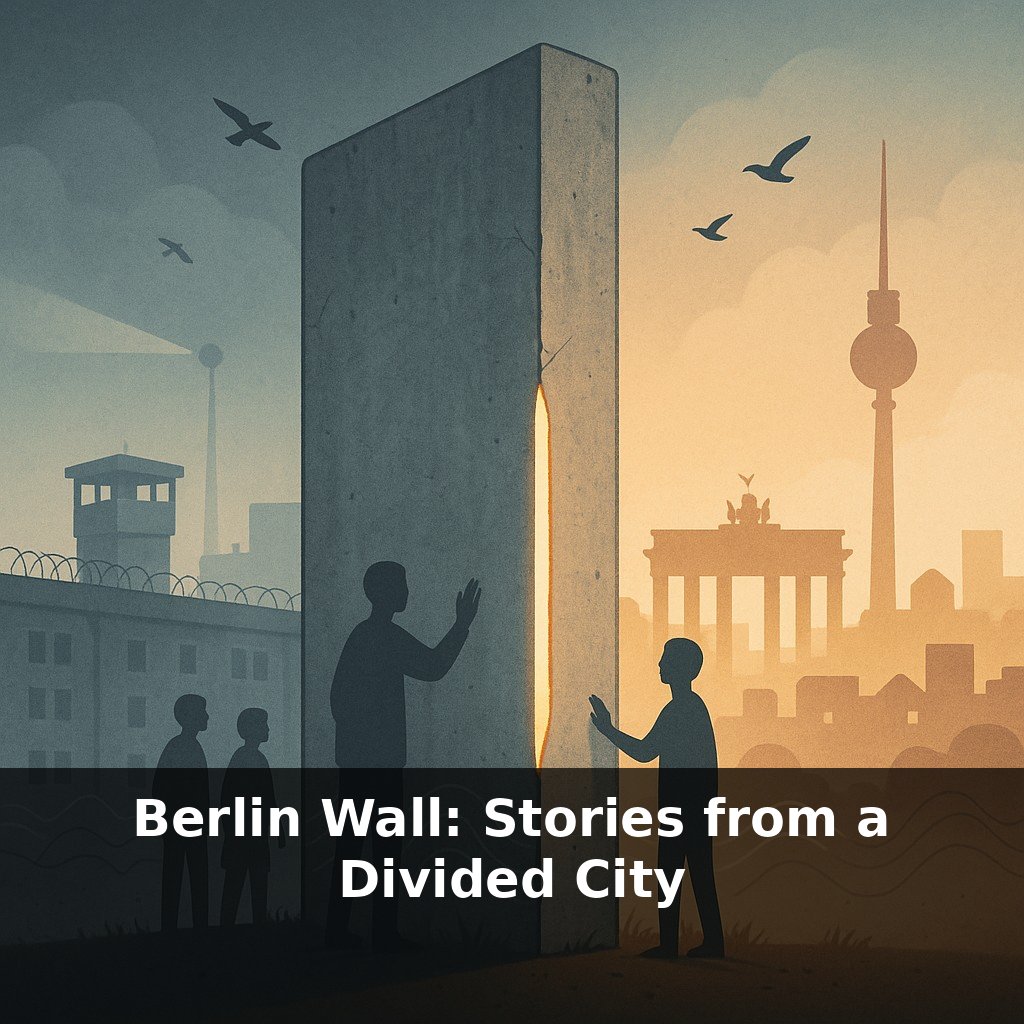
In today’s cities, the Wall’s remnants work like pressure gauges for democracy: when visitors walk the preserved death strips, they’re quietly measuring what they’d tolerate in their own lives. Engineers now mine old Stasi files to refine seismic sensors and border‑monitoring software, while psychologists use escape testimonies to study how people decide when danger outweighs delay. Your challenge this week: notice every “invisible wall” in your routine—then ask who benefits from you accepting it.
History suggests every barrier comes with hairline cracks, like ice at the end of winter. Some people mapped those fractures, others simply jumped when they heard the first drip. Your challenge this week: when a rule, habit, or system feels fixed, test one tiny edge of it. Note what bends, what doesn’t—and what that quietly reveals about who has power.