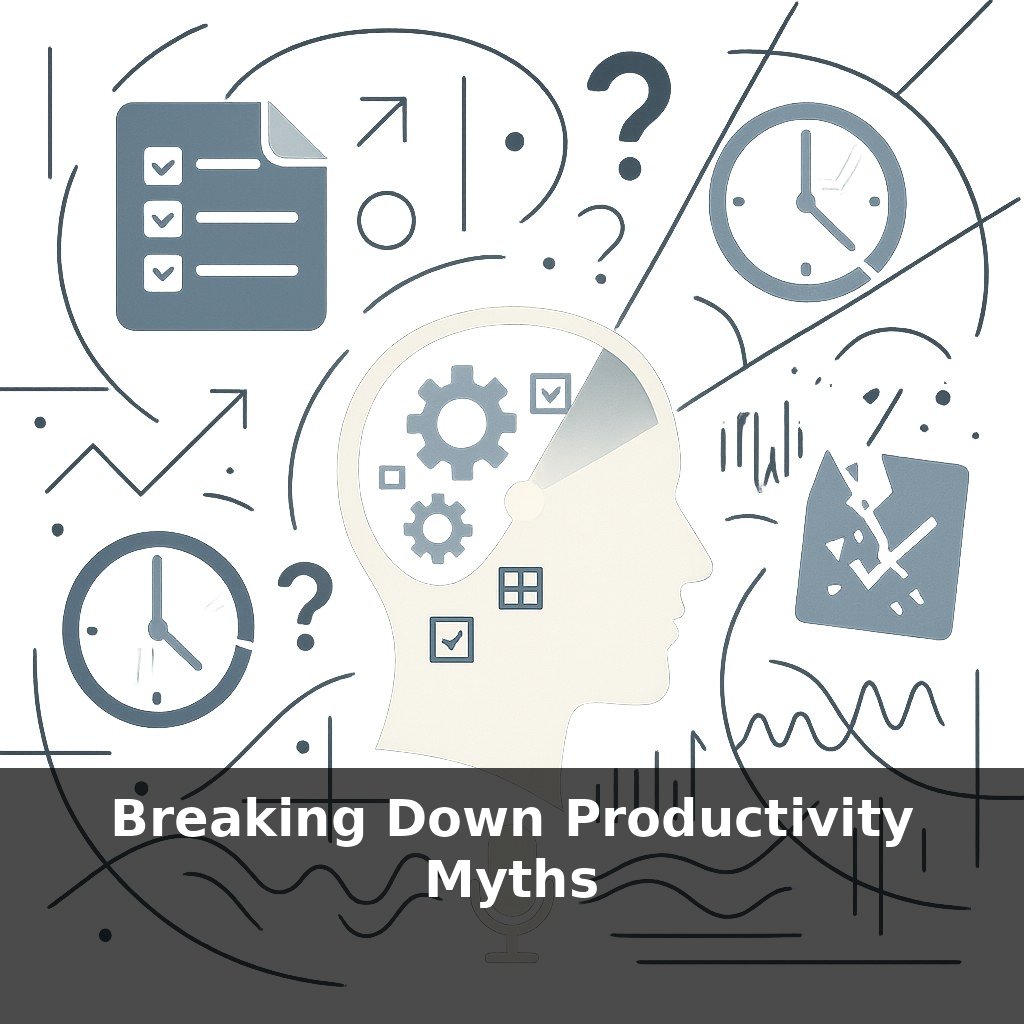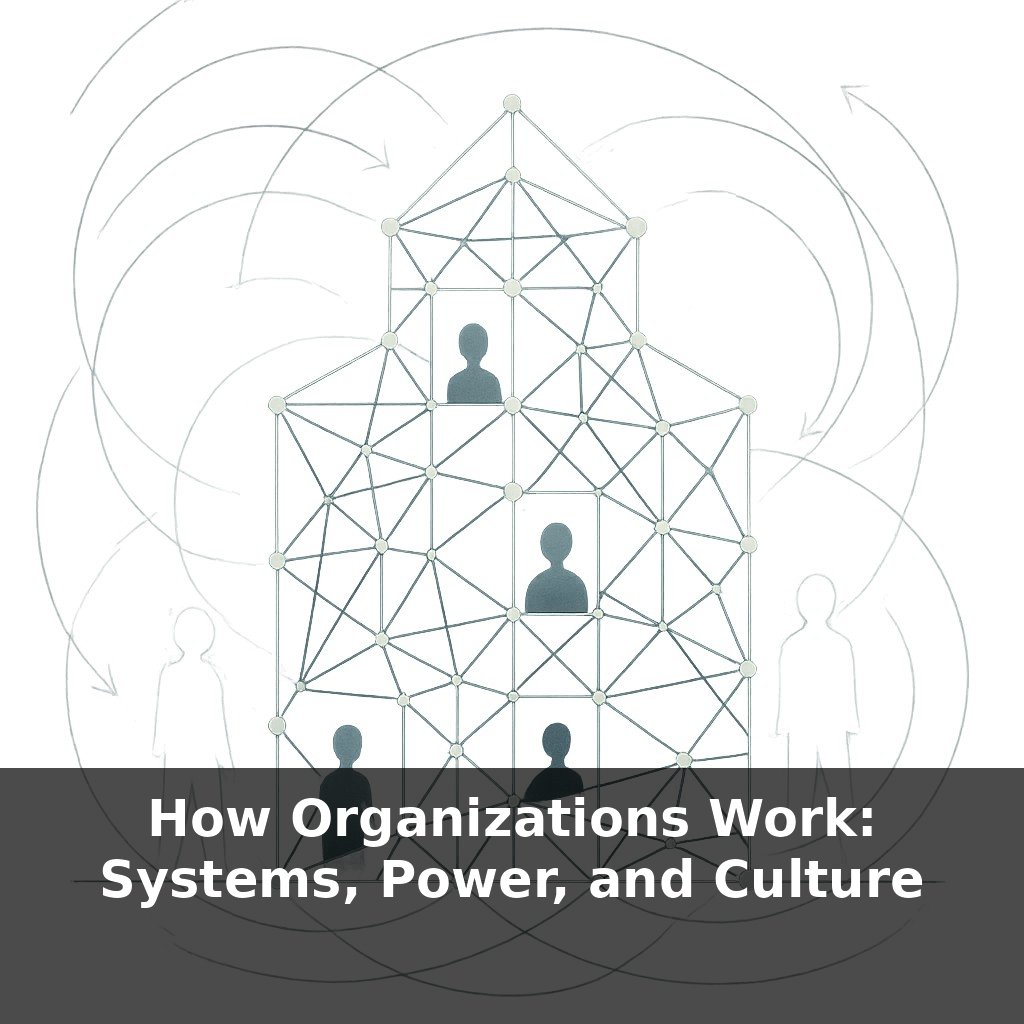
Most so‑called “productivity hacks” weren’t invented by influencers—they were stolen from lab studies and billion‑dollar companies. A coder in Berlin, a manager at Amazon, a writer in Nairobi: wildly different lives, quietly using the same hidden playbook you were never shown.
A strange pattern appears when you zoom out on the big names in productivity: the software founder with a “second brain,” the academic who time‑blocks every hour, the YouTuber preaching tiny habits, the consultant raving about sabbaticals. Different audiences, different vocab, same skeleton underneath.
They’ve all quietly solved the same four problems most of us just tolerate: our brains forget things, our priorities get hijacked, our habits decay, and our energy crashes. So instead of trying to “be more disciplined,” they redesign the system around them: where ideas live, when focus happens, how behavior gets triggered, and when recovery is non‑negotiable.
This is less about copying someone’s morning routine and more about recognizing the shared operating system they’re all running—and deciding which pieces you actually want to install.
Most people meet this operating system in pieces: a manager hands them OKRs, a friend swears by a note‑taking app, a podcast sells them on “deep work.” Each tool feels isolated, so adoption is random and short‑lived. Productivity gurus differ not because they found better tools, but because they assemble them into a coherent architecture: inputs go here, decisions happen there, execution looks like this, recovery is scheduled. Think less “collection of apps,” more “workflow blueprint” that turns scattered tactics into a repeatable, low‑friction way to move important work from idea to done.
The pattern becomes clearer when you watch what these people *actually* do in a normal week instead of what they post in a highlight reel.
First, they externalize memory in unglamorous ways. Notion dashboards and leather notebooks look cool on camera, but the underlying move is boringly consistent: nothing important lives only in their head. Ideas, half‑finished tasks, meeting promises, reading notes—they all get captured somewhere that will be seen again on a schedule. The practice isn’t “use Tool X,” it’s “assume Future You remembers nothing, and be kind to them.”
Second, they practice aggressive, even ruthless, prioritization. Publicly, this sounds like inspiration: “focus on what matters most.” Privately, it looks like disappointing people faster. They decide in advance which 1–3 outcomes justify a messy inbox, slower replies, or fewer meetings, and let those trade‑offs actually happen. Research on the 80/20 effect and attention residue isn’t trivia to them; it’s justification to say no without guilt.
Third, they treat behavior as something to be designed, not willed into existence. Instead of trusting “motivation,” they rig the environment: default calendar blocks, prewritten checklists, if‑then plans for known failure points. “When I sit at this desk, this is the only type of work allowed.” Their tools are almost interchangeable because the real work is in cue‑action‑reward loops, not the latest app feature.
Fourth, rest shows up as a visible, scheduled constraint, not a reward for finishing everything. They stop at fixed times, take short breaks even mid‑flow, and build in recovery seasons. The counterintuitive part: this isn’t framed as self‑care; it’s framed as protecting the small number of hours where their brain can actually do high‑leverage thinking.
Here’s the twist: none of this requires a guru‑level life. A mid‑level manager with kids and back‑to‑back meetings can still keep a capture habit alive, protect two real focus blocks a week, pre‑decide a handful of habits, and enforce a shutdown time. The gurus aren’t superheroes; they’re just unusually consistent at applying a few evidence‑backed moves while everyone else keeps searching for a new trick.
A senior engineer I coached had sticky notes everywhere and 40 open tabs, but still missed key deadlines. We didn’t add more tools; we ran a simple experiment: every request longer than 30 seconds went into one running list, reviewed twice a day. Within a month, her “forgotten” tasks dropped close to zero—and her manager stopped pinging her at 9 p.m.
A product lead at a fintech startup tried another move: two 90‑minute “no‑meeting zones” per week, protected like investor calls. She told her team: “If it’s urgent, call; if not, it waits.” After three weeks, her roadmap doc was actually ahead of schedule for the first time that year.
Think of it like upgrading a stadium instead of blaming the players: clearer scoreboards (visible commitments), better lighting (fewer hidden tasks), and fixed game times (known focus and rest windows). The same athletes suddenly look “elite,” but the difference is the field they’re playing on, not their genetics.
As AI copilots start drafting emails, scheduling, and even suggesting next steps, your edge shifts from doing more to choosing better. Bio-sensing wearables may soon nudge you when your focus dips, like a subtle “pit stop” light in a race. Four‑day weeks and skill half‑lives under five years push you to treat learning blocks like recurring meetings, not rain‑checks. The open question: will you use these tools to protect your time—or let them measure you into exhaustion?
You don’t need a rebrand to use these levers; you need a lab mindset. Treat your week like a beta release: ship a tiny change to how you capture, decide, or rest, then watch what breaks or suddenly feels lighter. Over time, those micro‑patches compound, and your calendar starts to feel less like an accident and more like a deliberate product.
Before next week, ask yourself: 1) “If I stopped copying other people’s morning routines for a week and instead protected just 90 minutes for my single most important project, what exactly would I choose, and when—down to the clock time—would I do it each day?” 2) “Looking at my current to‑do list, which 80% of tasks are just ‘productivity theater’ (checking email, tweaking apps, organizing Notion) that I’d be willing to ruthlessly drop or defer for seven days?” 3) “If I had to publicly teach a 5‑minute lesson on *my* unique productivity advantage (e.g., fast decision‑making, deep-focus blocks, batching communication), what would I highlight—and how can I double down on that strength in my schedule tomorrow?”