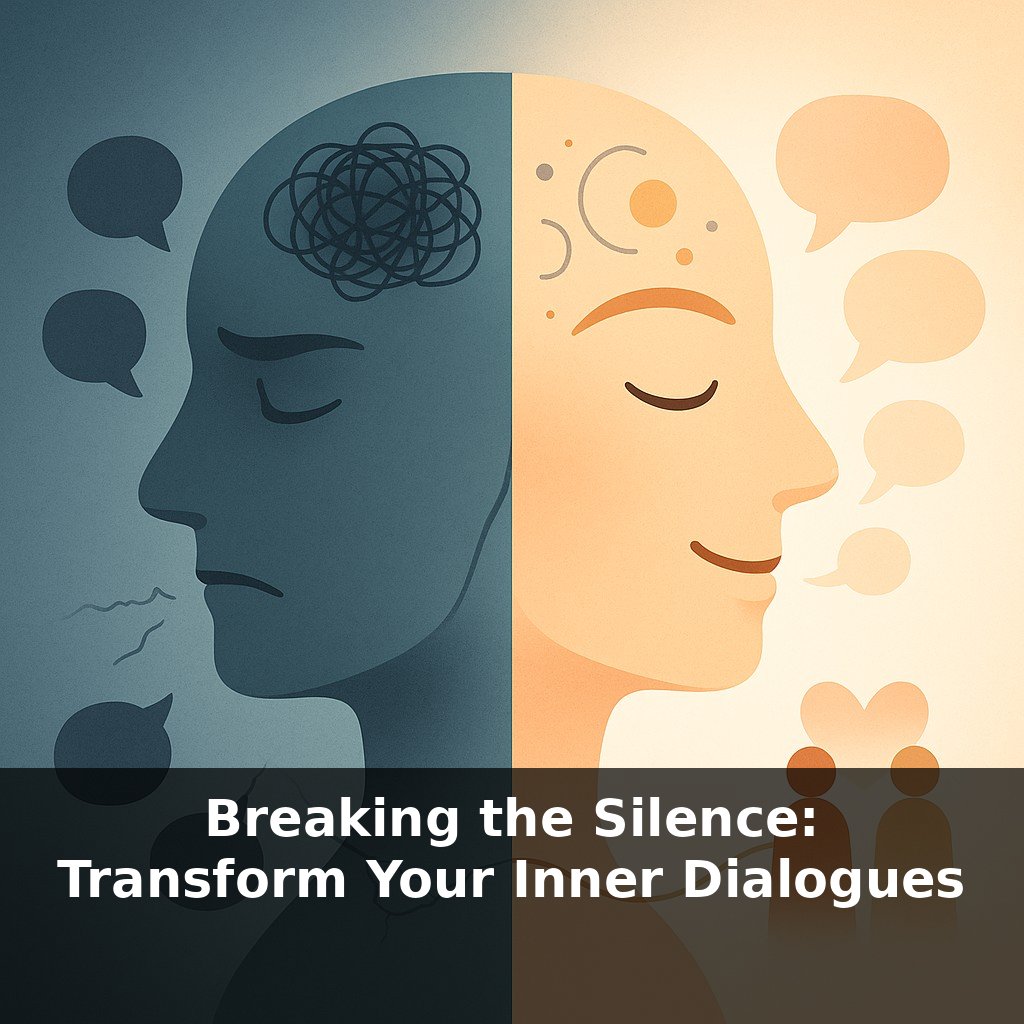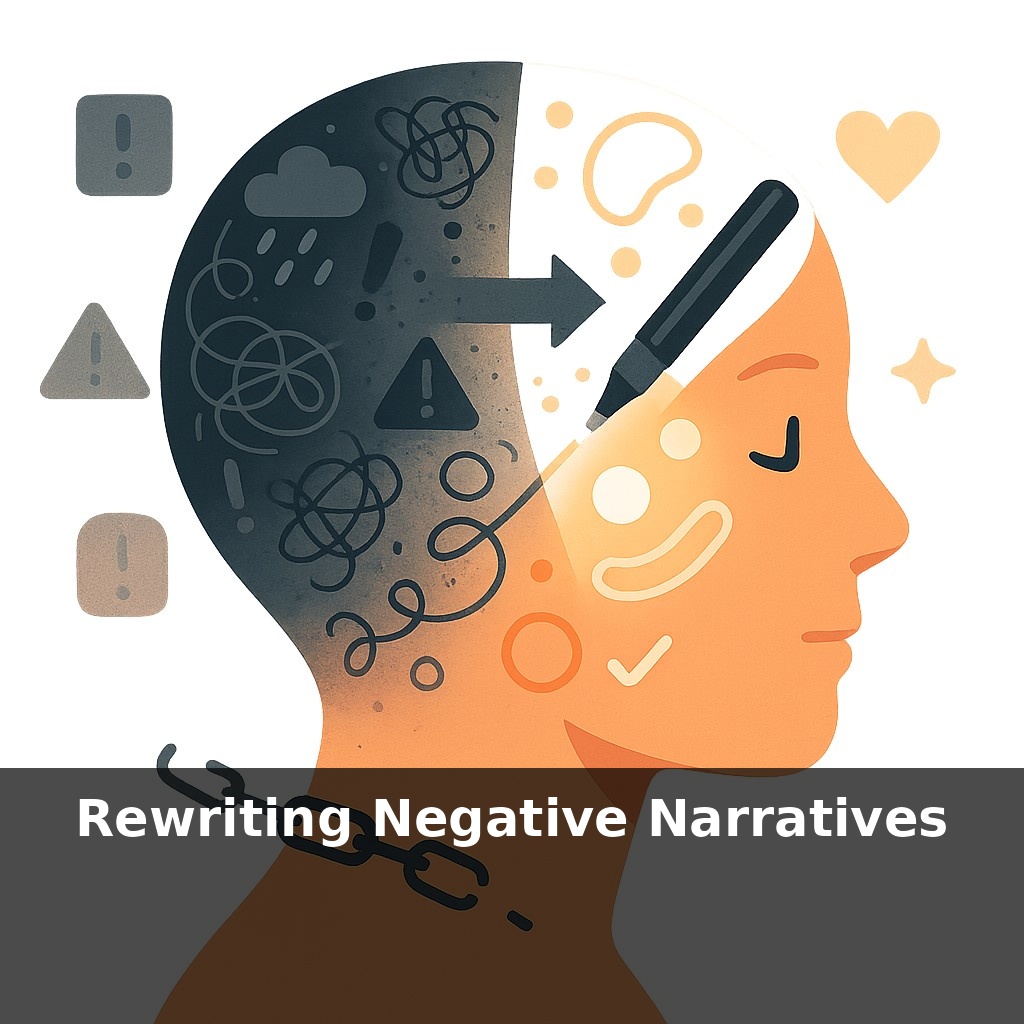
Most of the thoughts you’ll have today already showed up yesterday—like mental reruns you didn’t choose. Now here’s the twist: your brain tends to replay the harsh scenes louder than the kind ones. So why does the inner critic keep getting the lead role?
Some of those harsh thoughts feel true not because they’re accurate, but because they’re *familiar*. Your brain is wired to notice threats and mistakes first, then bookmark them for “future safety.” Over time, those bookmarks can quietly turn into a running story about who you are: *I always screw this up. I’m too much. I’m not enough.* The danger isn’t a single rough thought; it’s when those lines harden into a script that quietly directs your choices—who you date, which jobs you apply for, how honestly you speak in your relationships. Research shows that when people deliberately update this script using tools like cognitive restructuring or self-compassion, their mood and even stress physiology begin to shift. It’s less about faking positivity, more about fact-checking the old story and drafting a version that’s actually aligned with your real life.
Here’s where it gets practical: your brain doesn’t just *store* that old script, it keeps *updating* it in the background—especially during emotional moments and conflict. That means every tough conversation, every awkward silence with a partner or friend, is a high-impact “edit point” where the story about you and about *them* can quietly shift. Neuroscience studies show that when strong emotion and attention line up, your brain tags those scenes as “important,” giving them more say in future reactions. The catch? If you don’t guide that edit, your oldest, harshest assumptions usually fill in the blanks first.
Here’s the tricky part: those high‑impact “edit points” in conflict don’t feel like moments of choice. They feel like moments of *proof*. Your partner sighs and checks their phone while you’re talking, and before you’re even aware of it, your mind files it under: “See? I’m boring. People lose interest in me.” The scene is neutral; the meaning you assign is not. Over thousands of small moments like this, your brain builds shortcuts—automatic linkages between “what just happened” and “what it must mean about me and them.”
Psychologists call these shortcuts *schemas*—fast, background templates about how relationships work and who you are inside them. “People leave,” “My needs are a burden,” “If I don’t keep the peace, everything falls apart.” Once a schema is active, your attention bends around it. You notice every bit of “evidence” that fits, and quietly downgrade or discard the rest. That’s not you being irrational; it’s your brain trying to save energy by predicting rather than re‑evaluating.
This is where rewriting your narrative becomes a skills game, not a willpower test. Three skills matter most in relationships:
1. **Micro‑noticing.** Catching the *first* sentence your mind whispers after a difficult moment: “There it is again, I’m too needy.” You don’t have to like that thought; you just have to see it.
2. **Meaning‑separating.** Distinguishing between the *event* (“They checked their phone”) and the *story* (“I’m not worth listening to”). That gap is where options live.
3. **Deliberate re‑tagging.** Consciously labeling a moment in a more balanced way: “They might be distracted; this doesn’t automatically mean I’m uninteresting.” Over time, repeated re‑tags start to weaken the old pathways and strengthen new ones.
Think of it like updating a recommendation algorithm in a streaming app: if you always click on the same gloomy category, the system assumes that’s what you want and keeps offering more. The instant you start choosing differently—again and again—the suggestions shift.
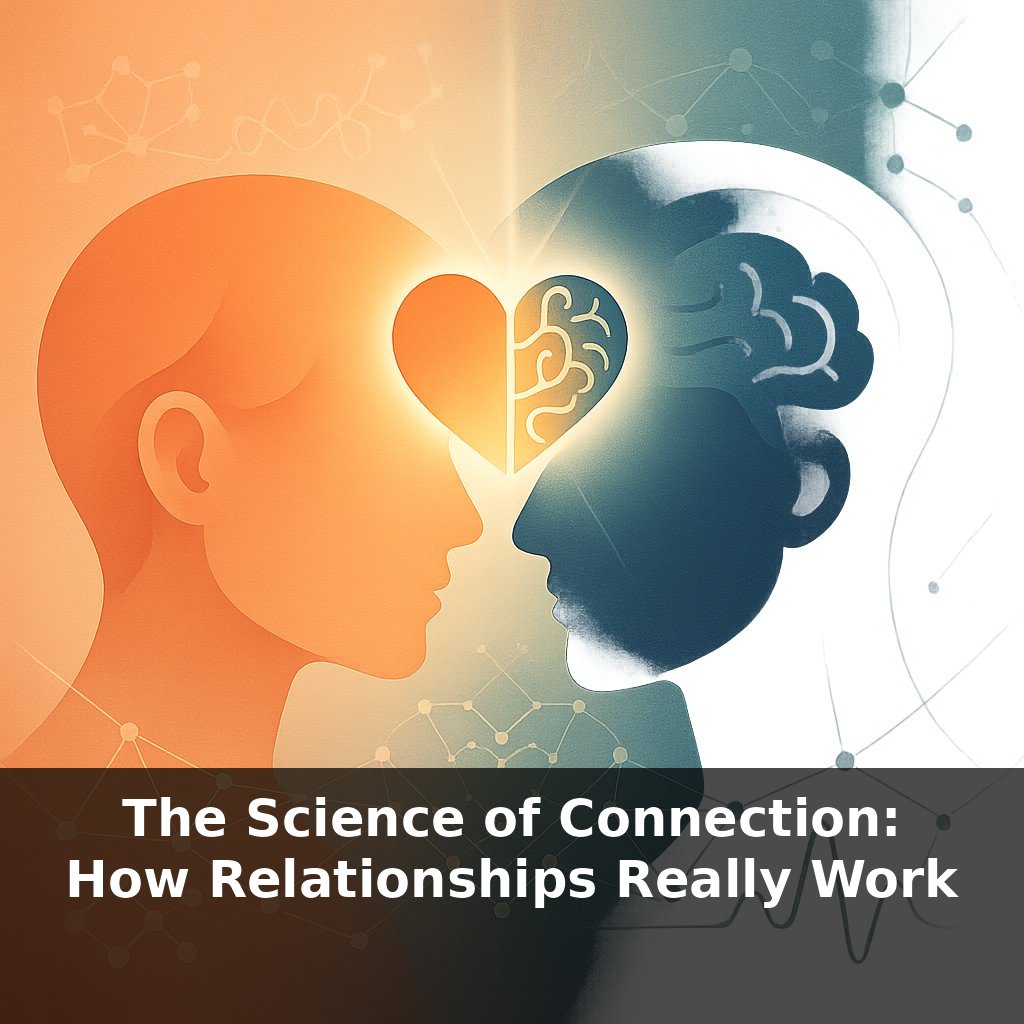
In close relationships, this shift is contagious. When you question your own harsh stories, you also become less certain about the harsh stories you’ve written about *them*: “They don’t care,” “They’re doing this on purpose.” That softening creates room for curiosity, and curiosity changes the tone of your next sentence, your body language, your timing. Those small differences are exactly what your partner’s brain is using to update *their* script about you.
So the goal isn’t to airbrush pain out of your story; it’s to stop letting the most pessimistic interpretation have automatic veto power over what happens next.
You can spot these quiet narrative edits in tiny, everyday scenes. Your friend replies “K” to a long text. One version of the story: “They’re annoyed; I said too much.” Another: “They’re rushing between things; this conversation might continue later.” Same event, different draft. Or your partner forgets something important you shared. Your old schema might insist, “Nothing I say lands,” and you shut down for the night. A revised line might be, “They’re scattered today; I still want this to matter, so I’ll bring it up when we’re both calmer.”
Try listening for your *first* sentence in moments like these, then experiment with a second one. Not a sugary affirmation—just a plausible alternative you’d offer a close friend. Over time, those “second sentences” become easier to reach for, especially when you say them out loud: “Part of me is telling a really old story right now; I’m not sure it’s the only one.” That small disclosure can change not only your inner script, but also how safe the other person feels to rewrite theirs alongside you.
When whole communities learn to revise harsh inner scripts, the ripple effects go beyond calmer conversations at home. Classrooms, clinics, and offices start to function more like collaborative labs than quiet war zones. Conflict becomes data, not a verdict. Think of cities where traffic lights adjust in real time: fewer pileups, smoother flow, less wasted fuel. As narrative skills spread, we may see similar shifts in social “traffic”—fewer blowups, more repair, and relationships that waste less emotional energy.
Each revised line of self‑talk is like moving one book from the “doom” shelf to the “possibilities” section in your mental library. Over time, the titles within arm’s reach start to change. You won’t control every plot twist in your relationships, but you can choose which stories stay in print—and which become old editions you rarely pull down.
To go deeper, here are 3 next steps: 1) Grab a worksheet from Dr. David Burns’ “Feeling Good” website and run one of your loudest negative narratives (like “I always mess things up at work” or “I’m not lovable”) through his “Daily Mood Log” to see, in writing, how distorted that story actually is. 2) Listen to the “Rewriting Your Story” meditation on the Insight Timer or Calm app tonight, and deliberately plug in a real scene from your life where you usually beat yourself up, then visualize it playing out with the kinder, updated narrative you want to live from. 3) Pick up *What to Say When You Talk to Yourself* by Shad Helmstetter and highlight 3 specific replacement scripts that match the negative lines you caught in yourself during the episode, then record them as a voice note on your phone so you can play them back tomorrow morning instead of your usual self-criticism.