A Harvard review found that people who trained their assertiveness felt almost a third more confident. Now, you’re in a meeting, heart racing, idea on the tip of your tongue. You speak up—and suddenly everyone leans in. How did your voice go from shaky to magnetic so quickly?
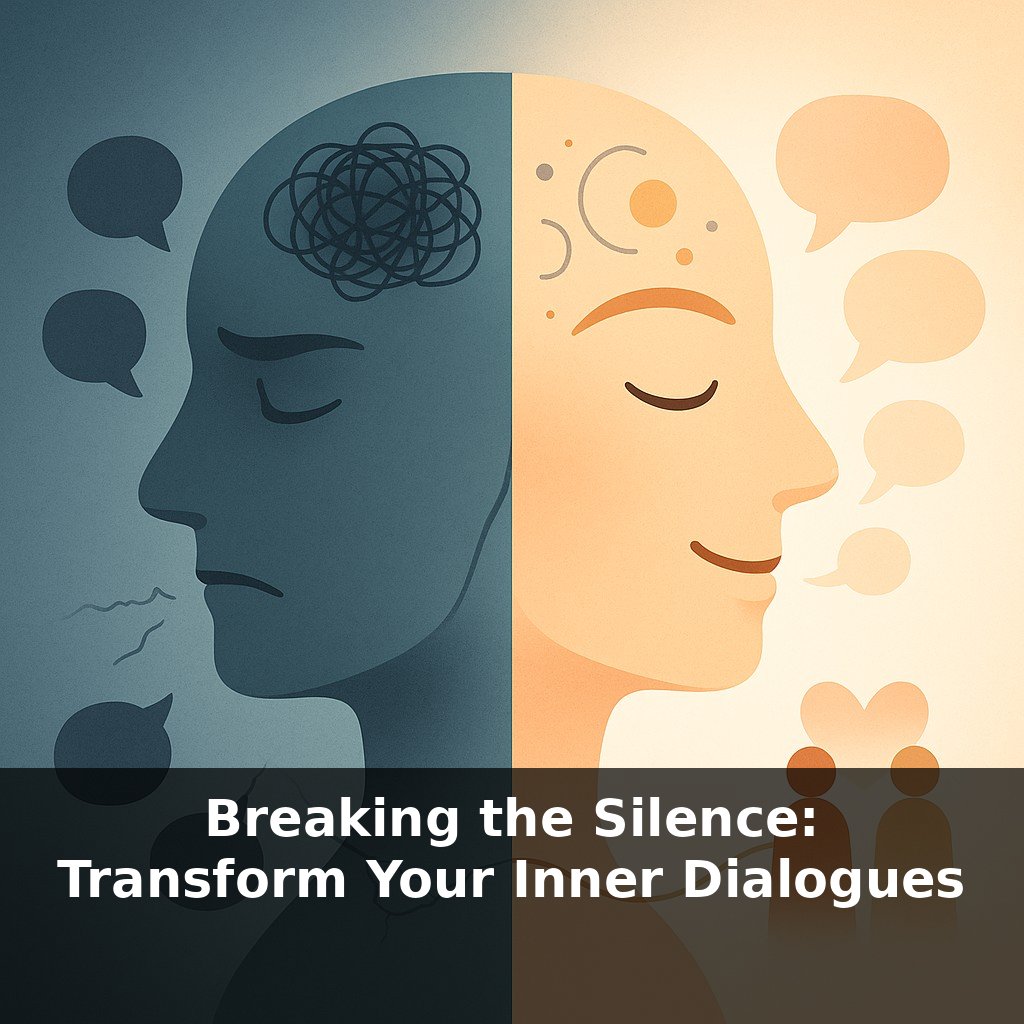
That shift didn’t start in the meeting; it started hours—or even years—earlier, in how you talk to yourself when no one’s listening. Most people try to “fix” their communication at the surface: better phrasing, stronger openings, slicker slides. But research shows your words are only a small slice of what people actually respond to. The rest rides on your physiology, tone, and micro‑expressions that leak your real beliefs about yourself.
Think of a time you meant to sound calm but your voice betrayed a tremor or your shoulders tensed. That wasn’t lack of vocabulary; it was your nervous system broadcasting on full volume. Confident communication grows when your inner dialogue, body, and behaviors stop arguing with each other and start working as a team. In this episode, we’ll explore how to align those three layers so your message lands the way you intend—especially in your closest relationships.
Research on couples and teams shows something subtle: it’s not the loudest person who shapes the room, but the one whose words, posture, and intentions quietly agree with each other. That agreement is learnable, not a personality trait. In fact, programs like Toastmasters work partly because repeated, low‑stakes practice rewires what your brain predicts will happen when you speak. Over time, your “I’ll probably mess this up” script gets replaced with “I can handle this.” Like updating the software on your phone, small internal upgrades can radically change how every future conversation runs.
Most people try to “sound” different before they let themselves “think” differently. But your brain does something sneaky in every conversation: it runs a prediction. Before you open your mouth, it quietly answers, “How is this going to go?” and prepares your body and behavior to match that forecast.
If your prediction is, “They’ll ignore me,” your voice may drop, your sentences shrink, and you edit yourself mid‑stream. Others then see hesitation, respond with less engagement, and your brain logs that as evidence: “See? They didn’t care.” A self‑fulfilling loop is born.
Social‑cognitive research shows that when you upgrade that internal forecast—even slightly—your external communication follows. This isn’t about chanting “I’m amazing” in the mirror; it’s about building specific self‑efficacy beliefs for specific situations: “I can explain my idea clearly in three points,” or “I can stay grounded even if they disagree.”
Those targeted beliefs make it easier to practice concrete skills. For example: - Choosing one clear intention per interaction: “I want us to understand each other,” rather than “I must impress them.” - Using active listening as a confidence tool, not just a kindness: summarizing what you heard gives you time to breathe and organizes your thoughts before you respond. - Calibrating your body‑language to the context: in a 1:1 with a partner, soft eye contact and open palms may invite safety; in a team update, a steady stance and slower gestures can project stability without aggression.
Crucially, there is no single “confident” template. Cultural norms, power dynamics, and your own temperament all shape what will feel authentic and respectful. The same directness that builds trust in a New York office might feel blunt in a small family business, or disrespectful in a culture that values indirectness. Skillful communicators don’t copy‑paste behaviors; they read the room and adjust without abandoning themselves.
Think of it like updating the operating system on a laptop: you’re not throwing away the hardware of your personality, just installing patches so your thoughts, words, and presence stop crashing each other and start running the same program.
Think of a conversation with your partner after a long day. You walk in the door, still carrying tension from work. You say, “I’m fine,” but your clipped pace to the kitchen and short replies send a louder message. They react to your pace, not your words, and the evening drifts sideways without either of you quite knowing why.
Now shift to a project update with your manager. You’re unsure how your progress will land, so you rush, over‑explain, and keep glancing at their face for approval. They hear the scattered delivery and start probing for “what’s really going on.” You leave thinking, “See, I knew it went badly,” when what they mostly noticed was your acceleration.
Or picture a friend telling you about a problem. You decide your only job is to help them feel understood. You slow your breathing, let your shoulders drop, and say, “Tell me more.” You echo their key points, ask one clarifying question, and leave more silence than usual. They later say, “You’re so easy to talk to,” even though you barely offered advice.
In the near future, you might rehearse a tough conversation in VR the way athletes review game footage: see your timing, pacing, and posture replayed with gentle, data‑driven pointers. AI tools could flag where your words and facial cues drift apart, then offer tiny “patches” you can test in low‑stakes practice rooms. As remote teams spread across cultures, learning these adaptive skills may feel less like fixing yourself and more like upgrading your toolkit for any room you enter.
Real progress here is less like flipping a switch and more like learning a new recipe: you test ingredients, adjust the heat, taste, and tweak. Each time you notice how your words, pace, and posture interact, you’re refining the dish. Over time, your default “flavor” shifts, and conversations start to feel less scripted and more genuinely yours.
Here’s your challenge this week: Before three key conversations (one with a colleague, one with a loved one, and one with yourself in the mirror), use the “Clear–Calm–Confident” script from the episode: 1) state what you want in one sentence, 2) pause and take one grounding breath, 3) deliver your message in a steady, slower voice than usual. Each evening, replay one of those conversations in your mind and deliberately swap any “I’m not sure” or “Does that make sense?” with the confident language the episode suggested (“Here’s what I’m proposing…” “What questions do you have?”). By Sunday night, record a 60-second voice memo speaking about something you care about using that same Clear–Calm–Confident structure, and listen back once, focusing only on where you sounded the most grounded—not where you “messed up.”