About half the people you know have lived through something truly hard—yet many still feel one bad week away from falling apart. On your commute, in a meeting, stuck in traffic: stress hits fast. The real question is, can you train your mind to bend without breaking?
About 30–35% of your capacity to adapt under pressure is influenced by genetics. That means roughly 65–70% is still in play—changed by what you practice, how you think, and who you lean on. In real terms, two people with similar “natural” resilience can end up wildly different: one burned out at 35, another steady at 65, largely because of daily habits.
Think in concrete numbers: eight weeks of consistent mindfulness practice—about 10–15 minutes a day—has been linked to measurable brain changes and better emotional control. Three focused journaling sessions per week can shift your mood profile by nearly 20% over a month. Add regular aerobic exercise, and you’re lowering baseline cortisol while boosting brain chemicals that support flexible coping.
In this episode, you’ll turn these findings into a practical, personal resilience blueprint you can actually follow.
Resilience isn’t one thing you “have” or “don’t have”—it’s more like a small team of skills working together. Neurobiology, attention, and relationships all pull weight. For example, cognitive reappraisal (how you interpret events) can cut emotional intensity by up to 40% in lab settings. Brief, structured breathing can shift your heart-rate variability in under 2 minutes, signaling your body to stand down. People who regularly lean on at least 2–3 trusted supports recover from major setbacks faster and show lower relapse rates after crises. In this episode, you’ll assemble your own mix of these tools into a daily system.
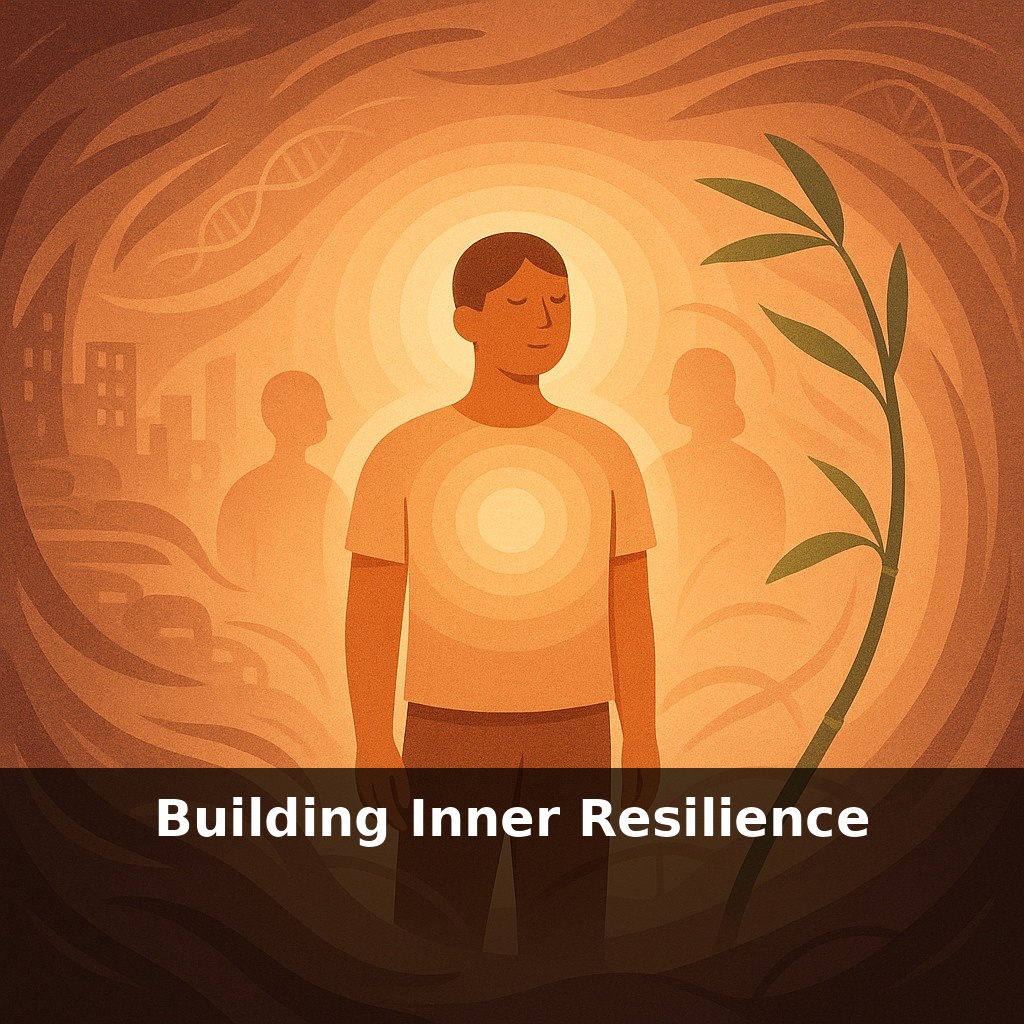
Think of your inner resilience as a system with three levers you can actually move: how you talk to yourself under pressure, how you reset your body, and how you use other people.
First lever: mental habits under stress. When something hits—a sharp email, a mistake in front of others—most people default to “This is a disaster” or “I always screw up.” Studies on cognitive reappraisal show that deliberately shifting the story you tell yourself can reduce negative emotion by around 30–40%. A simple structure is: “What happened? What else could this mean? What’s one constructive move now?” Used even 2–3 times per day, this starts to rewire what your brain predicts about threat and failure.
Second lever: rapid body resets. Your nervous system has a “volume knob” you can access in under 90 seconds. Techniques like structured exhale-focused breathing, brief muscle-tension–release cycles, or a 2-minute cold-water face splash can all nudge your physiology from “fight-or-flight” toward “safe-enough-to-think.” For example, one protocol—inhale for 4 seconds, exhale for 6, repeated 10 times—has been shown to quickly increase heart-rate variability, a biomarker of resilience. You’re not trying to feel amazing; you’re buying just enough calm to choose a better response.
Third lever: how you recruit support. Research following people after major setbacks finds that those who regularly contact at least 2–3 specific “anchors” (not just scrolling or vague group chats) show faster recovery and fewer stress-related symptoms. Precision matters. “Can we talk for 10 minutes? I don’t need solutions, just a sounding board,” is far more regulating than venting aimlessly for an hour. You’re teaching your brain: “When things go wrong, I’m not alone—and help is concrete and reachable.”
Across these levers, the pattern is consistency over intensity. Five micro-interventions per day—three quick reappraisals, one breathing reset, one deliberate check-in—can, over 8–12 weeks, noticeably change how quickly you come back online after hard moments.
A practical way to see this system in action is to treat your week like a small experiment. Take one common trigger—say, getting critical feedback at work. On Monday, do nothing different and just notice how long it takes you to feel settled again; many people find their mind keeps looping for 60–90 minutes. On Wednesday, add one reframe (“What’s one thing this feedback helps me improve?”), 60 seconds of 4–6 breathing, and a 5-minute check-in with a trusted colleague. Time how long it takes your body and thoughts to downshift; if you cut that rumination by even 20 minutes, that’s over 1,000 minutes—nearly 17 hours—saved across a year for a single trigger. In pure “life ROI” terms, 5–7 minutes of deliberate coping for a recurring stressor you face twice a week can reclaim the equivalent of two full working days annually, and that’s before you layer on other skills.
Resilience skills won’t stay abstract for long. Within 5–10 years, everyday tools will coach you in real time: a watch flagging rising tension, an app suggesting a 90‑second reset before a meeting, or a “recovery forecast” showing how last week’s habits changed today’s capacity by 12–15%. Schools and workplaces may track this as carefully as grades or KPIs, so learning to design your own micro‑routines now protects both your well‑being and your future autonomy.
In 30 days, these micro‑habits can stack: 10 reappraisals a week = ~40 chances to disrupt old loops; one 90‑second reset daily = 45 minutes of calm reclaimed per month; 2 targeted check‑ins weekly = 8 moments of not facing things alone. Small on paper, but that’s 96 deliberate resilience reps in a month—more than most people do in a year.
Try this experiment: for the next 7 days, deliberately pick one small, mildly stressful moment each day (a tight deadline, a tense email, a difficult conversation) and run a “resilience drill” in real time. As soon as you notice your stress response kick in, pause and do a 4–6 breath (inhale for 4 counts, exhale for 6) while silently saying, “This is my nervous system trying to protect me.” Then ask yourself one specific question: “What’s the next 10% wiser move I can make right now?” and act on that answer, even if it’s just changing your tone or asking for clarification. At the end of each day, quickly rate that drill from 1–10 for (a) how overwhelmed you felt before and (b) how grounded you felt after, so you can see whether this practice is actually building your inner resilience.