Understanding Financial Frameworks
📝 Transcript
Right now, most adults in the U.S. are doing everything “right” on paper—working, paying bills—yet still feel broke every month. Here’s the twist: the problem often isn’t how much they earn, it’s that their money has no script. Today, we’re going to change that.
Building on the idea that money management is often about tactics rather than sheer willpower, many attempt strategies like checking the account less, stopping takeout orders, or opening a savings account and hoping it grows. However, these efforts are typically as ineffective as telling someone to 'just eat healthier' without any plan, portions, or grocery list—you’re motivated until the next busy day hits, then everything collapses back into habit.
Financial frameworks step in where willpower taps out. They give your decisions a structure you can lean on when you’re tired, stressed, or tempted. Instead of asking, “Can I afford this?” in the moment, the real question becomes, “What did I already decide this dollar is for?”
In this episode, we’ll unpack how simple rules like 50/30/20, zero-based budgeting, and envelope-style systems quietly shift your day-to-day choices—so your bank balance starts reflecting your priorities, not your impulses.
Here’s the catch: most of us are already using a framework—we just don’t realize it. “Rent first, then cards, then whatever’s left” is a framework. “Pay bills on payday and hope the rest lasts” is a framework. They’re invisible, automatic scripts you’ve absorbed from family, culture, or crisis moments, and they quietly decide where your money goes before you do.
The goal today isn’t to memorize rules; it’s to surface the system you’re already running. Once you can actually see your current pattern, you can keep what works, upgrade what doesn’t, and plug in tools that make those upgrades stick.
Here’s where this gets practical: a good framework doesn’t start with math; it starts with reality.
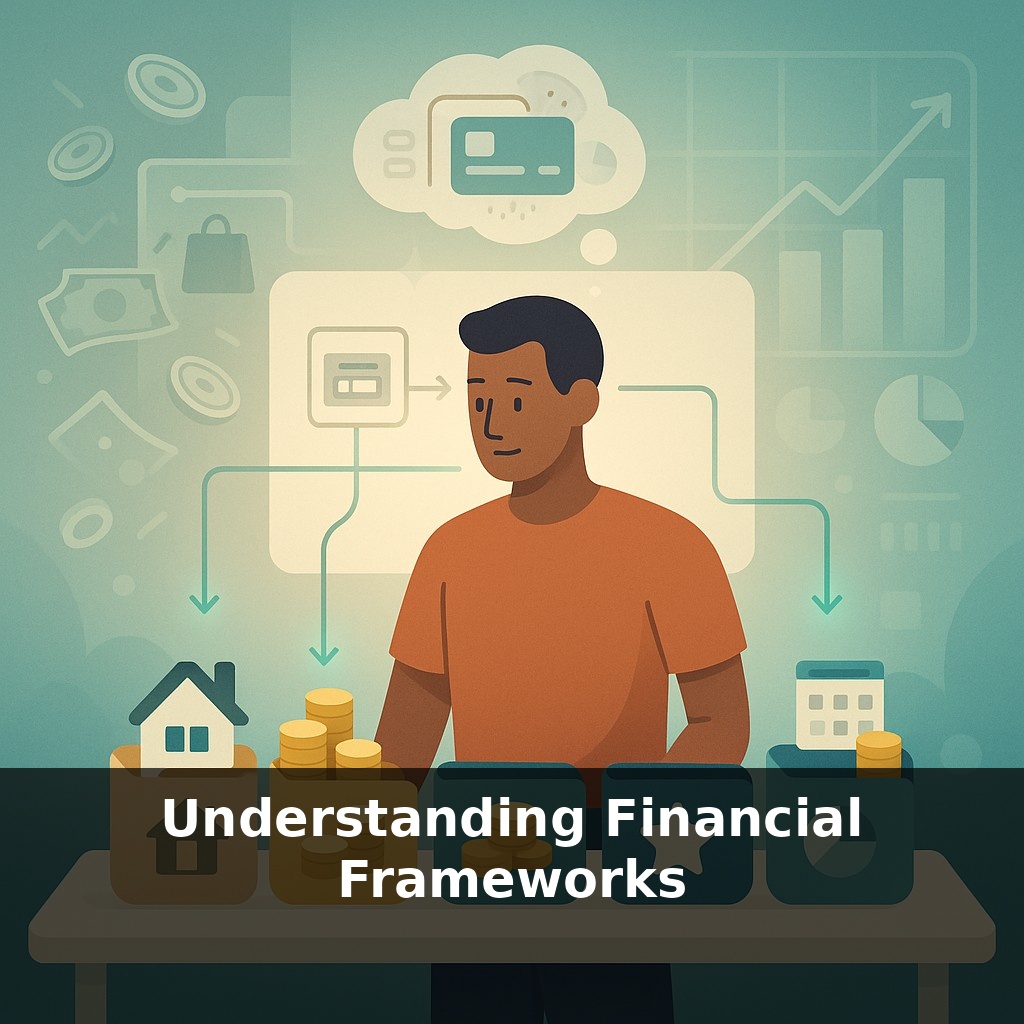
First, there’s *where* your money flows. Not categories in an app—actual destinations. One paycheck might hit a checking account, another lands in a joint account, a side hustle goes to PayPal, and a tax refund just sits in a random savings account. Each of those “buckets” often has its own unspoken rule: checking is for surviving, the joint account is for “serious” bills, PayPal is fun money, refunds are emergency patch kits.
Then there’s *when* money moves. Maybe rent leaves on the 1st, subscriptions drip out all month, and debt payments cluster right before payday. If most of your obligations hit before your second paycheck, the end of the month will always feel tighter—no matter how much you earn.
And finally, there’s *who* gets paid first. Some people always overpay the credit card before anything else. Others keep utilities spotless but chronically shortchange savings. Your priority order is a framework in disguise.
Structured approaches simply make those three dimensions explicit:
- They decide in advance which account each dollar touches. - They line up due dates and pay cycles so you’re not ambushed mid-month. - They lock in a priority stack: this, then this, then this—every time.
That’s why high earners still end up broke. If the “who goes first” rule is always lifestyle—restaurants, upgrades, nicer everything—income just scales the problem. Lifestyle creep isn’t a character flaw; it’s a predictable outcome of a framework that never reserves space for the future.
On the flip side, rigid rules can backfire if they ignore your actual life. A single parent with volatile income in a high-rent city can’t copy-paste someone else’s percentages and expect calm. The point is not obedience to a template; it’s consistency of *your* rules under stress.
Think of designing your approach like mapping a hiking trail you’ll walk every month: you choose the route, but once it’s marked, you’re less likely to wander off a cliff when the weather turns bad.
You can see these ideas in the wild long before someone opens a budgeting app. A freelancer might mentally tag every third invoice as “tax money” and refuse to touch it—that’s a self-made rule about *who* gets paid first. A couple might route one partner’s paycheck to the mortgage and daycare, and the other’s to groceries and everything flexible. If a bonus shows up, it quietly defaults to travel, not debt. None of that lives in a spreadsheet, but it still steers behavior.
Concrete examples from products make this clearer. YNAB doesn’t just track spending; it forces every dollar to be spoken for, which is why their users often report big savings early on. Mint, at its peak, mainly reflected what already happened, yet millions stuck with it because even a rearview mirror is better than driving blind.
One helpful way to experiment is to label accounts by job, not bank name: “Next Month’s Bills,” “True Emergencies,” “Guilt-Free Fun,” “Quarterly Taxes.” Your money starts to follow the names.
If banks start auto-routing your cash, your “rules” become quiet settings in the background. The risk? Letting defaults harden into a life you didn’t choose—like following a GPS so blindly you forget where you meant to go. The upside is huge: you’ll be able to stress-test your money life the way engineers test bridges, simulating job loss, pay raises, or a move before they happen, then tweaking your setup until your future feels less like guesswork and more like a draft you can keep revising.
Building on our understanding of how frameworks can redefine financial stability, the next step isn’t picking the “perfect” method; it’s running small, low-risk experiments. Treat the coming month like a sketchbook page, not a final canvas. Identify a specific financial rule to experiment with this month, such as paying yourself first by setting up an automatic transfer to savings each payday, then note any changes in your ability to handle unexpected expenses. Reflect on whether this rule improves your financial stability.
To go deeper, here are 3 next steps: (1) Open a free account with Portfolio Visualizer and plug in your current mix of assets (or a sample 60/40 stock-bond split) to backtest it over the last 20 years so you can see how your chosen framework actually behaved in different markets. (2) Grab a copy of “The Psychology of Money” by Morgan Housel and, over the next week, read Chapters 1–5 with a highlighter, specifically noting any stories that challenge the way you currently think about risk, safety, or “enough.” (3) Download the free “Bogleheads Investment Philosophy” PDF from bogleheads.org and compare its principles side-by-side with the framework from the episode, circling where they align and starring any places where you’d need to change your current accounts or funds to match.
Unlock all episodes
Full access to 6 episodes and everything on OwlUp.
Subscribe — $1.99/monthLess than a coffee ☕ · Cancel anytime