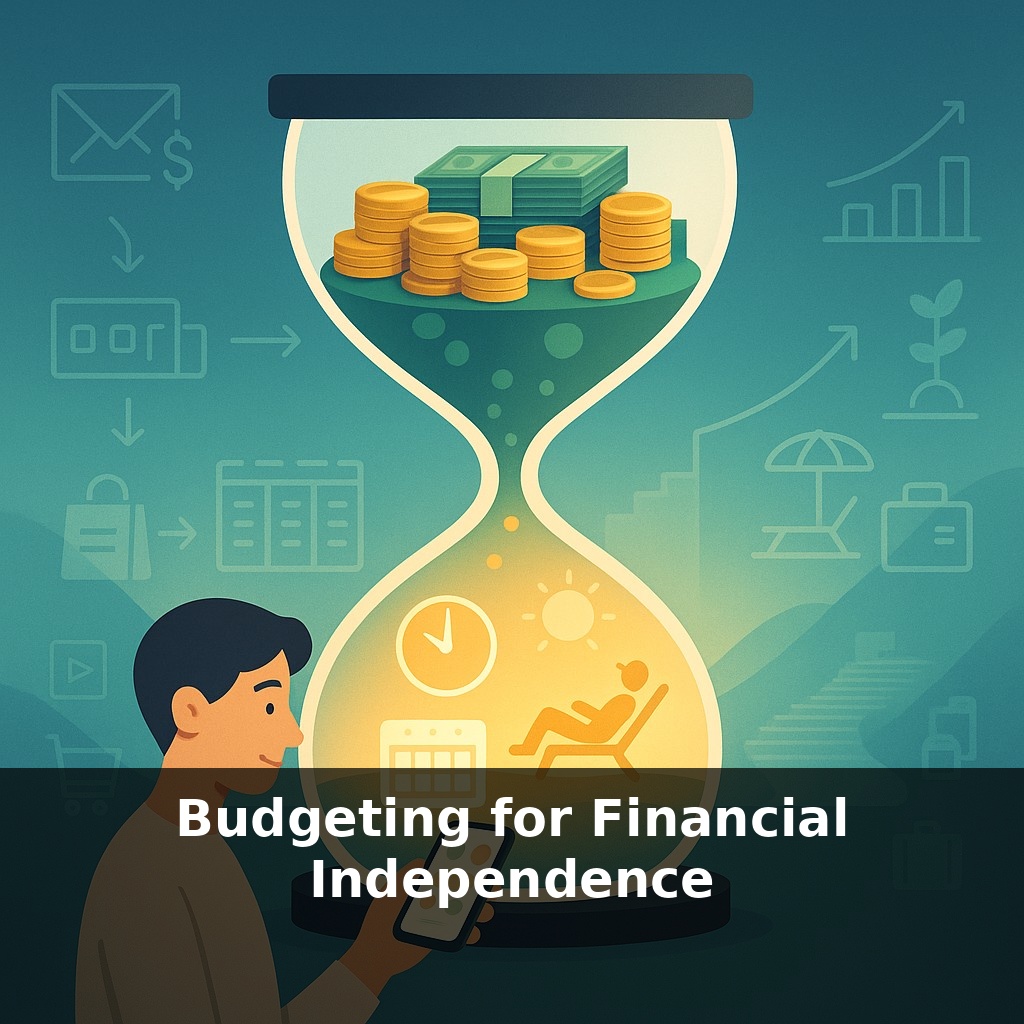
Despite budgeting efforts, a staggering number of adults end the month with little to show. Picture this: your paycheck arrives, bills auto-draft, and with just a few taps for takeout, the chance to invest in your future vanishes. The twist? The real power of a budget isn’t tracking money. It’s quietly buying your future time.
Only 39% of Americans keep a detailed household budget, yet almost everyone has opinions about money, “being bad with numbers,” or not earning enough. That gap—the difference between what we *feel* about money and what we’re actually doing with it—is where your path to financial independence quietly lives.
In this series, we’re shifting from “Is budgeting important?” to “How do I use it as a tool to escape dependence on my next paycheck?” That means connecting today’s small decisions to tomorrow’s freedom: how aggressively you save, how intentionally you cut, and how deliberately you invest the difference.
Think of this as moving from tracking the past to engineering the future. We’ll explore how to reverse‑engineer your FI number, route each dollar toward it, and design a system that runs even on low‑motivation days—so your money habits keep working, whether you’re feeling disciplined or not.
Most advice stops at “track what you spend,” but that only tells you where you’ve been. To actually buy back years of your life, you need to see how each category you spend in either accelerates or delays that goal. This is where we shift from a single monthly total to *distinct money roles*: core needs, meaningful wants, future freedom, and quiet leaks. Core needs keep you stable; meaningful wants keep you motivated; future freedom funds your escape; leaks are everything that doesn’t clearly serve the first three but still drains your account, drip by drip, month after month.
Most people start by asking, “Where can I cut?” A better question is, “Which dollars are currently working *against* my future freedom?” The shift sounds subtle, but it changes how you look at every line item in your life.
Start with this lens: every recurring cost you carry isn’t just this month’s hit—it’s a slice of your future price tag. The data is brutal but useful: for every extra $100 a month you no longer need, you shrink the portfolio required to support your life by roughly $30,000 under the 4% rule. That random $27 subscription you barely use isn’t “just $27”; it’s almost $10,000 of extra portfolio you’d otherwise have to build.
This is where “quiet leaks” move from abstract idea to concrete target list. A leak isn’t necessarily a small amount of money; it’s a category that: - doesn’t protect your stability, - doesn’t genuinely improve your day‑to‑day life, and - doesn’t move you closer to owning more of your time.
Notice what isn’t on that list: there’s no moral judgment and no requirement to be as cheap as possible. A daily coffee you truly enjoy may belong in meaningful wants; a gym membership you never use is a leak, even if it’s “healthy” in theory. The role a dollar plays matters more than how it looks from the outside.
Now add one more layer: *friction*. People who reach FI quickly don’t just spend less; they make it mechanically harder to let leaks grow back. They: - auto‑route money to investments right after payday, so less is available for random taps and swipes, - batch decisions (like reviewing all subscriptions quarterly) instead of relying on willpower in the moment, - and commit to low‑fee investment vehicles, so fewer dollars are silently shaved off by costs.
The same $1,000 can be: - scattered across fees, impulse upgrades, and forgettable purchases, or - concentrated into low‑cost funds that quietly send you dividends years from now.
Your job isn’t to track perfectly; it’s to keep redirecting more dollars into the second path and less into the first, until the balance of power in your financial life permanently tilts in your favor.
Chris, a software engineer earning $95k, thought he was “pretty frugal” until he tagged three months of transactions. He found $260/month in food delivery and “convenience fees” stacked on top of a normal grocery bill. Instead of banning takeout, he created a simple rule: max 4 deliveries per month, pre‑loaded on a gift card. The rest of that old delivery money started flowing into a low‑fee index fund—no spreadsheets, just one decision that changed the default.
Sara, a nurse, noticed her card spikes happened after stressful shifts. She set up a 24‑hour pause: any online cart over $40 had to wait a day. Surprisingly, half of those “must haves” disappeared, freeing up cash without feeling like punishment.
Think of these tweaks like rerouting a hiking trail: you’re not climbing a new mountain, you’re just smoothing the path you already walk so it naturally leads toward future freedom instead of dead ends.
Your challenge this week: pick *one* spending trigger—stress, boredom, social pressure—and run a 7‑day experiment to gently interrupt it with a rule you can follow even on your worst day.
As tools get smarter, the “effort” part of money planning will quietly shrink. Apps will learn your rhythms the way maps learn traffic, warning you when this month’s choices nudge you off your longer path. With more people on irregular paychecks, flexible systems that adjust like tide charts will matter more than rigid monthly plans. If enough households redirect even a small slice of spending, local capital pools could grow—funding co-ops, small lenders, and community projects that weren’t viable before.
Each tiny choice becomes a vote for the kind of life you want next year, not just next weekend. As you notice patterns, you can start reshaping them—testing new rules, swapping old defaults, and adjusting when life shifts. Think less “perfect system,” more “ongoing sketch,” where each revision quietly moves you closer to work you choose, not endure.
Start with this tiny habit: When you sit down to check your bank balance on your phone, tap into your transactions and highlight just **one** expense that didn’t move you closer to FI (like an extra takeout or random Amazon buy). Then, in your notes app, type the name of that one expense and next to it type what you *wish* that money had gone to instead (e.g., “VTSAX,” “emergency fund,” or “student loan payoff”). That’s it for today—no big spreadsheet, no full budget—just one “redirect” choice each time you peek at your accounts.