“Most people don’t have a spending problem. They have a direction problem.”
Meet Clara, a diligent saver who, despite tracking every penny in a budget spreadsheet, hasn't seen her savings account increase in months. You’ve tracked every receipt—so why does it still feel like you’re going nowhere?
Here’s the twist: a “good” budget can still quietly work against you if it’s built in the wrong direction.
Most people start with last month: rent, groceries, subscriptions, a guess at “fun money.” They tweak a few numbers, hope it feels less tight, and call it a plan. But that method treats your future like leftover scraps—whatever remains after today’s life is paid for.
Flip it.
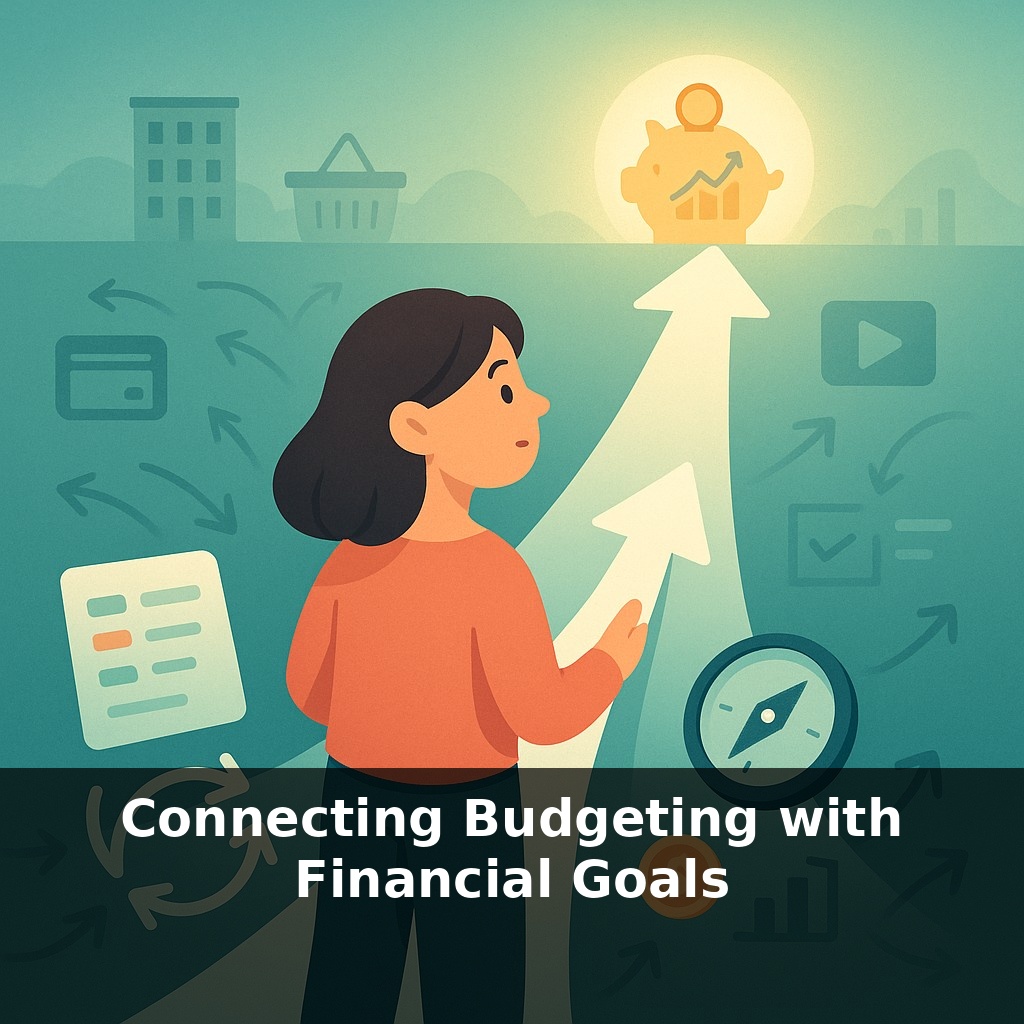
Start from the future and walk backward. Ask, “What do I actually want my money to *do* in the next 12 months? In the next 5 years?” A three-month safety net, paying off that 19% card, a realistic retirement target—these aren’t line items, they’re destinations.
Think of this like planning a train journey: you first choose where you’re going and when you need to arrive, then you pick the routes and connections—not the other way around. Your budget should work the same way.
Now we zoom in: “future first” isn’t just a slogan—it changes how you treat every single dollar that hits your account. Instead of one vague pile of “money,” you’re assigning roles: this $200 is the starter brick for an emergency fund, that $150 is your monthly ticket out of credit card debt, that 5% of your paycheck is future‑you’s rent in retirement. Like an artist blocking in big shapes before adding details, you decide the major goals and their timelines, then let the smaller spending flex around them. The goal isn’t perfection; it’s giving every dollar a job that actually moves you somewhere.
Here’s where “future‑first” budgeting stops being theory and starts changing how your money actually behaves.
Begin by translating vague hopes into targets with a date and a dollar figure. Not “I should save more,” but “I want $1,500 for travel by October,” or “I need $9,000 in an emergency fund within 24 months.” That clarity is powerful: households with a written plan are 2.5× more likely to hit retirement targets—and that same planning muscle works for nearer‑term goals too.
Next, stack your goals by urgency and risk, not emotion. A new car might *feel* exciting, but living in the 64% who are paycheck‑to‑paycheck is a bigger threat. High‑interest debt, thin savings, and housing stability usually sit at the top; lifestyle upgrades and “nice‑to‑have” projects go lower on the ladder.
Now break big numbers into monthly “required moves.” A $1,500 travel fund in 10 months is $150 a month. A 6‑month safety net over 3 years might be $200–$300 a month, depending on your expenses. Suddenly, goals that felt abstract become line items you can either fund or consciously delay.
Automation is where this shifts from willpower to system. Instead of waiting to see what’s left at month‑end, you schedule transfers to each goal on payday. Research shows those automated flows boost saving rates by 17% compared with manual deposits, because you’re not asking yourself to make the same hard decision over and over.
You can do this with separate savings accounts nicknamed by goal—“Tax Buffer,” “Summer Trip,” “New Laptop”—or with goal “buckets” inside one account. What matters is that dollars are visually tied to outcomes, not just sitting in a gray, tempting lump.
For longer‑term goals, like retirement or a down payment five years out, connect them to actual investment choices instead of a single generic risk label. Goal‑based portfolios—where risk and timeline match the purpose—have outperformed plain “moderate” or “aggressive” portfolios by 1.2 percentage points annually, largely because people stick with them through volatility.
The misconception is that this kind of structure will feel suffocating. In practice, many people find the opposite: once the big, scary items are handled first, spending the rest feels lighter, because you’re not quietly wondering what you’re neglecting every time you tap your card.
Think about someone earning $4,000 a month who feels “stuck.” Instead of tweaking coffee and streaming, they list three specific targets: $600 for a winter trip in 6 months, $2,400 for a car repair/medical buffer in 12 months, and $1,200 toward retirement this year. That’s $100 + $200 + $100 per month. They set three automatic transfers on payday to three nicknamed accounts, then let the rest of their spending float inside that constraint. Six months later, the trip is paid for in cash—and when a $700 car bill hits, it comes from the buffer, not a 24% card.
Another person might tie each dollar to “chapters” of a story instead of accounts: Chapter 1, “Security”; Chapter 2, “Freedom to change jobs”; Chapter 3, “Sabbatical in 3 years.” They assign calendar dates and monthly amounts to each chapter, then review quarterly: “Is Chapter 2 still more important than a home reno?” Adjustments become publishing edits, not self‑criticism, and the budget feels like an evolving draft of the life they’re actually writing.
Your budget may soon feel less like a spreadsheet and more like a navigation app. Open‑banking tools could pull in bills, income, and goals, then reroute money automatically when life swerves—like shifting surplus from a quiet month into next year’s “career break” fund. Think of your accounts as a small ecosystem reacting to weather: bonuses, medical bills, even market swings. The risk: every new connection is another gate in the fence around your data, so “set and forget” won’t apply to privacy settings.
Think of this as sketching a map you’ll redraw often, not carving commandments in stone. As life shifts—kids, career jumps, health detours—your goals can trade places in line. Your challenge this week: rewrite your budget as a story with chapters 1, 2, and 3, each tied to a date and dollar target, then let everything else fill in around those plot points.