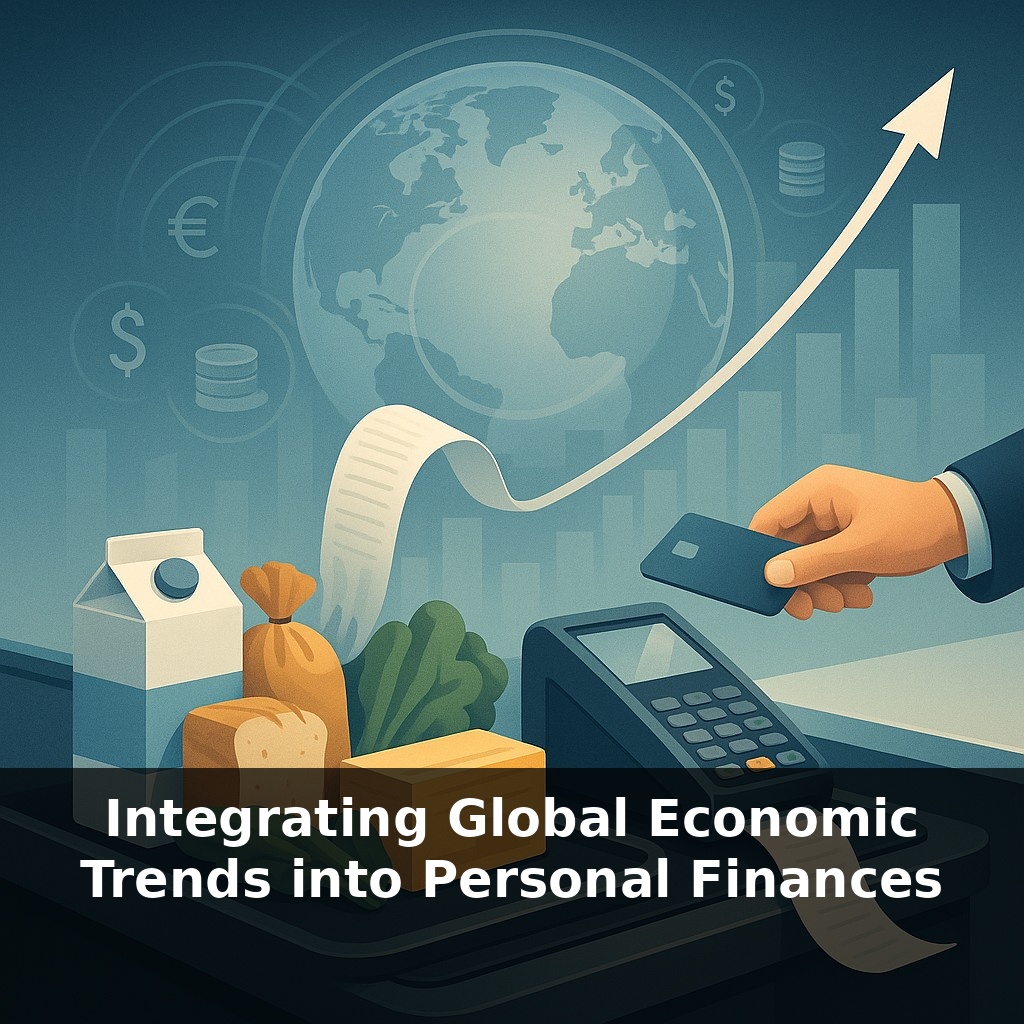
Global inflation has surged to its highest peaks in recent history, yet budgeting habits remain myopic. While at the checkout, do you ever wonder why the prices climb? It's not just local economics at play. You’re at the checkout, your total jumps again, and the real driver is happening thousands of miles away.
Average global inflation recently peaked at 8.7%—yet most people only “zoom in” on their paychecks and bills, not the forces moving underneath them. Your salary, rent, loan rate, grocery total, even the cost of streaming services are all quietly reacting to global data released on screens you’ll never see.
This episode is about learning to zoom out.
You don’t need a PhD or to follow every headline. You do need a short list of signals—like interest‑rate decisions, currency moves, and shipping costs—and a way to translate them into concrete actions: when to fix a loan, when to build a cash buffer, when to lean into (or away from) certain investments, when to time big expenses like travel or tuition.
Think of it as upgrading your money habits from “local only” to “world-aware”—so your plan bends with global shocks instead of breaking.
Most of what hits your wallet starts as a number on a screen in some other country: a crop report that nudges grain prices, a factory shutdown that delays electronics, an energy deal that shifts fuel costs. Those shifts don’t just show up at the pump or in your grocery cart—they travel through wages, rents, loan offers, and portfolio swings. The goal here isn’t to track everything; it’s to notice a few “global ripples” that matter most for *your* life stage, then adjust your next moves: how much cash to keep, when to refinance, where to invest, and when to delay or fast‑track big plans.
Here’s how to make global trends *practically* useful without turning your life into an economics homework assignment.
Start with your own “exposure map.” List where you’re most sensitive to outside shocks: - Debt: mortgage, student loans, credit cards, variable vs fixed - Essentials: groceries, fuel, utilities, rent - Income: industry, employer type, how easy it would be to switch jobs - Plans: travel, study abroad, major purchases, moving countries
Now connect that to just a handful of signals:
1. **If you carry debt or plan big borrowing** Focus on policy‑rate paths and bond yields in your country. You’re not trying to predict exact moves—only the *direction* and how fast they’re changing. A series of sharp hikes? That’s a cue to: - Prioritize paying down variable‑rate balances - Delay optional borrowing (like car upgrades) - Run the math on refinancing if you’re near the end of a fixed term
Every percentage point matters: on a large loan, even small shifts can turn into a new subscription’s worth of monthly cost.
2. **If most of your spending goes to food and energy** Look at broad commodity indexes and major producer news. If you see sustained spikes, you can: - Lock into longer‑term utility contracts where possible - Batch‑buy nonperishables you know you’ll use - Shift meal plans toward less affected staples
Because 40–60% of that grocery bill is tied to these benchmarks, small changes upstream can justify deliberate swaps in what’s on your plate.
3. **If you invest—even only in retirement accounts** Check how globally diversified you really are. A portfolio tilted heavily to your home country is effectively a bet that your domestic economy will keep up with the world. Historical data shows that mixing global stocks and bonds can smooth the ride. You don’t need constant tweaks—but when headlines scream about trouble in one region, it’s a moment to ask whether you’re overly concentrated there, not a cue to abandon the whole plan.
4. **If your goals cross borders** Exchange‑rate charts matter. A 10% swing can redraw the budget for a semester abroad or overseas visit. When your currency is unusually strong, that’s your window to prepay tuition, buy flights, or top up foreign‑currency savings for later.
The pattern: notice broad moves, match them to your specific exposures, then adjust *timing* and *emphasis* in your plan rather than reacting out of panic.
A useful way to test this is to zoom into one ordinary week and trace how far‑away events quietly reroute your choices. Say your landlord emails about a rent increase the same week your employer hints at a hiring freeze. You could shrug and cut “fun” spending—or you could ask, “What outside forces might hit me *next*?” If your industry leans on exports and your country’s currency has been sliding, that might push you to bulk‑up a three‑month cash cushion rather than upgrading your laptop.
Or consider a friend planning a master’s program abroad. Instead of only comparing tuition brochures, they watch how their home currency trades against the school’s. When the rate briefly swings in their favor, they lock in part of next year’s housing deposit, the way a painter mixes extra of a rare color before it runs out. Each small move isn’t about beating the system; it’s about quietly steering around the biggest waves instead of meeting them head‑on.
As AI tools plug into live data, your future budget might quietly shift categories the way a smart thermostat tweaks temperature—barely noticeable, but always reacting to the wider system. Groceries could feel less predictable as climate jolts specific crops, nudging you toward seasonal menus and flexible shopping lists. And if digital currencies or new reserve systems reshape capital flows, “macro awareness” may become as standard a life skill as using email or search.
You don’t have to stare at charts all day; you just need a short ritual for noticing when the “global mood” changes. A headline about a distant election, a shock in a major port, or a surprise policy move can be your cue to nudge one dial—save a bit more, delay a big buy, or rebalance. Over time, those tiny course corrections can quietly rewrite your trajectory.
Try this experiment: for the next 7 days, pretend your household is a tiny open economy that “trades” with the world. Each day, pick one real global data point (e.g., today’s USD/EUR exchange rate, oil price, Fed funds rate, or a headline about supply chains) and adjust a micro-decision accordingly—like choosing between driving vs. public transit based on fuel prices, fixing vs. variable rate on a small loan, or buying imported vs. local groceries. Track in a simple two-column note: (1) the global signal you used and (2) the exact money decision you changed because of it, plus the dollar impact if you can estimate it. At the end of the week, use a spreadsheet or a financial tracking tool to log which type of global signal actually changed your behavior or saved you money—those are the trends worth monitoring in your budgeting strategy going forward.