On LinkedIn, people who post just once a week often get several times more views than those who show up once in a while—yet most professionals still treat it like a once-a-year résumé update. You’re busy, so here’s the puzzle: how do you look “always present” in just 30 minutes a week?
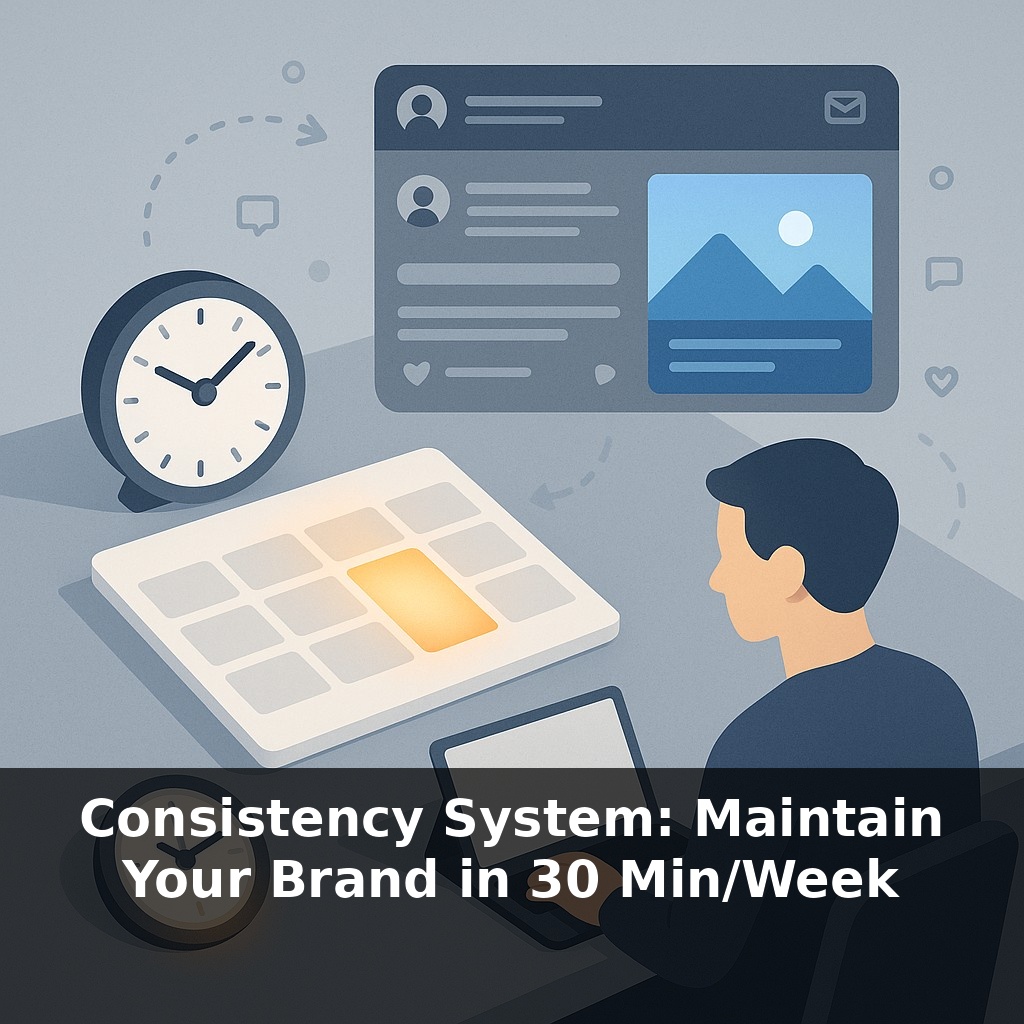
Posting weekly is the goal, but “be consistent” is useless advice if you don’t have a repeatable system that survives real life: back-to-back meetings, travel, kids’ bedtimes, surprise deadlines. That’s where a 30‑minute consistency system comes in—not as a heroic burst of willpower, but as a tiny, reliable loop you can run every week without thinking too hard.
You’ll design three pieces: 1) A simple input stream: where your post ideas come from while you work. 2) A batching habit: how you turn raw notes into 4 short posts in one sitting. 3) A light engagement rhythm: how you “signal boost” your posts in a few spare minutes.
Think of it less like “being active on LinkedIn” and more like setting up a weekly studio session where you quickly record and release what you’re already learning on the job.
Now that you’ve seen the outline of the system, the real leverage comes from shrinking the overhead around it. Most people fail not because they lack ideas, but because they waste time deciding *when* to think, *what* to write, and *where* to post. Your goal is to pre‑decide all of that. You’ll turn work you already do—projects, calls, small wins, even mistakes—into raw material, then pass it through the same 30‑minute “assembly line” every week. Like a doctor following a checklist before surgery, you reduce the space for hesitation and make showing up feel almost automatic.
Here’s how a 30‑minute block actually breaks down when you’re in the chair, timer on, cursor blinking.
Start by lowering the bar: you’re not sitting down to write four masterpieces; you’re documenting four small, specific moments from your week. That might be a tough client question, a mistake you fixed, a process you refined, a surprising metric, or an insight from a meeting. When you think this small, you stop trying to sound “thought‑leader‑ish” and start sounding useful and human—which is what performs best.
Structurally, think in tiny building blocks rather than “posts”:
- 1 problem or observation from real life - 2–3 lines unpacking what actually happened - 1 clear takeaway or shift in perspective - 1 simple next step or question for the reader
At ~7–8 sentences, you’re within that 25–35 second read window without counting characters.
The hidden move is to treat this like a lab session. In one 30‑minute block, you’re not just writing; you’re also running four small experiments:
- Post 1: personal story with a lesson - Post 2: tactical how‑to - Post 3: opinion on a trend in your field - Post 4: behind‑the‑scenes of how you work
Over a month, you’ll see which format pulls comments, which earns saves, and which gets profile visits. Those signals quietly train your future topics, so each week the writing feels easier and hits closer to what your audience actually cares about.
To keep the drafting fast, rely on 1–2 reusable templates instead of starting from a blank page. For example, a “mistake → lesson” frame and a “question I get a lot → answer” frame will cover more situations than you think. Rotate them, tweak the opening line, and you’ve cut decision‑making in half.
Think of your calendar the way a meteorologist treats seasons: you’re not predicting the exact storm, just the pattern. Some weeks your 30 minutes will produce sharper ideas than others. That’s fine. The win is running the block anyway, trusting that the average of many imperfect weeks beats the occasional “perfect” burst.
Think of this 30‑minute block like a tiny art studio session you protect each week. You’re not commissioning a mural; you’re sketching four quick studies and pinning them to the wall for others to react to. One sketch might be a half‑formed opinion, another a sharp “how I’d do this differently next time.” Over time, the wall tells a clear story of how you think.
To keep ideas flowing, notice micro‑moments: a Slack thread that clarified something, a chart that surprised you, a sentence from a mentor that stuck, a process you quietly fixed. Capture them in a single line when they happen. In your studio block, you simply choose four and “ink” them.
You can also recycle formats like a songwriter reusing chord progressions: - “Here’s what changed my mind about X.” - “If I had to do Y again from scratch, I’d start here.” - “Most people in our field do Z; here’s the tradeoff I see.”
Same structure, different content, faster decisions.
Your challenge this week: book one 30‑minute “studio session,” set a timer, and don’t edit while drafting. Get four rough posts out, then spend 5 extra minutes choosing which two you’ll actually publish.
As AI tools mature, that 30‑minute block becomes less about typing and more about directing. Drafts will pre‑populate from your calendar, calls, even whiteboard photos—like a weather radar quietly collecting signals while you decide which clouds matter. Recruiters may soon glance at a “thinking footprint” score beside your résumé. Treat this short ritual as rehearsal for that future: a place to sharpen how you reason in public, not just how often you appear.
Over time, this 30‑minute loop becomes less about “showing up” and more about spotting patterns in your work. You’ll notice which topics spark debate, which stories feel overused, which questions keep returning like a familiar song hook. Follow that signal trail. Let it nudge your projects, offers, even career moves—not just your next post.
Begin with a specific task: Every morning, identify one content opportunity from your existing work—like a client insight, a small achievement, or a resolved challenge—and jot it in your content system. Choose a single brand pillar to align it with and craft a corresponding insight or question to share. At week's end, curate a 'mini-series' from these insights and pre-schedule it using your preferred platform, focusing on fostering engagement or discussion around each piece.