Most people can tell if you’re faking confidence in less than 3 seconds. Now, catch yourself in this moment: your voice, your posture, your thoughts. Which feels more real—how you’re acting, or what you’re actually feeling? That tiny gap is where your real charisma is hiding.
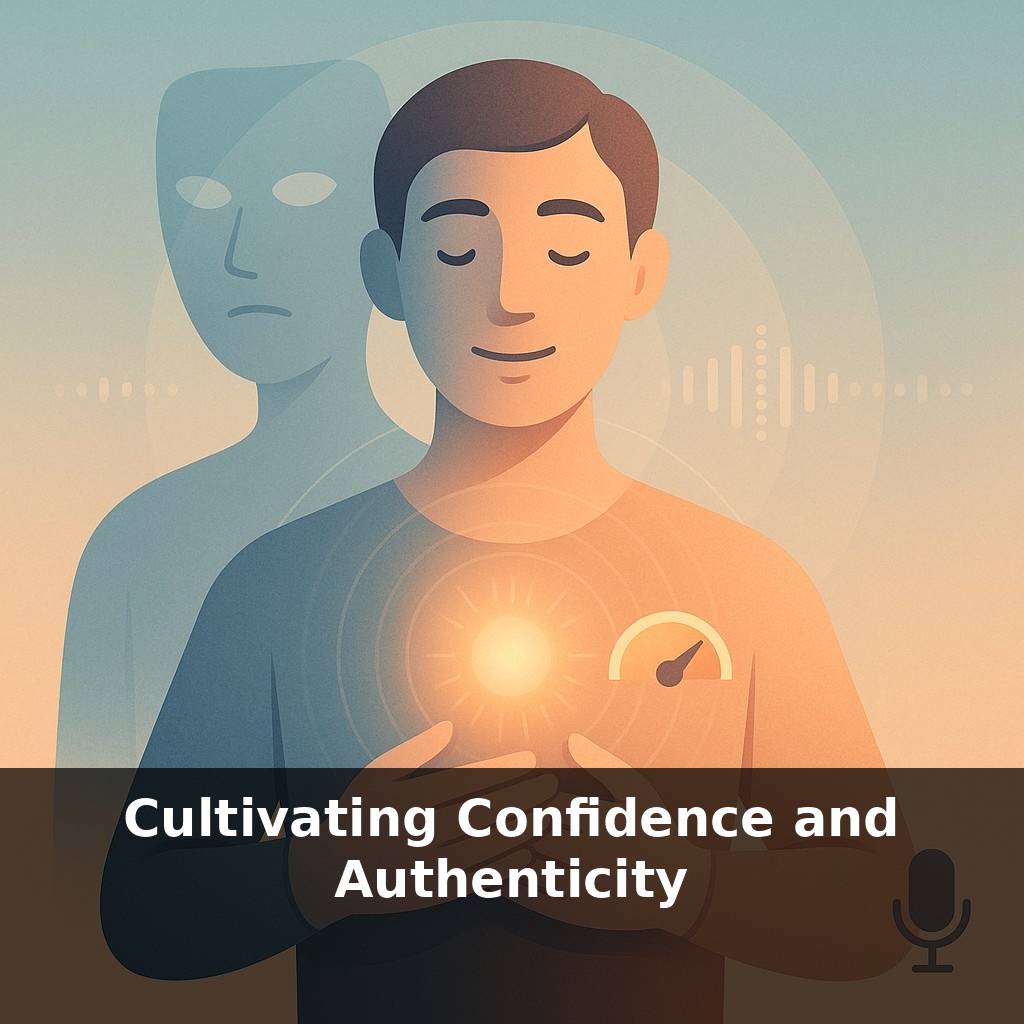
That gap between how you act and how you feel? Your brain is tracking it like an internal “integrity meter.” When your words, body, and values line up, your nervous system relaxes, your voice steadies, and people lean in without quite knowing why. When they don’t, your body hits the brakes—tight shoulders, rushed speech, mental static. Most people try to fix this from the outside: better posture, stronger voice, “high status” tricks. But if your inner narrative is still “I’m not enough” or “I’m faking this,” those signals leak through. The real shift starts upstream, in two places you can actually train: what you believe you can handle, and how clearly you know what you stand for. Think of it less like putting on a performance and more like tuning an instrument—subtle internal adjustments that make everything you play sound cleaner, richer, and unmistakably yours.
Most people try to feel “more confident” in the moment they need it most—right before the presentation, the date, the difficult conversation. That’s like trying to cook a full meal the second you get hungry with an empty fridge. The real work happens earlier, in quiet, unglamorous reps: how you talk to yourself after small failures, how often you practice skills when nobody’s watching, how you behave when it would be easier to bend your values a little. Those micro-moments slowly teach your brain, “When I show up as myself, I can handle what happens next.”
Here’s the quiet truth most people miss: your brain isn’t asking, “Am I confident?” It’s asking two much more practical questions on loop:
1) “Have I seen myself do something like this before?” 2) “Am I okay with *who* I’m being while I do it?”
Those are the two dials you’re constantly adjusting: evidence (mastery) and alignment (authenticity). When both are turned up—even a little—you stop “performing confidence” and start radiating something steadier and less fragile.
Let’s start with evidence. Bandura’s research on mastery experiences is brutal and freeing: your brain trusts receipts, not pep talks. That means every small, repeatable proof of “I handled that” rewires what future-you thinks is possible. You gave feedback once and nobody exploded? Your brain logs it. You led one small meeting and it went fine? Logged. Over time, these reps compound.
Think of it like a note-taking app for your capabilities. Most people never tag or search their wins; they only replay failures. So by the time they’re in a high-stakes moment, their mental “search history” is filled with reasons to doubt themselves. Charismatic people aren’t necessarily better; they’re better archivists. They can quickly pull up internal examples of “I’ve done something like this before,” which calms their body enough for their skill to show.
Now the second dial: alignment. This is where authenticity quietly boosts confidence. When your behavior lines up with your values, your brain spends less energy on internal debates. Instead of running two programs—“Say this” and “Is this really me?”—it runs one. That freed-up bandwidth becomes presence: better listening, cleaner eye contact, natural gestures. You’re not trying to impress; you’re tracking the moment.
Research on authentic leadership backs this up: when people feel their leader is consistent and real, they engage more—and that external trust loops back into the leader’s own sense of “I can do this my way.” It’s a self-reinforcing circuit: small, value-aligned actions → positive responses → stronger self-trust → bolder, yet still genuine, behavior.
The paradox: the more you chase looking confident, the faker you feel. The more you chase acting in line with what you care about, the more confident you seem—often before you *feel* ready.
Think about two real people you know: one who seems “put together” but oddly hard to relax around, and another who might stumble over words yet somehow makes everyone feel safe. The first often has polish without alignment; the second has enough proof they can handle life *and* they’re not trying to hide who they are.
Concrete example: a manager who quietly keeps a “wins” folder of successful projects, tricky 1:1s handled well, problems solved under pressure. They review it before big meetings—not to hype themselves up, but to remind their brain, “We’ve walked into uncertainty before and walked out okay.” Now layer authenticity: they open the meeting by naming what others are thinking (“We’re under pressure and some of this is unclear, so let’s surface concerns early”). Performance improves not because they’re fearless, but because people feel the congruence between their track record and their candor. Over months, that combo makes them the person others naturally turn to when stakes rise.
Soon, tools won’t just coach your delivery; they’ll mirror back how “you” you actually are. XR simulations might replay a tough conversation with live overlays: where your voice tightened, where your gaze dropped, when your words drifted from your stated priorities. Like a financial dashboard for your presence, tiny “authenticity spikes” and “confidence dips” could become trackable data—inviting you to run small, deliberate experiments instead of guessing what really lands.
Think of this as learning a new cooking style: early dishes feel clumsy, but each attempt teaches your hands what “right” feels like. Here, the recipe is noticing when your actions and quiet intentions overlap. Track those moments like secret ingredients. Over time, you won’t chase presence—you’ll season every interaction with it almost by reflex.
To go deeper, here are 3 next steps:
1. Re-listen to the section where the host shares the “micro-bravery” examples and then grab Mel Robbins’ *The 5 Second Rule* audiobook; for the next 7 days, use her 5-4-3-2-1 countdown before every situation where you’d normally people-please (like answering Slack, speaking up in a meeting, or declining an invite). 2. Take the authenticity exercise from the episode (the “values over vibes” idea) and plug it into Brené Brown’s free Values PDF (from *Dare to Lead*); choose your top 2 values and then change one real-world setting today—your email bio, Instagram profile, or LinkedIn headline—to reflect those values in clearer language. 3. Since the guest talked about curating your “bravery circle,” open your podcast app and subscribe to one confidence-focused show they mentioned (for example, *The School of Greatness* or *The Confidence Podcast*), then immediately send a 2-sentence text to one friend you trust, inviting them to listen to the same episode with you and swap one insight over voice notes by tonight.