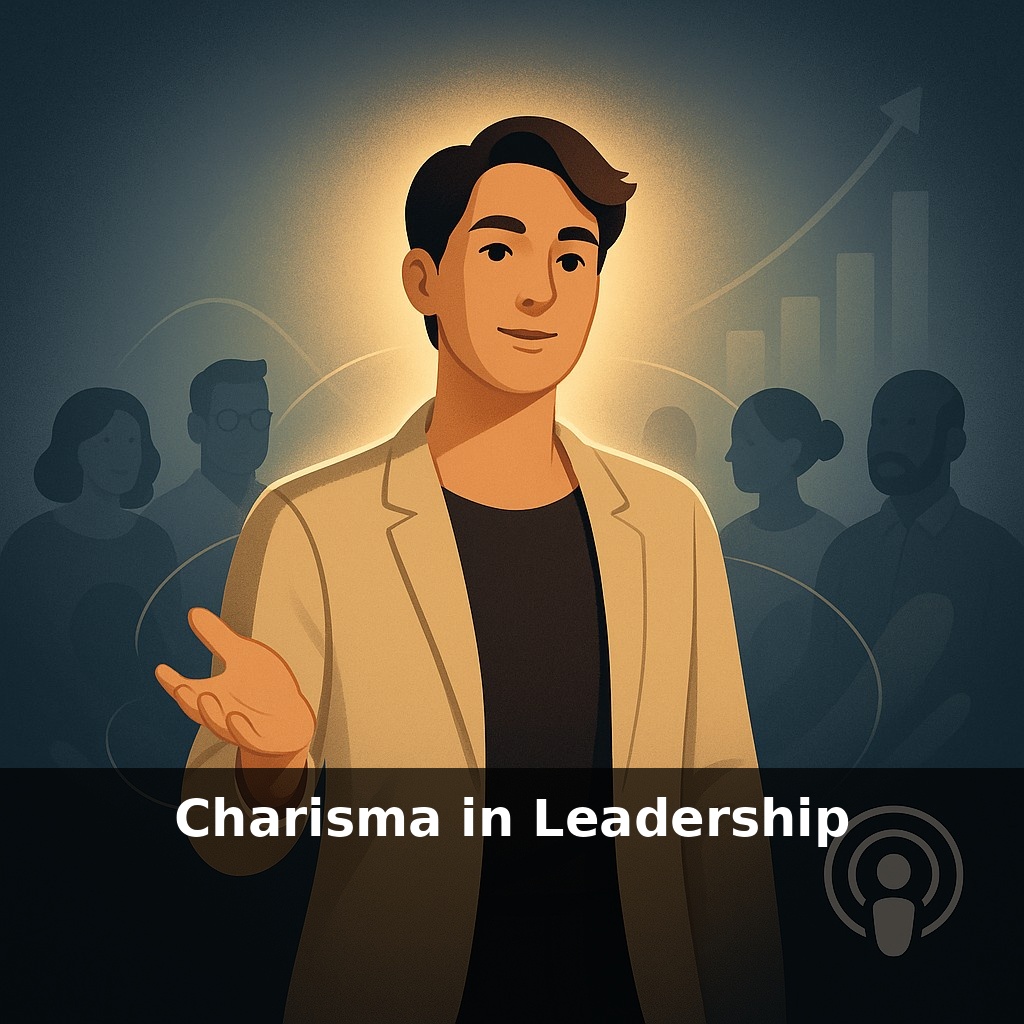
“Charisma can double how effective a leader appears, yet most leaders aren’t born with it.” A CEO walks into a room: same strategy, same team, but today she speaks with vivid stories, direct eye contact, and calm certainty. By the end, people feel different—though nothing on paper has changed.
Gallup’s latest data shows a 23 % profitability gap between highly engaged teams and everyone else. That gap is where charisma quietly does its work. Not as a theatrical performance, but as a series of small, deliberate choices a leader makes in ordinary moments: how they enter a meeting, how they respond to a tough question, how they frame a setback.
In this episode, we’ll zoom in on those “micro-moments” and treat them like a lab. You’ll see why some leaders leave people more focused and energized after a five‑minute update, while others drain the room in the same time. We’ll connect this to what the research says about learned charismatic behaviors, and we’ll look at how competent, ethical leaders use these behaviors to align people around real goals—not just to get applause.
By the end, you’ll have a clearer sense of which specific habits to practice first.
Some of the most revealing signals of charisma aren’t dramatic speeches; they’re the tiny “emotional decisions” you make without thinking. Do you look up from your laptop when someone speaks, or keep typing? Do you pause after a tough comment, or rush to defend yourself? These split‑second choices quietly teach people how much their energy and opinions matter. Think of them as recurring “moments of truth” in your leadership day—small, repeatable points where you either deepen trust and motivation or erode it, one interaction at a time. In this episode, we’ll start mapping those moments.
A meta‑analysis of over five thousand leaders found a strong link between how charismatic they were seen to be and how their teams actually performed. Yet when researchers watched these leaders on the job, what stood out wasn’t fireworks—it was structure. Charismatic leaders tended to run conversations, meetings, and even hallway chats in more intentional ways.
Think of your day as a sequence of “channels” where your influence shows up: vision, emotion, and interaction.
**1. The vision channel: how you aim attention**
Here the question is: *what do people walk away thinking about?* High‑charisma leaders repeatedly: - Translate goals into vivid outcomes (“so our customers feel…”) - Tie tasks back to identity (“this is what great engineers here are known for”) - Name the stakes without melodrama (“if we get this right, we unlock X; if we miss it, Y keeps happening”)
Notice this isn’t about hype; it’s about selecting and framing what matters so people can see themselves in it.
**2. The emotion channel: how you set the climate**
In tense situations, these leaders manage the *temperature* of the room. They: - Label emotions in neutral language (“there’s a lot of frustration here; let’s surface it”) - Signal direction (“we’re not stuck—we’re going to unpack options”) - Model the feeling they want to spread—curiosity instead of defensiveness, resolve instead of panic.
This is one reason charisma spikes follower engagement: people feel their reactions are seen and guided, not ignored or steamrolled.
**3. The interaction channel: how you make people feel seen**
Studies of leader–follower conversations show that perceived charisma rises sharply when people experience: - Specific recognition of effort, not just results - Probing questions about their thinking, not just their status - Short, focused listening bursts—90 seconds of undivided attention can change how an entire week feels
Over time, these patterns quietly rewrite expectations: *Around you, my work makes sense, my emotions have a place, and my input matters.*
One crucial nuance: the same behaviors land differently in different cultures and personalities. A strong, emotive voice might inspire in one context and feel theatrical in another. The most effective leaders treat these channels like dials, not switches—constantly adjusting intensity, timing, and style to the person and moment in front of them.
A product director walks into a sprint review already behind schedule. Instead of diving into the backlog, she starts with, “Here’s the one customer problem we’re all trying to crush this month,” and sketches a quick, human example. Suddenly, every comment in the room orients around that anchor. That’s the vision channel in action: not drama, but deliberate focus.
At Patagonia, leaders often open meetings by briefly connecting agenda items to the company’s environmental stance. It’s not a speech; it’s a 20‑second “why” that tilts attention toward meaning. People leave debating trade‑offs, not just tasks.
Watch how some managers handle bad news. One shrugs and moves on; another says, “This stings. Here’s what we *can* influence in the next 10 days.” Same facts, different emotional climate.
Your day might feel chaotic, but those channels are like adjustable sliders on a soundboard. Each tiny choice—how you start a 1:1, how you react to a curveball—nudges the whole mix toward noise or clarity.
Boards and investors will increasingly ask not just “Did the numbers move?” but “*How* did you move them?” Charisma will be audited the way cybersecurity is now: stress‑tested, monitored, backed by safeguards. Leaders who document decisions, invite dissent, and show their “workings” will gain trust. On the flip side, AI‑polished personas that feel too smooth—like marketing emails that read suspiciously perfect—will trigger skepticism, not devotion.
When you treat your presence like a craft, every agenda slide and hallway check‑in becomes raw material for trust. Over time, followers don’t just respond to your words; they start to anticipate your standards the way a seasoned team anticipates a coach’s next play. That’s when charisma stops being a performance and starts becoming culture.
Here’s your challenge this week: Choose one recurring interaction (like your Monday team huddle or 1:1s) and deliberately practice *one* charismatic behavior from the episode: storytelling, vocal energy, or presence. For the next three instances of that interaction, open with a 60–90 second story that ties your team’s current goal to a vivid, human example (customer, colleague, or personal moment), using the vocal variety techniques mentioned in the show (slight pauses, emphasis, and a warmer tone). After each interaction, ask two people, “On a scale of 1–10, how engaging did that opening feel—and what would have made it a 10?” and track your scores across the three attempts.