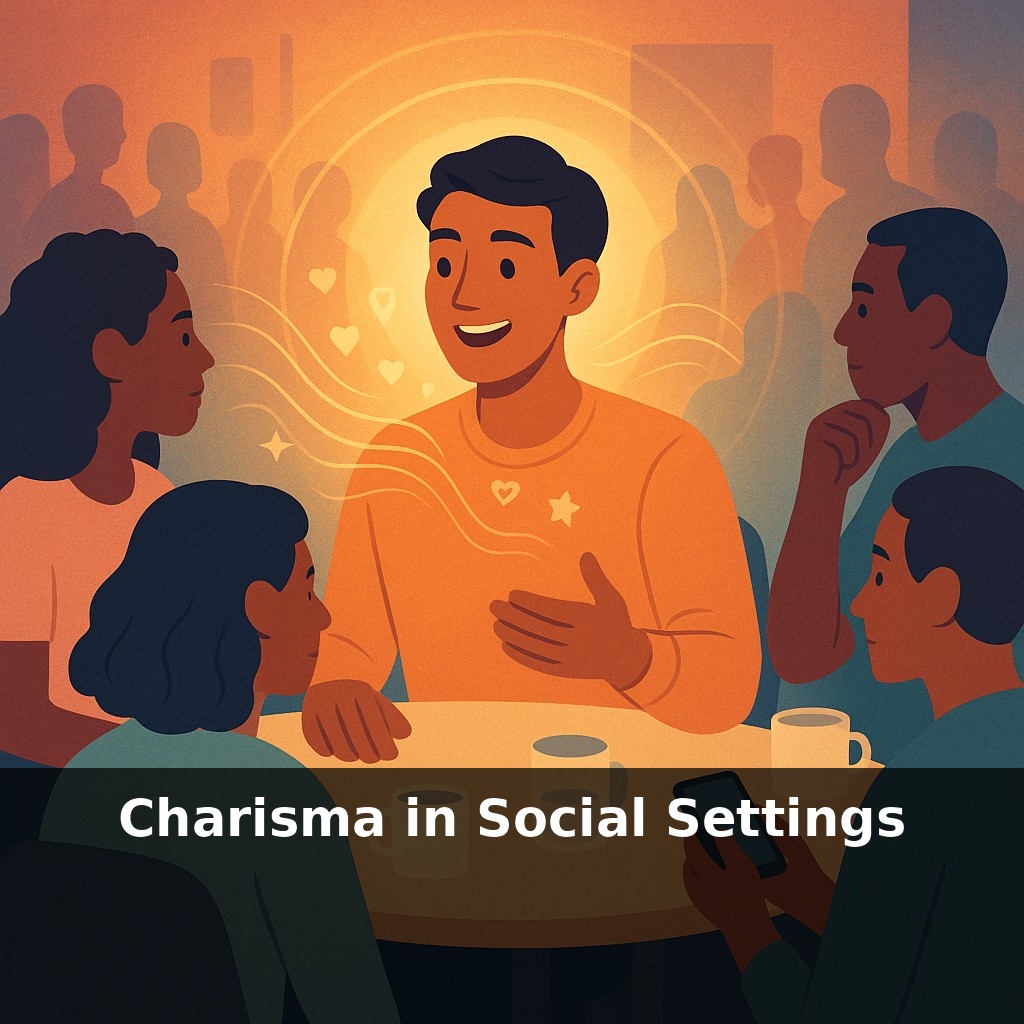
In a crowded room, one person speaks and the whole table subtly leans in. Another tells a better story… and people check their phones. Same setting, similar words—totally different pull. Today, we’re unpacking why small, almost invisible cues create that magnetic difference.
A 2016 Stanford study found that people remember about 65% of a story… and only 5% of a standalone statistic. That gap is where real-world charisma lives. Because in social settings, people aren’t just hearing you—they’re running an instant, unconscious test: “Do I feel something with this person?” Story, tone, and timing are three of the fastest ways to tip that test in your favor.
Think of the last time a friend talked about their stressful week versus the time they told you a quick, vivid moment—like their boss spilling coffee right before a big presentation. Same content (work stress), totally different emotional pull.
In this episode, we’ll zoom in on how you *package* what you say: turning everyday moments into shareable stories, using your voice like a dimmer switch, and choosing small details that make people lean in instead of mentally checking out.
Here’s the twist: the most charismatic people in a group setting aren’t usually the loudest or the funniest—they’re the ones who make *other people* feel a little brighter, braver, and more interesting. Research on oxytocin and mirror neurons shows that when you signal genuine interest, people’s brains literally soften toward you; they share more, laugh more, and remember you more positively. So in this episode, we’ll look at how to engineer that feeling on purpose: using micro-moments of attention, warmth, and presence to turn casual chats into the kind of interactions people replay in their heads later.
Here’s where we zoom in on the “social physics” of being that person others gravitate toward in groups—without forcing anything or turning into a performer.
Start with *how you enter* a conversation. Most people mentally knock on the door: hovering at the edge, waiting for a perfect gap. High-impact communicators “slide in” on the existing thread. They briefly track the topic, then add a short, concrete contribution that matches the current emotional temperature.
Example: friends are trading awkward travel stories. Instead of launching a monologue, you might say, “This reminds me of the time I accidentally boarded the wrong train in Italy—30 seconds of pure panic,” then pause. That tiny pause is social oxygen: it lets others laugh, ask, or add their own stories. You’re not grabbing the spotlight; you’re expanding the circle.
Next comes *how you pass the ball*. In groups, many people either hog it or drop it. The sweet spot is “looping”: you answer, then redirect in a way that pulls others in.
Someone asks, “How’s work?” A looping version: “It’s been intense in a good way—we just shipped a project we thought would die three times. Actually, that makes me curious—what’s been the most chaotic win for you this year?”
You’ve shared something human, then turned the focus outward with a specific, emotionally loaded question. Specificity matters; vague questions get autopilot answers.
Then there’s *calibrating energy*. Research on social contagion shows that people tend to mirror the most emotionally consistent person in the group, not the loudest. That means your job isn’t to be “on”; it’s to be *steady*. If the group is low-key, you can raise the energy by one notch—more animation, a clearer narrative arc—rather than jumping from 2 to 10. In a hyped setting, you can be the person who listens a bit more slowly, summarises what others say, and cracks concise, well-timed comments instead of competing for airtime.
Now add *micro-recognition*. People remember the moments you reflect something good back to them in front of others: “By the way, the way you handled that client email? That was surgical.” Public, specific, low-drama praise makes people feel seen without putting them on the spot. Over time, you become a quiet amplifier of everyone’s best moments, which strongly feeds into how influential and “easy to be around” you seem.
You’re in a group chatting about weekend plans. One person says, “Uh, just relaxing, nothing special.” Conversation dies. Another says, “Saturday I’m finally trying that tiny taco spot under the bridge—everyone says their salsa is dangerous,” then looks around like they’re letting people in on a secret. Same basic update, totally different pull.
Think of each social moment as having “open loops” you can either close or widen. Example 1 – Closing: Friend: “I started running again.” You: “Nice.” (Loop closed. No hook, no path.)
Example 2 – Widening: Friend: “I started running again.” You: “Respect. What made you lace up again—boredom, crisis, or a weird TikTok?”
You give them playful categories, which makes answering easier and more vivid.
Another move: surface “hidden threads” in what people say. Coworker: “I’m buried in a new project.” You: “Buried how—fun buried or ‘why did I say yes to this’ buried?”
You’re not shifting focus to you; you’re upgrading the *quality* of what they feel safe sharing.
A single group hangout today might be replayed tomorrow in screenshots, DMs, and side chats. That means every “small moment” can echo far beyond the room. The upside: consistently making others feel a bit safer, braver, or more appreciated can quietly compound into a reputation that precedes you. The catch: people will also sense when your warmth is selectively deployed. Your future relationships depend less on big speeches and more on how repeatable your best moments are.
Your challenge this week: in three different group settings (work, friends, online), pick *one* person each time to subtly “center” using what you’ve learned—loop them into a thread, highlight a win, or widen a story so they can step in. After each setting, quickly note: - What you did - How they reacted in the moment - Any ripple effects (others joining, energy shift, follow-up messages)
By the end of the week, you’ll have real data on which moves actually change the room for you.
Think of this as practicing social “debugging”: you test a line, adjust your posture, or tweak a follow‑up question, then watch how the system (the room) responds. Over time, you’ll spot your own repeatable patterns—the comments that spark side chats, the questions that light people up—and you can start designing more of those moments on purpose.
To go deeper, here are 3 next steps: (1) Watch Vanessa Van Edwards’ TEDx talk “You Are Contagious” and practice her “three-second smile” and open body posture in a low‑stakes setting today (like when ordering coffee). (2) Use the free app “Orai” or “Yoodli” to record yourself telling a 60‑second story about your day, then review the feedback on your energy, eye contact (simulated), and pace to tweak how charismatic you sound. (3) Grab Olivia Fox Cabane’s *The Charisma Myth* and read just the chapter on presence, then apply one exercise (like grounding with your senses) at your next social interaction tonight—whether that’s a group chat, a call, or an in‑person meetup.