 2min preview
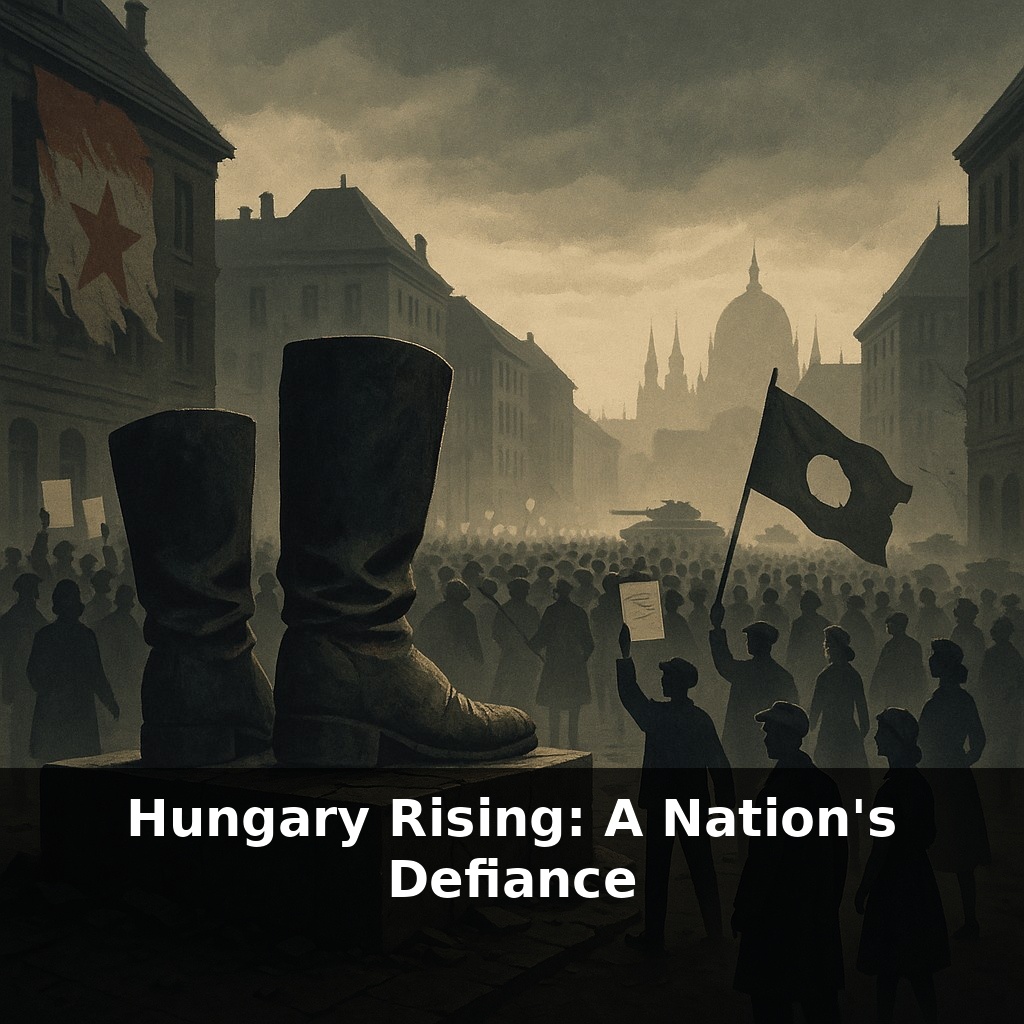
Hungary Rising: A Nation's Defiance
📝 Transcript
A crowd the size of a small city gathers in Budapest—and by nightfall, the dictator’s giant bronze statue is lying in the street. Students with handwritten demands, factory workers walking off the job, Soviet tanks rolling in. Is this a doomed riot, or the moment an empire starts to crack?
Two weeks before those streets erupted, Budapest looked, on the surface, orderly enough: trams ran on time, red stars hung from buildings, newspapers repeated the approved slogans. But below that neat facade, conversations were changing. University reading groups quietly passed around banned Polish essays. Party intellectuals, once loyal, began to mutter about “national roads to socialism.” Radio engineers, used to relaying Moscow’s voice, were sketching ways to broadcast their own.
Think of a tightly scripted play where, one by one, the actors start improvising lines the director never approved. By October 1956, the script in Hungary was fraying. Reform communists challenged hardliners, workers debated production quotas in canteens, and rumors of change in Poland traveled faster than official denials. When the first protest march formed, it wasn’t an isolated outburst—it was the moment scattered whispers finally found a single, risky chorus.
Subscribe to read the full transcript and listen to this episode
Subscribe to unlockSubscribe for $1.99/month to unlock the full episode.
From this course
Cold War Epochs: Turning Points and Crises
8 episodesUnlock all episodes
Full access to 8 episodes and everything on OwlUp.
Subscribe — $1.99/monthLess than a coffee ☕ · Cancel anytime