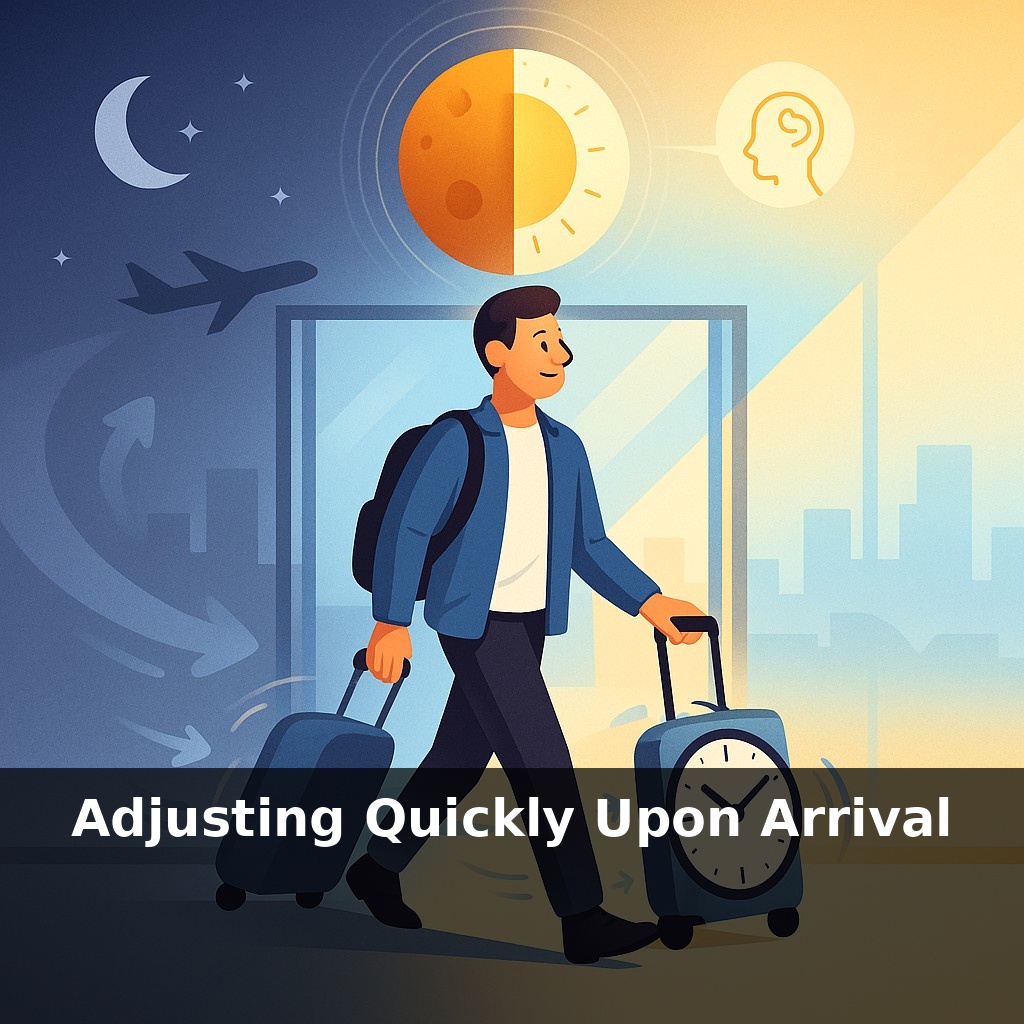
Most travelers waste several days “arriving” after they’ve already landed. You step off the plane, power through meetings, and still feel trapped in your old time zone. Yet with a few well‑timed tweaks on day one, your body clock can catch up in about half the time.
Most people land, drop bags at the hotel, and then “see how they feel.” That’s like arriving at a connecting airport and never checking which gate your next flight leaves from—you’ll get somewhere, but probably not where you meant to go, and definitely not on time.
This episode is about treating your first 48 hours on the ground as deliberately as you planned your flights. Instead of reacting to fatigue, you’ll be running a small personal experiment: using light, movement, and brief rest in specific windows to tilt the odds in your favor.
We’ll look at why your first local morning and afternoon matter far more than your first night’s sleep, how a few minutes of the right kind of light can outperform an extra hour in bed, and how to use short, controlled naps without sabotaging your evening. The goal isn’t perfection—it’s cutting your “lost days” in half.
Here’s where it gets interesting: research shows you can deliberately “tilt” each day by 1–2 hours just by choosing *when* you step outside, move, and pause. Most travelers never use that leverage; they arrive and let hotel lighting, random meeting times, and convenience foods run the show. In this episode, we’ll layer in three levers you probably haven’t timed before: bright morning exposure strong enough to matter, afternoon activity at the right intensity, and ultra-short daytime sleep that sharpens you without wrecking your night—more like tapping a brakes once, not parking the car.
A 20‑minute nap can sharpen your reaction time as much as a strong coffee—without the crash. Add bright local‑morning light and a bit of afternoon exertion, and you’re no longer passively “waiting it out”; you’re actively steering how fast your internal systems relocate.
To make this useful on the ground, turn research numbers into a rough rule: for many people, a well‑planned arrival day can shift your internal schedule by 2–3 hours instead of the usual slow drift. Do that twice and you’ve moved 4–6 hours—enough to feel functional on most trips.
Think of your first local morning as “set tempo” time. Within 1–2 hours after local sunrise, you want light that’s stronger than office brightness. Outdoors beats everything; if that’s not possible, seek a window seat where you can actually feel the light on your face. This isn’t background ambience—you’re giving your system a clear timestamp: “This is morning now.” On eastbound trips, that helps you get sleepy earlier; on westbound, it helps you stay anchored so you don’t slide later and later.
Next comes the early‑to‑mid afternoon “anchor block.” This is when a lot of travelers crash into a foggy lull, scroll their phones, and accidentally nap for 90 minutes. A better use of that window: 20–40 minutes of steady movement at a pace that raises your breathing but still lets you hold a conversation. That could be a brisk city walk, treadmill, or even climbing hotel stairs. Research suggests this kind of effort nudges your evening chemistry earlier, making it easier to fall asleep at the new local night instead of staring at the ceiling.
Only after that movement does the short nap earn its place. Cap it at about 20 minutes, ideally before 4 p.m. local time. Set an alarm, lie down, and treat it like plugging your phone into a fast‑charge socket: you’re boosting immediate performance, not topping up fully. Longer sleeps here bleed into deeper stages and make it harder to wind down later.
Your challenge this week: the next time you land somewhere with at least a 3‑hour shift, script the first local day in 3 blocks—morning light, afternoon movement, and a single 20‑minute nap. Don’t guess; write exact times before you fly. When you get home, compare how quickly your evenings and mornings felt “normal” against a previous similar trip where you just winged it.
Landing in London from New York, think of three “micro‑scenes” instead of one long blur. Scene one: you’re outside a café terrace by 8 a.m., not buried in emails in a dim lobby. Ten minutes of real daylight while you sip coffee and skim your schedule does more for your alertness than another hour under hotel lamps.
Scene two: noon hits and you’re tempted to crash on the bed “for just a bit.” Instead, you turn the walk to your client’s office into a deliberate 25‑minute city loop, looping one extra block, using crosswalks as built‑in interval breaks. You arrive a little flushed, but noticeably clearer.
Scene three: mid‑afternoon, between meetings, you close your eyes for a strict 20 minutes—eye mask on, phone in airplane mode, alarm set. When you stand up, you’re not fully “rested,” but your focus snaps back enough to make decisions instead of just agreeing to everything.
Over a three‑day trip, those tiny choices stack up like bonus layovers shaved off a long itinerary—same miles, fewer wasted hours in limbo.
Future tweaks may feel less like discipline and more like letting the environment “tune” you automatically. Cabin lights could subtly shift color and timing based on your seat and destination. A watch might notice you glazing over at 2 p.m. and quietly cue a brief light pulse instead of caffeine. Drugs that temporarily loosen your internal schedule could make rapid hops between continents more like changing playlists than fighting biology—useful, but raising new questions about when to bend your rhythm and when to protect it.
Treat each arrival as a draft you can revise, not a test you either pass or fail. Some days you’ll nail the timing; others, work or family plans will scramble it. That’s useful data. Over a few trips, you’ll notice your personal “settings”—how much light, movement, and rest you need—so every landing feels a bit more like coming home than starting over.
Try this experiment: When you arrive somewhere new today (a meeting, coffee shop, or friend’s place), give yourself exactly 5 minutes to fully “land”: silently name 5 things you see, 4 things you hear, 3 things you can touch, 2 things you can smell, and 1 thing you’re genuinely curious about in this new setting. Then, for the next 10 minutes, act like a “friendly anthropologist”: assume nothing is wrong or awkward and just observe how people move, talk, and interact, as if you’re studying how this place works. Before you leave, ask one person a simple, curious question about how things usually go there (e.g., “How do people usually kick things off here?”) and notice how much faster you feel like you “fit” compared to your usual arrivals.