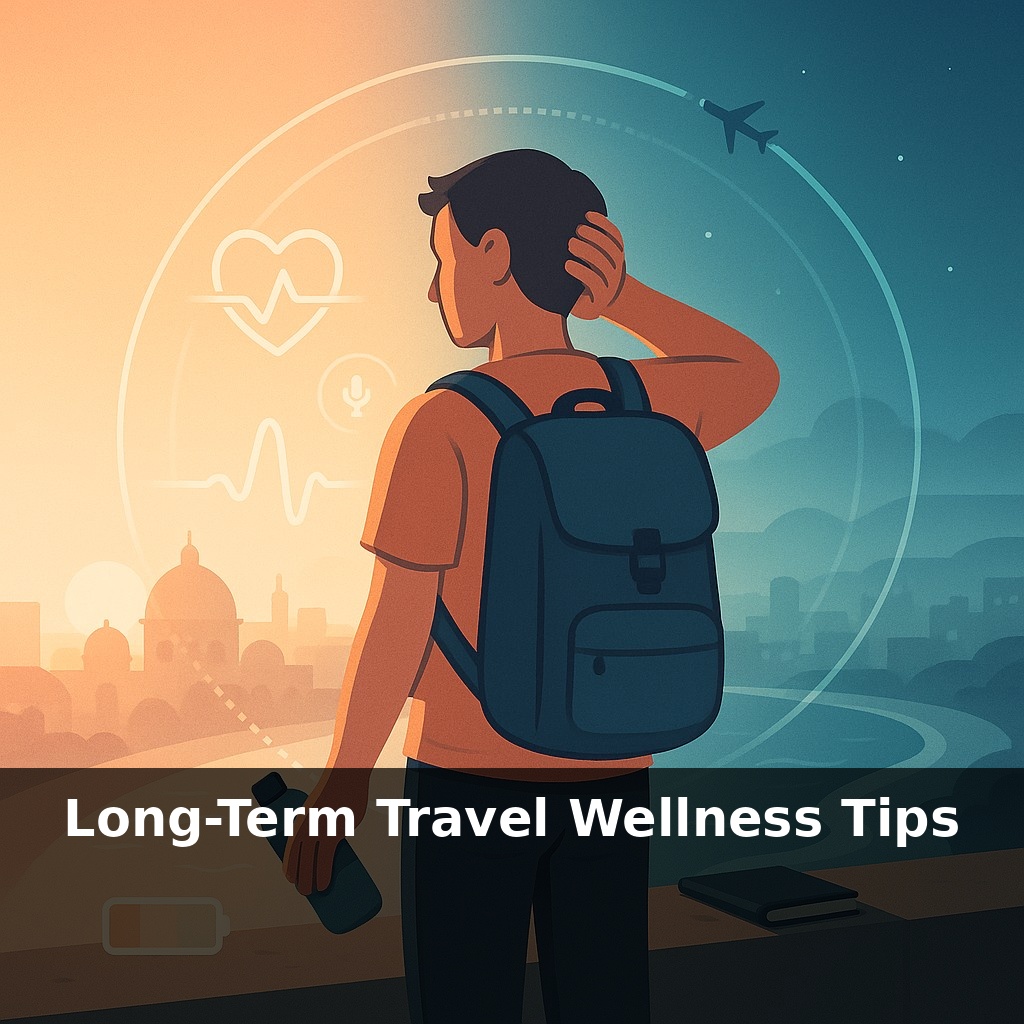
Halfway through a “dream” year abroad, more than a third of travelers quietly hit a wall: constant fatigue, brain fog, random stomach issues. One day you’re chasing sunsets, the next you’re bargaining with your own body just to get out the door. What actually flipped that switch?
Surprisingly, many attribute that ‘mid-trip crash’ to age, fitness level, or unfortunate encounters with foreign cuisines, yet evidence suggests otherwise. But the data tell a different story—long-term travel quietly chips away at your body’s core systems like tiny waves eroding a cliff. No single night of short sleep, salty airport meal, or rushed connection breaks you; it’s the accumulation that finally shows up as that wall you hit.
The good news: the same cumulative effect works in your favor. Small, boring decisions—consistent wake time, five minutes of movement in a bus queue, a glass of water before coffee, a 10-minute wind-down ritual—add up too. Over months on the road, those “micro-habits” function like invisible scaffolding, holding your energy, mood, and gut in place while everything around you keeps changing.
Here’s where it gets interesting: the same research that flags long-term travel as stressful also shows you can cut illness and burnout risk by more than half with a simple, repeatable routine. Not a retreat-in-Bali routine—one that survives 5 a.m. buses, dorm bunks, and street food. Think of it as a tiny “core kit” for your biology: a regular anchor for sleep timing, light exposure that tells your brain which time zone it’s in, movement “snacks” that fit into boarding lines, and nutrition choices that won’t collapse the first time you face a night market or train-station pastry case.
Long-term travel quietly pushes on three levers over and over: your clock, your defenses, and your mood. To keep all three working for you instead of against you, think less in terms of “fixing” problems and more in terms of staying ahead of them.
Start with hydration. Airplanes, high altitudes, and hours in air‑conditioned buses pull fluid out of you faster than you notice. That 4–7% of long‑haul flyers who end up mildly dehydrated? Most felt “off” or irritable, not “thirsty.” The fix isn’t chugging a liter at security; it’s steady intake: sip 200–250 ml every hour you’re in transit, and pair each coffee or drink with at least the same amount of water. Add electrolytes on days you’re sweating hard or crossing multiple time zones; they help your body hold on to what you drink.
Next, guard your gut like it’s your passport. Traveler’s diarrhea isn’t just an inconvenience; when 30–70% of people on trips longer than two weeks get hit, it becomes a planning assumption. You’re not trying to live in a bubble; you’re just shifting the odds. Practical safeguards: choose stalls or cafés where food is cooked to order and you can see high heat being used; avoid lukewarm buffets and pre-cut fruit left sitting out; keep a tiny “gut kit” with hand sanitizer, a proven probiotic you’ve tested at home, oral rehydration salts, and one reliable anti-diarrheal medication recommended by your doctor or travel clinic.
Your immune system is the other gatekeeper. Cramped transport, new microbes, and disrupted routines all add up—unless you give your body some extra armor. Regular exercise on the road has been shown to cut upper-respiratory infections by 43%. That doesn’t require a gym: brisk walking with your bag instead of taking the moving walkway, stair sprints in your guesthouse, resistance bands in a park. Aim for at least 20–30 minutes of moderate movement most days, and one or two short, higher‑intensity sessions each week when possible.
Then there’s your mind. WHO estimates that 1 in 20 long-term travelers develop significant mental-health issues tied to isolation and stress. The warning signs are subtle at first: you stop messaging friends back home, you default to doom-scrolling in hostel bunks, you feel weirdly flat in places you “should” be excited about. Instead of waiting for a crash, pre‑build a tiny mental-health routine: schedule one non-negotiable social touchpoint every few days (a call, a language exchange meetup, a coworking day), plus one solo decompression ritual that doesn’t depend on Wi‑Fi—like journaling, a brief breathing exercise, or a 10‑minute walk with no phone.
Finally, be strategic with jet lag tools rather than desperate. That Cochrane Review showing melatonin shaving about 34 minutes off sleep onset isn’t magic, but it is meaningful if you time it with your new local bedtime, stick to the lower end of the 0.5–5 mg range to avoid grogginess, and use it only for the first few nights after big jumps. Combine that with smart light exposure and your existing anchors, and you’re steering your internal clock instead of just enduring it.
Think of each travel day as a mini “stress test” where you run the same experiment with slightly different variables. One day you nail your fluids and movement but skimp on food quality; another day your meals are great but you barely see daylight. The patterns in how you feel 12–24 hours later are the real data.
A few concrete examples: keep a running note on your phone with three columns—“Sleep anchor kept?”, “Hydration on point?”, “Mind reset done?” and jot a yes/no plus one sentence. After two weeks of buses, flights, and new beds, you’ll often see a clear signature: maybe you tolerate short nights surprisingly well if you move and eat decently, but a single day of grazing on pastry and chips tanks your mood the next morning. Or you’ll notice that one 10‑minute breathing session on arrival days stabilizes you more than another coffee ever did. Over time, you’re not guessing which levers to pull—you’re building your own field manual.
If digital-nomad visas turn into “moving cities,” your routines become a kind of travel infrastructure—quiet but powerful. Governments and companies are already noticing: healthier travelers file fewer claims, stay productive longer, and stick with remote roles. Think of your current experiments as beta-testing for that future system: the notes you keep on what actually sustains you could one day mirror the data airlines, apps, and insurers use to shape routes, perks, and support.
Your challenge this week: run a 7‑day “travel systems audit.” Each day you’re on the move, deliberately change just ONE variable—water intake, timing of your main meal, or when you get daylight—and keep the rest as consistent as the trip allows. Jot down: - departure/arrival times - what you changed - how your energy and mood felt 12 hours later
By day 7, identify the single tweak that gave you the biggest payoff, and lock it in as your new non‑negotiable for the next leg of your journey.
Treat these experiments less like rules and more like sketching a map as you walk. Over time, you’ll notice “green zones” where certain combos of sleep, food, and pace reliably make days flow easier—like discovering hidden side streets that bypass traffic. Keep tracing those routes, adjusting for each new place, until your routine feels portable, not fragile.
To go deeper, here are 3 next steps: (1) Set up your “travel wellness hub” by downloading the apps the episode mentioned—Cronometer (for nutrient tracking), Calm or Insight Timer (for sleep and nervous system regulation), and Rome2Rio (to plan less-stressful transit days)—and put them all on your home screen before your next travel day. (2) Order one of the portable wellness tools they talked about—like a foldable travel yoga mat (e.g., Manduka eKO Superlite) and a compact massage ball—then block a 10-minute “non-negotiable movement window” in your phone calendar for every travel day on your upcoming trip. (3) Build your “resilience carry-on kit” today by adding: LMNT or Nuun electrolytes for hydration, a small pill organizer with magnesium glycinate and your regular supplements, and a paperback like “The Circadian Code” by Satchin Panda to guide you in adjusting sleep and light exposure across time zones.