About half of our everyday decisions rest on thinking mistakes we never even notice. You confidently back the wrong job move, trust the weaker argument, or ignore the one email that really mattered—yet your brain swears it’s being careful. Why is our inner judge so easy to fool?
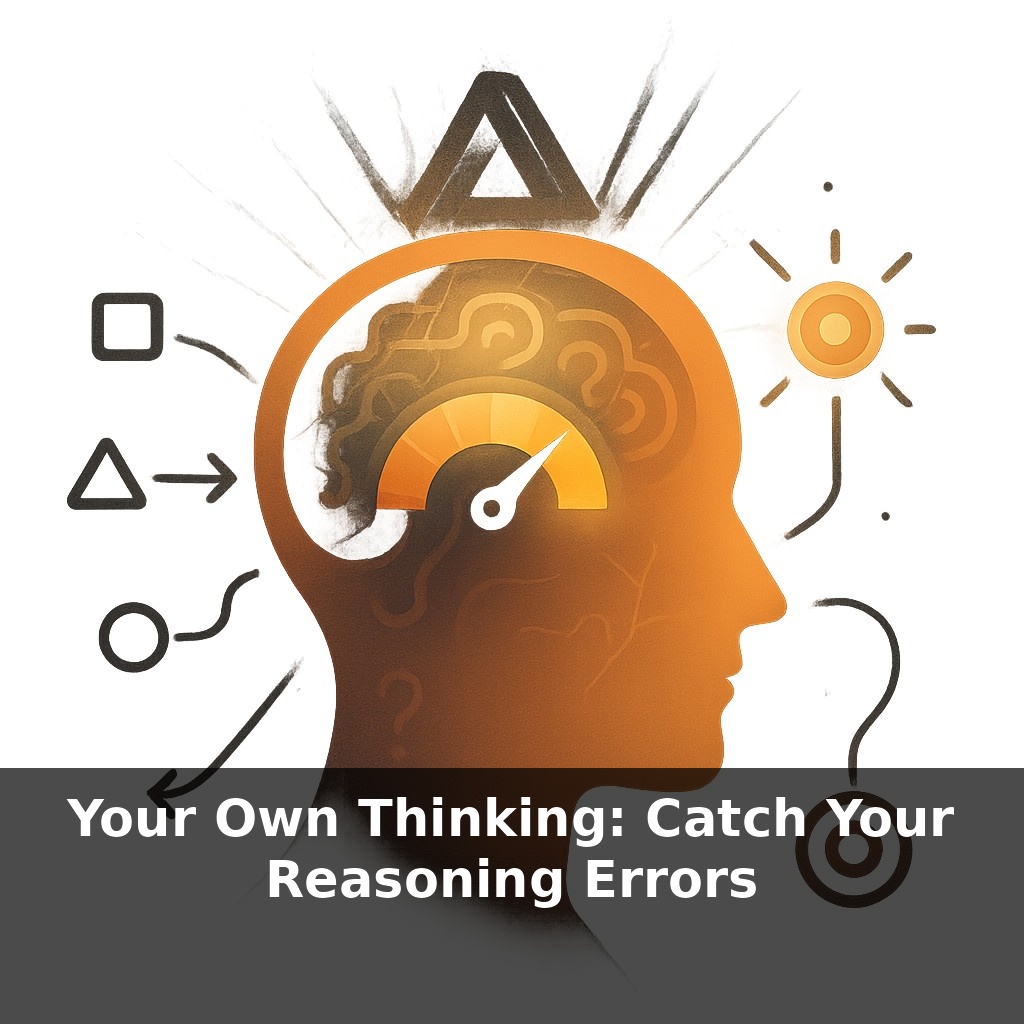
Your brain is running a quiet side-process all the time: it’s not just deciding what to think, it’s estimating *how sure* it is about those thoughts. That “confidence meter” feels solid from the inside, but research shows it’s often miscalibrated—like a bathroom scale that’s always five kilos off yet still displays numbers with great precision. This is where metacognition comes in: the skill of noticing your own thinking *while* you’re thinking. It’s less mystical than it sounds. In studies, people who deliberately pause to ask “How might I be wrong?” or “What else could explain this?” make fewer systematic errors, even when they don’t get any smarter in the IQ sense. The surprise is that small, structured tweaks—short written checklists, quick “consider-the-opposite” drills, or brief premortems before big choices—can quietly upgrade your mental quality control.
Psychologists call this “thinking about your thinking,” but in practice it feels more like adjusting a recipe while you cook instead of only tasting the dish at the end. The goal isn’t to distrust every thought; it’s to notice *which* situations reliably trip you up. Maybe you get overconfident when you’re tired, or overly cautious when money is involved. Different contexts trigger different blind spots. Researchers find that people who track these patterns learn to flag “high-risk” moments in real time—meetings, negotiations, late-night scrolling—and quietly switch into a slower, more deliberate mode.
Most of the time, your thoughts feel like a smooth, continuous stream. But when researchers peek inside that stream, they see something bumpier: you’re constantly *guessing* at what’s true, then quietly editing your story so it looks cleaner than it really was.
One way this shows up is what Daniel Kahneman calls “what you see is all there is.” Your mind takes whatever information is immediately available and treats it as if it’s the full picture. If three colleagues nod at your idea, your brain behaves as though “everyone is on board.” You rarely feel the missing data as missing; you feel it as certainty.
A second pattern: once you’ve taken a stand—on a candidate, a product, a relationship—your brain starts doing public relations for that stance. It highlights confirming details, forgets the awkward counterexamples, and polishes a narrative where your choice was obviously right. That’s why people can be *most* confident right after committing to a plan, exactly when their information is *least* complete.
Metacognitive skills don’t magically remove these tendencies; they give you levers to interrupt them. In lab tasks, a simple prompt like “generate one reason this might be false” nudges people to treat their first story as a draft, not a verdict. In forecasting studies, writing down just a couple of concrete alternatives forces your mind to acknowledge that reality has more branches than the one you’re rooting for.
Crucially, the aim isn’t to become a cold reasoning machine. Emotions and shortcuts are part of how you navigate life at human speed. The useful shift is moving from “My feeling of certainty proves I’m right” to “My feeling of certainty is one more data point to inspect—especially when the stakes are high.”
You can see this played out in places where getting things wrong is expensive. In medicine, checklists that explicitly ask, “What else could this be?” reduce diagnostic misses without adding much time. In aviation, crews run through structured challenge–response routines not because they’re bad pilots, but because they assume their first impressions are *incomplete*. These systems externalize metacognition: instead of relying on vague self-doubt, they build in small, concrete moments of self-questioning.
The surprising lesson from these fields is that better thinking often comes less from heroic insight and more from humble, repeatable habits that catch your brain *before* it glides past its own blind spots.
A useful way to spot your own blind spots is to treat everyday situations as small experiments. Say you’re convinced a friend is annoyed with you because they replied with a short text. Instead of accepting that story, you jot down three alternative explanations: they’re busy, they misread your tone, their battery’s dying. The act of forcing out extra options often shrinks the emotional punch and exposes how flimsy the first narrative was.
You can do the same with decisions about money. Before buying an expensive gadget you feel sure you “need,” write a one-sentence case *against* the purchase: how often you’ll realistically use it, what you’d cut to afford it, what else that money could fund. Investors who ritualize this kind of internal debate tend to avoid their most painful regrets—not because they become fearless, but because they become more conscious of when fear or excitement is steering the wheel. Over time, these micro-habits teach your mind that its first take is a hypothesis, not a verdict.
As tools quietly handle more routine choices—route planning, recommendations, even drafting emails—your unexamined habits will concentrate in the few decisions only you can make: values, priorities, trade-offs. That’s where unnoticed errors hurt most. Think of a chef tweaking a signature sauce: tiny adjustments, tasted often, decide whether the whole menu works. In the same way, regularly sampling and adjusting your own thinking may become a core life skill, not an optional extra.
Over time, you’re not just “fixing errors,” you’re training a quiet internal coach to notice patterns in how you argue, choose, and react. Think of it like tuning an instrument: a few small adjustments, made regularly, can change how every note lands. The payoff isn’t feeling unsure; it’s trusting that your doubt is finally working for you.
Adopt this observational practice: When you have a thought like “I’m absolutely certain about this,” take a moment to jot down—in a notebook or app—the opposite perspective you'd have to embrace if things weren't as clear-cut. Highlight a specific counterpoint that could challenge your current view tomorrow. Keep it light-hearted, treating this as a playful debugging session for your mind. Implement this once daily with heated subjects—be it headlines, work-related choices, or a friend's message.