Assessing Your Financial Situation: Where Do You Stand?
📝 Transcript
Right now, there’s a good chance you know your phone’s battery level better than your own net worth. You’re not alone: a typical cardholder carries around six thousand dollars in credit card debt. In this episode, we’re going to gently turn the lights on your real financial picture.
So if you’re not supposed to rely on gut feelings or vague stress levels… how do you actually tell where you stand? That’s where a true assessment comes in: listing what you own, what you owe, what comes in, and what goes out—without judgment, just data. Most people skip this step because they’re afraid of what they’ll see, then wonder why money still feels chaotic years later.
Research on consumer behavior shows a clear pattern: those who regularly check their own “numbers” are more likely to crush high-interest balances, grow savings, and stay calm when life throws them a curveball. You don’t need complex software or a finance degree; you need a quiet moment, a few recent statements, and the willingness to be honest on paper. Think of this as laying out all the puzzle pieces on the table before you try to complete the picture.
Here’s where we zoom in. Instead of just knowing your “big number” like net worth, you’ll break your money life into four simple lists: what you own, what you owe, what comes in, and what goes out. This isn’t about optimization yet; it’s about accuracy. You might notice patterns you’ve never seen before—subscriptions you forgot, debts that quietly grew, or extra cash that disappears every month. Like walking a familiar trail with a detailed map for the first time, you’ll start to see where the path narrows, where it’s smooth, and where a detour might actually help.
Let’s take those four lists and turn them into two simple tools: a personal balance sheet and a cash‑flow snapshot. They sound technical, but they’re really just structured ways of arranging information you already have, so you can see patterns your brain tends to blur.
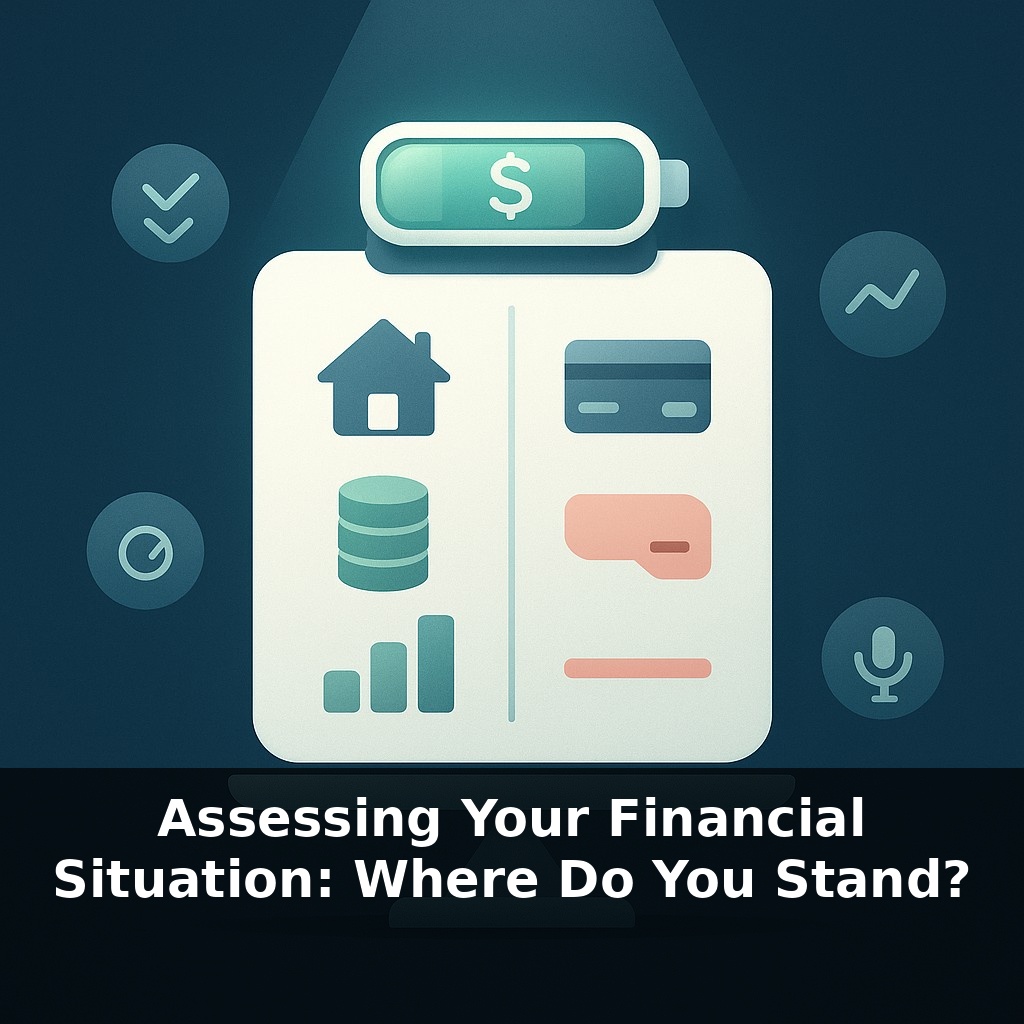
Start with the balance sheet. On one side, list every asset with a realistic value: checking and savings balances, retirement accounts, brokerage accounts, the current market value of your car or home, even that small HSA you forgot existed. On the other side, list every liability: student loans by servicer, each credit card with its balance and interest rate, auto loans, personal loans, buy-now-pay-later plans, and your mortgage if you have one. Totals matter, but so does the mix. A household with modest assets and low-interest mortgage debt is in a very different position from one with similar totals but stacked high-interest cards.
Now layer in two “vital signs” researchers focus on: your debt-to-income (DTI) ratio and your liquid cushion. The first compares what you must pay on debts each month to your gross income. The second looks at how many months of essential expenses your easily accessible cash could cover. Someone might have a respectable net worth on paper but keep almost everything tied up in retirement accounts, with only a few hundred dollars available for emergencies—that’s a fragile setup.
Next, build your cash-flow view using the “what comes in/what goes out” lists. Separate essentials (housing, utilities, food, transportation, insurance, minimum debt payments) from choices (subscriptions, dining out, travel, shopping, kids’ activities). Don’t moralize; just observe. Research shows that when people see categories side by side—say, interest charges versus streaming services—they naturally start to re-balance without being told what to cut.
Here’s where the numbers begin to tell a story. Are high-interest payments swallowing a big share of income? Is lifestyle creep quietly matching every raise? Are you technically doing “fine” but one layoff away from scrambling? Like walking through a dense forest and suddenly reaching a lookout point, this structured overview lets you see not just where you are, but which direction actually leads to safety and progress.
Think of this stage like planning a long hike through a national park. You’re not just glancing at the trailhead sign; you’re tracing the route, checking elevation changes, and noting where water sources and campsites actually are. That’s what happens when you start adding detail to your numbers instead of keeping them in vague categories.
For example, two people might both spend $800 a month on “food,” but one has $500 in groceries and $300 in takeout, while the other spends $650 on groceries to cook for a family and $150 on coffee and lunches out. Same total, very different options for change. The same goes for income: is your money arriving in a steady paycheck, or in waves from freelance work, tips, or seasonal hours?
As you separate out irregular items—annual insurance premiums, car repairs, holiday travel—you’ll start to spot the real pressure points. Are surprise costs truly “surprises,” or just unplanned but predictable? This is where your numbers stop being abstract and start pointing to specific, practical next moves.
A decade from now, pulling up your full money snapshot could feel as routine as checking the weather. Apps may quietly scan your accounts, flag patterns, and say, “At this pace, your student loans vanish in 3.5 years—want to speed that up?” But the tech won’t erase the need for judgment. Like an art critic learning to see tiny shifts in color, you’ll need to read subtle changes in your own numbers—and decide when to adjust course, or when to ignore automated nudges.
As you sit with your numbers, notice how certain line items spark tension while others feel calm. That emotional “map” is just as useful as any spreadsheet. Over time, you’ll spot which habits quietly move you forward and which tug you off trail. You’re not chasing perfection here—only a clearer view, so your next money move is chosen, not accidental.
Here’s your challenge this week: Log into every financial account you have—checking, savings, credit cards, student loans, car loan, mortgage, and any investment or retirement accounts—and capture today’s exact balances in a simple one-page snapshot (paper or digital). Then calculate two numbers: your total debt and your total cash/investment assets, and use those to figure out your net worth for today. Finally, compare your monthly take-home pay to your fixed monthly bills (rent/mortgage, utilities, minimum debt payments, insurance, subscriptions) and write the exact dollar amount left over each month in a box titled “My Current Financial Margin.”

Unlock all episodes
Full access to 7 episodes and everything on OwlUp.
Subscribe — $1.99/monthLess than a coffee ☕ · Cancel anytime