Right now, about half of Americans are paying interest on yesterday’s groceries. One listener wrote in: “I’ve paid for my couch twice and I still owe more.” Here’s the twist—two people with the same debt and the same payment can end up with totally different results.
One listener sent me their numbers: three cards, same balances, same rates, same monthly amount going out. They ran two payoff plans side by side on a spreadsheet—and the finish dates were almost a year apart. Same money, same person, wildly different outcome.
Here’s where it gets interesting: researchers tracking thousands of real people noticed a pattern. The “efficient” plan wasn’t always the one that actually got finished. The plan that looked slightly worse on paper often won in real life, simply because it felt better week to week.
So this isn’t just about calculators; it’s about knowing yourself. Are you fueled by seeing quick wins, or by squeezing every last dollar of waste from your budget, even when progress feels slow? In this episode, we’ll test both approaches against your real life and see which one you’re more likely to stick with all the way to $0.
Think of this like choosing a route on a road trip: one is shorter on the map, the other has fewer hills. On paper, it’s “obvious” which to pick… until you remember you’re the one who has to stay awake at the wheel.
Researchers looking at real payoff behavior found a split: some people thrive when every dollar is optimized, others need frequent signs they’re getting somewhere or they quietly stall out. That means the smartest strategy is the one that fits both your spreadsheet and your stress levels.
From here on, we’ll treat you like a case study—your habits, your cash flow, your tolerance for boredom—all of it matters.
Let’s put some structure around those two big strategies without rehashing what you already know.
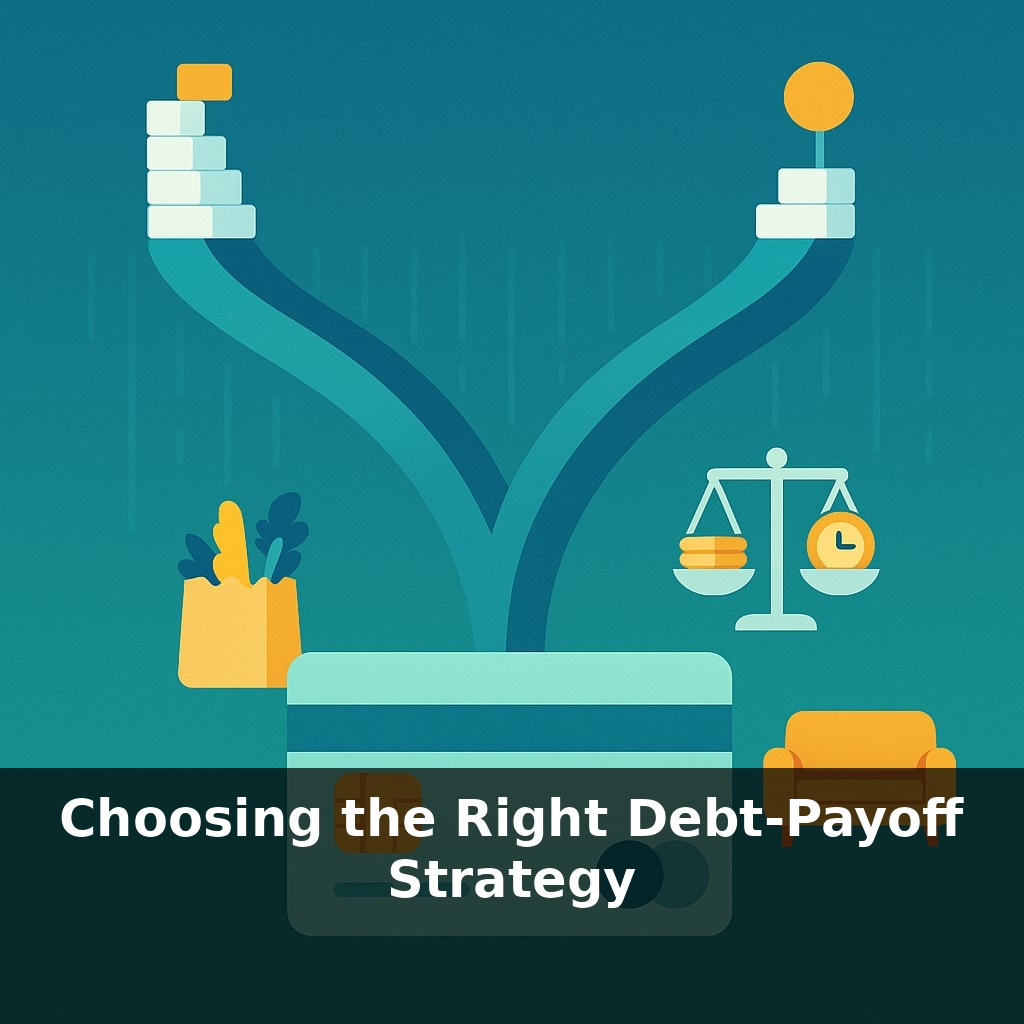
Debt Avalanche says: line up what you owe from highest rate to lowest, then throw every extra dollar at the top of the list while keeping the others on minimums. When that top one disappears, you roll everything down to the next on the list. Mathematically, this cuts the most cost for each extra dollar. In that NBER study, people using a pure Avalanche shaved roughly 15–25% off their total interest versus folks focusing on smaller balances first.
Debt Snowball flips the sorting rule: you rank by balance size instead of rate. The tiny ones get attacked first; the monsters wait their turn. That Harvard paper found people using this kind of structure were 18% more likely to still be at it after a year. Not richer on a spreadsheet—just still in the game.
Here’s where it gets more nuanced. In real life, your debts aren’t neatly arranged like textbook examples. Sometimes the smallest balance also has the ugliest rate. In that case, the “right” first target is the same for both strategies. That’s why it’s a misconception that Snowball is automatically more expensive—ordering can accidentally line up with Avalanche for chunks of your list.
Another wrinkle: hybrids work. You might start with a quick Snowball win on one nagging account, then immediately pivot to Avalanche mode for everything left. Or you use Avalanche as your default, but if motivation tanks, you temporarily bump a small, psychologically loud balance to the front just to clear it.
Think about your cash-flow stability too. If your income jumps around, a fragile plan that only works when everything goes perfectly can crack fast. In a volatile month, being able to wipe out one whole bill—even if it’s not the “perfect” target—might be worth more than squeezing out every last dollar of interest.
One more layer people overlook: missed payments. The CFPB warns that a single slip can trigger a penalty APR close to 30%. At that point, it doesn’t matter which philosophy you like more—avoiding those landmines becomes your first priority.
So instead of asking, “Which strategy is best?” try, “Which order of attacks fits my psychology, my income pattern, and the landmines in my accounts?”
Think about how you react to progress in other parts of your life. When you’re on a hike and the trail is long, do you get energy from seeing the total miles shrink, or from passing lots of little trail markers along the way? That same instinct shows up when you’re deciding which balance to clear next.
Try three quick thought experiments:
• Travel mode: If your flight is delayed, are you the person who starts re-optimizing every connection, or the one who just wants to know, “What’s my next concrete step?” Avalanche feels like the first, Snowball like the second.
• Art mode: When you tackle a big painting or DIY project, do you block out the whole piece first (big picture), or fully finish one small corner so it looks “done”?
• Stress test: Recall the last time money got tight unexpectedly. Did you double down on spreadsheets, or look for one simple bill to kill?
Your answers hint at which strategy will feel natural when things get messy—because they will.
Banks and apps are starting to “watch” how you actually reduce balances and quietly adjust the route for you, like a navigation app that reroutes when traffic changes. That means your future statements and dashboards may not just report what you owe; they’ll nudge you toward sequences that fit your habits. The opportunity—and risk—is that your financial “GPS” will be partly designed by companies whose incentives don’t always match your own.
Whichever path you test first, treat it like adjusting a recipe: start with a base, taste your week-to-week stress level, then tweak the order until you find something sustainable. You might even switch routes when a new card, raise, or emergency pops up. The “right” strategy isn’t fixed—it’s the one you’re willing to revisit as your life shifts.
Try this experiment: For the next 7 days, run a real-world “debt snowball vs. avalanche” test using just $50. Take your smallest balance debt and put $25 extra toward it (snowball style), then take the other $25 and put it toward the highest-interest debt (avalanche style), tracking how each changes your payoff date and how each one makes you *feel* before and after you hit “submit.” At the end of the week, compare: Which approach gave you more motivation, clarity, and sense of progress—seeing a balance drop fast, or knowing you attacked the most expensive debt? Use that emotional + numbers combo to officially choose your primary payoff strategy for the next 3 months.