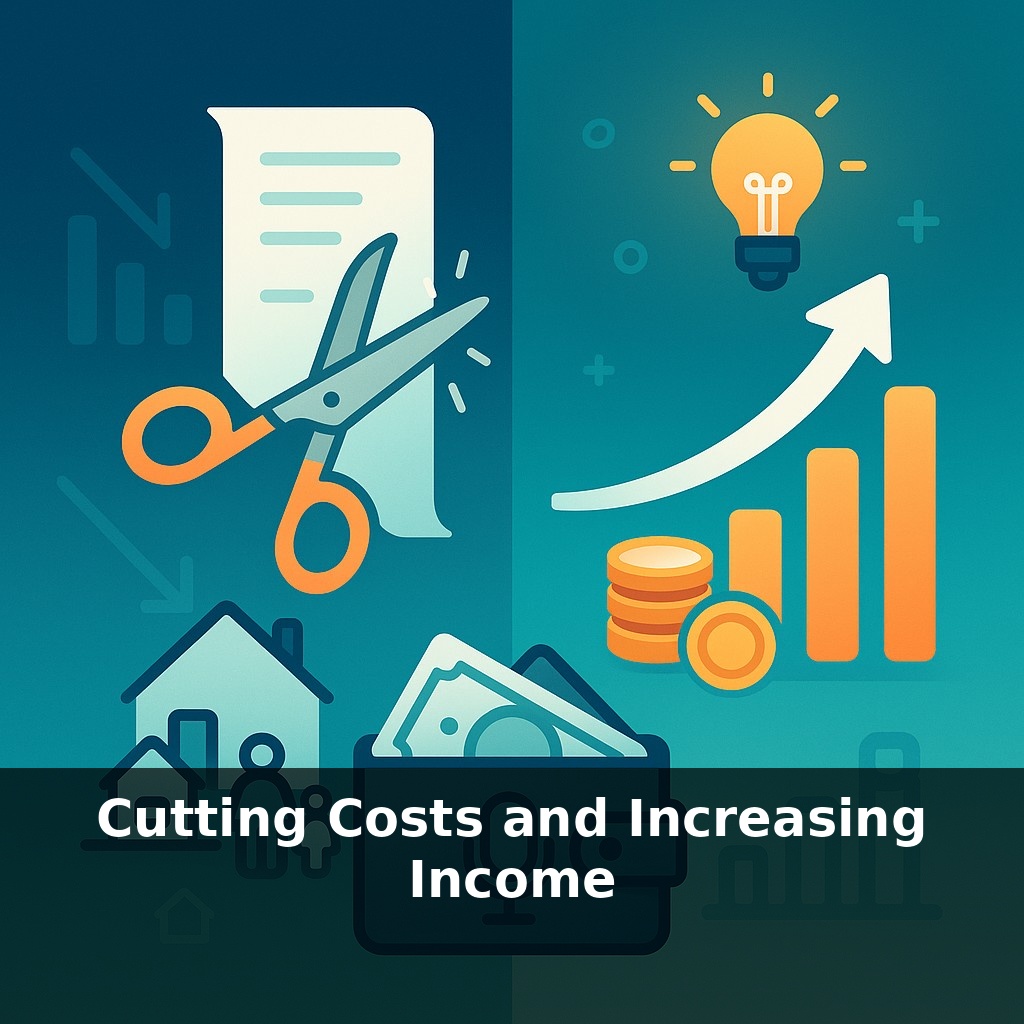
Right now, many families are sitting on hidden “pay raises” without changing jobs. In one evening, you could cut a bill, find an easy side gig, and free up more cash than a small workplace raise—without asking your boss, and without adding a single extra workday.
Most people think the only way out of debt is a big promotion or a lucky break. But the data says something different: households that pair disciplined cost-cutting with even modest new income tend to see the fastest turnarounds. Not because they work themselves into the ground, but because they deliberately stack small wins.
You already know you can squeeze more from your existing budget and bring in extra cash on the side. Now we’re going to connect those moves into a system. Think of it like repainting a room: the transformation doesn’t come from one brushstroke, but from layering passes in the same direction.
In this episode, we’ll look at which expenses usually shrink the fastest, which side-hustles ramp up income most predictably, and how to turn those gains into a focused attack on high-interest debt—so progress shows up in months, not decades.
Think of this phase as tuning an instrument you already own, not buying new gear. The goal isn’t to squeeze every dollar until life feels miserable; it’s to find the notes that are clearly out of tune and adjust those first. Research shows the biggest early gains rarely come from dramatic lifestyle changes, but from tightening up recurring patterns you barely notice anymore. That might mean fixing one overpriced service, replacing a leaky habit, or pointing fresh income at a single target. We’re looking for moves that feel small today but compound quietly in the background.
Most households leak money in three quiet places: recurring services, food, and “convenience fees” on everyday life. You’re not doing anything wrong; modern life is just set up to bill you on autopilot. The goal now is to reverse that autopilot so that, by default, more money stays with you.
Start with the stuff that renews without your input. Subscription fatigue is real: streaming bundles, apps you forgot you signed up for, memberships you meant to “use more later.” Instead of asking, “Do I love this?” ask, “Would I sign up today at this price?” If the honest answer is no, cancel or downgrade. That single question clears more clutter than arguing with yourself about every $9.99 line item.
Next, tackle the bills you don’t think you can change. Phone, internet, and insurance companies expect negotiation. Their pricing assumes some customers will call and push back. Have three things in front of you: your current rate, a competitor’s offer, and a simple script: “I’d like to stay, but [competitor] can give me X for Y. What can you do to match or beat that?” Be ready to sit through a silence; that’s often when discounts appear.
Food is the second big sink. You don’t need a perfect meal plan; you need a “default week” that prevents last‑minute, expensive decisions. Pick 5–7 simple, repeatable dinners that share ingredients—like using the same bag of rice or pack of chicken in multiple recipes—so less ends up in the trash. Designate one “eat the fridge” night where the rule is: use what you already have. Over a month, that alone can keep a surprising amount of cash from ending up in the garbage with wilted produce.
On the income side, think in tiers. Tier 1: things you can start with almost no setup—delivering groceries, pet sitting, basic online tasks. Tier 2: skills you can grow—writing, design, tutoring, e‑commerce. The point isn’t to find the perfect thing; it’s to get money flowing, then upgrade. A clunky first $50 often teaches you more than another week of research.
Your challenge this week: pick one recurring bill to renegotiate, one subscription to cancel or downgrade, one “eat the fridge” night to schedule, and one concrete side‑income experiment to test for just 3–5 hours. Track exactly how many dollars those four moves free up or generate. That number is your new monthly “debt weapon.”
Think of this like planning a weekend road trip. You don’t need a luxury car or perfect itinerary; you just need enough gas, a clear route, and fewer pointless detours. One person might “fuel up” by renting out a driveway spot near a stadium on game days, while another lists a spare room desk on a local coworking app a few evenings a week. Someone else may batch errands into a single drive to cut fuel and wear‑and‑tear, then quietly resell kids’ outgrown clothes online each month.
Notice how these aren’t life overhauls—they’re tweaks to what’s already happening. You’re already parked somewhere, already driving, already rotating stuff through your home. The shift is asking, “Can this space, time slot, or unused item pull double duty?” Over time, those double‑duty choices build a buffer that makes the next decision easier: you can say yes to a better opportunity, or no to a bad deal, because you’ve built room in your budget instead of running at the edge.
As tools get smarter, this approach can compound quietly in the background. Open‑banking apps may soon auto‑hunt better deals, shuffle leftovers into savings, or drip spare dollars into micro‑investments without you lifting a finger. At the same time, platforms for niche talents—voice clips, tiny design fixes, micro‑consulting—are multiplying. Think of it like new hiking trails appearing on a once‑empty map: the more paths you know, the easier it is to reroute when the main road is blocked.
Over time, those tiny choices start to feel less like sacrifice and more like editing a rough draft. You keep what fits your real life, cross out what doesn’t, and add new “lines” of income where the page was blank. The goal isn’t perfection; it’s progress you can notice. As your margin grows, so does your ability to choose what you actually want next.
To go deeper, here are 3 next steps:
1. Use a free tool like **Rocket Money** or **Copilot Money** today to automatically scan your accounts for recurring subscriptions, then cancel at least two low-value ones (e.g., unused streaming or app trials) directly through the app. 2. Open a **high-yield savings account** (Ally, SoFi, or Capital One 360) and set up an automatic transfer of a specific amount from your checking each payday to capture the “found money” from your cuts. 3. Spend 25 minutes on **Upwork** or **Fiverr** creating a basic profile offering one concrete skill you already have (e.g., Canva social posts, podcast editing, or basic bookkeeping), then send **3 custom proposals** to gigs paying at least $50 so you start testing an income stream immediately.