Almost half of Americans couldn’t pay a mid-sized surprise bill without borrowing. Now hear this: one person making the same salary as you ends the month calm and covered; another ends it panicked and short. The twist? It isn’t income. It’s the quiet habit they use before payday.
That calm-at-the-end-of-the-month person isn’t “better with money” by nature—they’ve just given every dollar a job before it lands in their account. Think of payday like a crowded train station: income rushes in, bills and swipes rush out. Without a plan, your money sprints in every direction, and you only notice what’s missing when the platform is empty.
Budgeting basics are about turning that chaos into intention. Not spreadsheets for spreadsheet’s sake, but a simple system where you decide in advance what matters most: staying housed, getting to work, eating well, shrinking debt, building a tiny buffer. You’ll learn to handle lumpy expenses—like car repairs or annual fees—by breaking them into monthly “mini-bills,” so they stop feeling like disasters and start feeling like just another Tuesday. This isn’t about perfection; it’s about building a flexible framework you can actually live with, even when life throws curveballs.
Now we zoom in from the big picture to the small, daily moves. At its core, a budget is just a forward-looking plan for this month’s dollars: what will keep you afloat, what will move you forward, and what can wait. The research is clear—people who actively tell their money where to go, instead of just watching where it went, build cushions faster and feel less stressed. Think of it like sketching a quick outline before painting: you’re not locked into every brushstroke, but you’re no longer guessing with each color. Your job isn’t to predict perfectly; it’s to choose on purpose, then adjust as reality shows up.
Think of this section as zooming in one more level: from “have a plan” to “what actually goes on the page?”
Start with the raw material: your take-home pay. Not what your offer letter says—what actually lands in your account after taxes and deductions. If it varies, use a conservative average from the last 3–6 months and treat anything above that as a bonus you’ll assign later.
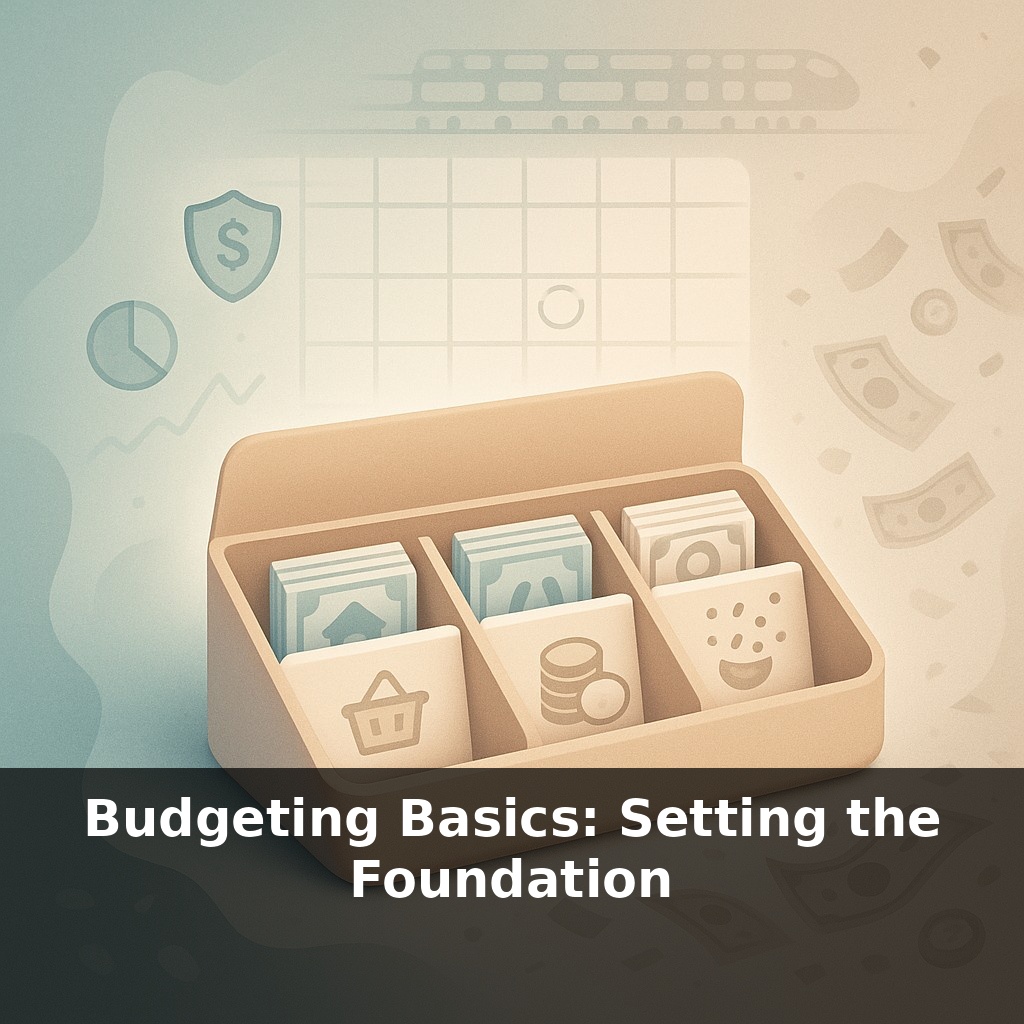
Next, sketch three simple buckets for this month:
1. **Must-pay essentials** These keep your basic life running: housing, utilities, minimum debt payments, transportation to work, core groceries, phone, basic insurance. Use your bank history to pull real numbers, not guesses. The BLS says many households sit around 33% of income on housing and 16% on transportation; if your numbers are way above that, note it without judgment—it’s information, not a verdict.
2. **Stability builders** This is where the forward-looking part shows up: small transfers to an emergency buffer, extra toward high-interest debt, or saving for known upcoming costs like car maintenance. Research suggests people who track weekly save noticeably more; this is the category that benefits most from that attention.
3. **Flexible life money** Dining out, hobbies, streaming, gifts, trips—anything that makes your current life feel like a life, not just bills. The goal isn’t to erase this; it’s to right-size it so you’re not trading next month’s panic for tonight’s takeout.
Here’s the key move: **match every dollar of expected income to one of these buckets before the month begins**. If the math doesn’t work on the first pass (it usually doesn’t), you adjust the least painful areas first—often in the flexible bucket—before touching essentials. If cuts there still aren’t enough, that’s a signal to explore income boosts or larger lifestyle changes over time.
Finally, layer in behavior: simple calendar reminders before big auto-drafts, automatic transfers to savings the day after payday, and tiny, pre-decided rewards when you stick to the plan for a week—like choosing a favorite low-cost treat rather than impulse-scrolling a shopping app. The structure is the math; the follow-through is these small, repeatable habits that make the structure livable.
Think of someone earning $3,200 a month after taxes. They list out their real numbers: $1,050 rent, $250 utilities, $320 car + gas, $300 groceries, $120 phone/insurance, $200 debt minimums. That’s $2,240 for must-pays, leaving $960.
They decide $260 will build stability: - $100 to a starter emergency stash - $100 extra to their highest-interest card - $60 toward a “future repairs” pot at their bank
Now $700 remains for flexible life: $180 eating out, $60 subscriptions, $160 fun/entertainment, $150 personal care, $150 “everything else.” They write these as caps, not wishes.
During the month, a friend invites them on a last‑minute weekend trip. The ticket is $120. Instead of saying “I’m broke” or “whatever, I’ll put it on a card,” they open their plan and play Tetris: move $60 from eating out and $60 from fun. Trip covered, no new debt—just fewer takeout nights and one cheaper hangout.
By the end of the month, they’re not asking, “Where did it all go?” They can point to exactly what they traded to make that trip happen.
In a few years, your “money outline” may update itself. Think fitness tracker, but for cash flow: an app quietly flags patterns you’d miss—like weekends that always run hot or months when travel explodes—and proposes tiny course‑corrections before you feel the squeeze. Open banking could let you test new tools without rebuilding from scratch, the way you’d swap phone widgets, turning today’s basic plan into a customizable dashboard that grows with your goals and attention span.
Your first version won’t be perfect—and that’s the point. You’re training your attention, not auditioning for an accountant. As you adjust next month’s numbers, notice which categories always feel tight and which quietly have slack. Those pressure points are clues: to renegotiate a bill, rethink a habit, or aim for a different income path. Your plan becomes a mirror, not a judge.
Try this experiment: For the next 7 days, only spend from three simple categories you heard about in the episode—“Essentials” (rent, groceries, transport), “Lifestyle” (eating out, subscriptions), and “Future You” (savings/debt payoff)—and label every single purchase that day with one of those three words in your banking app notes or a simple phone list. At the end of each day, quickly total how much went into each category and circle which one “won” that day. After a week, look at which category dominated and commit to flipping the script for just one day—engineer tomorrow so “Future You” wins by cutting one Lifestyle expense and moving the exact amount to savings or debt instead.