A teenager in ancient Athens could quote lines from Homer the way we quote movie scenes—thousands of years later, we can still read those same words. How did a 24-letter alphabet and shifting word endings create stories strong enough to cross millennia?
Those same lines of Homer that an Athenian teen knew by heart didn’t survive by accident. They passed through the hands of rhapsodes chanting in marketplaces, librarians in Alexandria comparing scrolls by lamplight, and Byzantine monks copying each curve of each letter onto fresh parchment. Ancient Greek wasn’t just a language—it was a shared operating system for law courts, medical schools, mystery religions, and philosophical debates from Sicily to Syria. When Plato dissected justice, when physicians recorded symptoms, when engineers described machines, they all trusted Greek’s precise grammar to do the heavy lifting. Today, learning even the basics lets you “eavesdrop” on those conversations without a translator smoothing over the rough edges. In this episode, we’ll trace how the script, sounds, and sentence patterns you meet in a beginner’s textbook grew out of that sprawling, very human history.
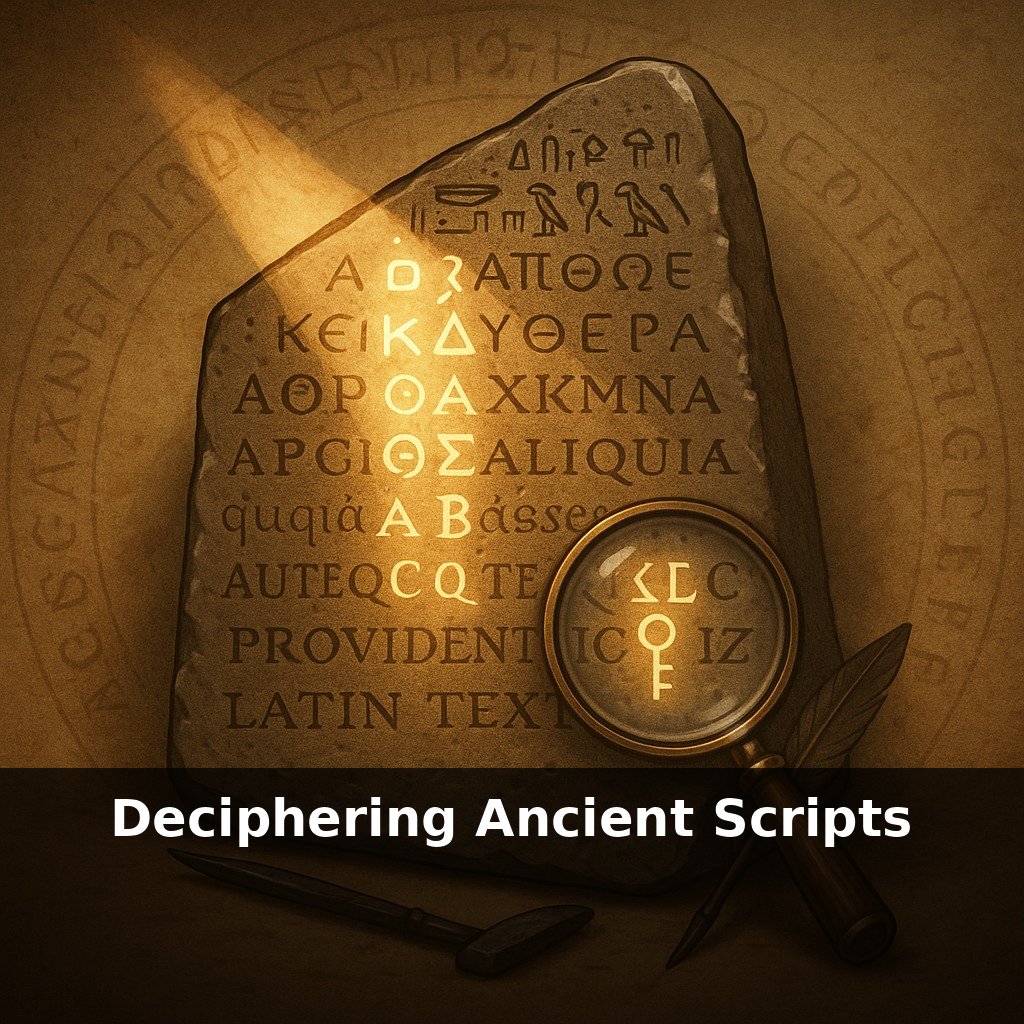
Open one of those surviving tablets or papyri and you don’t just see “old words”—you see traces of hands, habits, and hurried decisions. A scribe squeezes a line into the margin rather than waste costly material. A teacher adds tiny dots to guide a student’s voice. A later owner scratches a comment in the side, quietly arguing with the author. These marks remind us that the “rules” you learn were once solutions to everyday problems: how to fit speech onto clay, how to time a pause, how to show who did what to whom with the least confusion. Grammar, in that sense, is fossilized conversation.
Walk into a first‑year Greek class and the first surprise isn’t the letters; it’s the way the page looks. Lines are dense, words carry extra “accessories” above them, and short little forms—ὁ, τοῦ, τῇ—keep reappearing. Those are your first clue that Greek pushes meaning into places English mostly leaves empty.
Start with those tiny extras over vowels: accents and breathing marks. They’re latecomers, added long after Homer, but they tell you two crucial things—where the voice rises, and whether a word starts with a faint breathy onset or slips in quietly. Rough breathing ( ̔ ) signals that light /h/ at the beginning; smooth ( ̓ ) says “no breath here.” In performance, that could cue a singer’s timing. On the page, it stops look‑alike forms from colliding. Take ὅτι and ὅ,τι—one means “that,” the other “whatever.” In a fast‑moving argument by Plato, that dot and accent placement keep the logic from derailing.
Then there are the little “function words” that steer the bigger ones. Articles and particles—ὁ, ἡ, δέ, γάρ, μέν—work like colored thread running through a tapestry. A tiny δέ might nudge a story forward (“now, next”), while γάρ quietly signals explanation. They rarely translate cleanly, but they organize discourse: contrast, cause, emphasis, hesitation. Follow them, and you can often sketch the skeleton of a paragraph before you know half the vocabulary.
Verbs carry another layer of structure. Beyond tense, they encode mood and voice with almost theatrical precision. An aorist subjunctive can hint at a single, projected action; an imperfect indicative can linger on past habit or ongoing scene. Voices—active, middle, passive—let a writer shade responsibility: did someone simply do an action, do it for themselves, or have it happen to them? In courtroom speeches, those choices are rhetorical weapons.
This density is why even a small toolkit goes far. Once you recognize a few recurring endings and helpers, short authentic sentences become approachable. A single line of Herodotus can show you a narrative shift, a causal γάρ, and a compact verb form doing the work of an English phrase. It’s less about decoding a puzzle than learning to notice where Greek prefers to “hide” its hints.
A simple inscription on stone might read like scattered shards to a beginner: ΘΕΟΙΣ ΑΓΑΘΟΙΣ ΑΝΕΘΗΚΕΝ. But each piece does a specific job once you learn to spot it. The last word often hides the action; here, ἀνέθηκε(ν) means “dedicated.” Up front, θεοῖς ἀγαθοῖς, “to the good gods,” reveals the recipients. No preposition announces “to”—the form itself carries that idea. As you move to longer texts, this stacking becomes more elaborate. In a line from Herodotus, you might see a divine name, a place in an oblique form, and a compact verb, all condensed into what looks like a stone’s worth of text on the page. Poetry tightens the screws further. In Homer, word order bends to fit the meter, so you might not meet the verb until the end of the line. Your eye learns to roam, collecting clues—the article that signals “here comes a subject,” a tucked‑away pronoun, a particle shadowing a contrast. Reading starts to feel less like scanning a left‑to‑right conveyor belt and more like walking a small hillside, choosing the order in which you pick up visible shells.
Future implications stretch well beyond classics departments. As pattern‑spotting tools grow, students in ethics, AI, or cognitive science can treat old texts like a deep archive of human decision‑making. A digital corpus marked for argument moves, emotion, and narrative turns could work like a weather map of past thought, letting you “see” where fear, hope, and persuasion cluster—and then compare those currents with modern debates, policy speeches, even online comment storms.
Each new inscription or papyrus you puzzle through is less a museum piece than a doorway. As digital projects stitch these fragments into searchable constellations, even beginners can trace how ideas about courage, fate, or justice migrate across genres—like tracking a melody as it’s remixed from epic, to courtroom, to whispered prayer.
Here’s your challenge this week: pick one short verse or sentence in Ancient Greek that you know in English (for example, John 1:1 or a line from Homer) and hand-copy it in Greek letters once a day for 7 days, saying each word out loud as you write. Each day, spend 5 focused minutes sounding out every letter and marking the accent with your pencil as you go. By day 7, record yourself reading that same verse/sentence slowly in Greek, then listen back and circle any words on the page where your pronunciation still feels shaky.